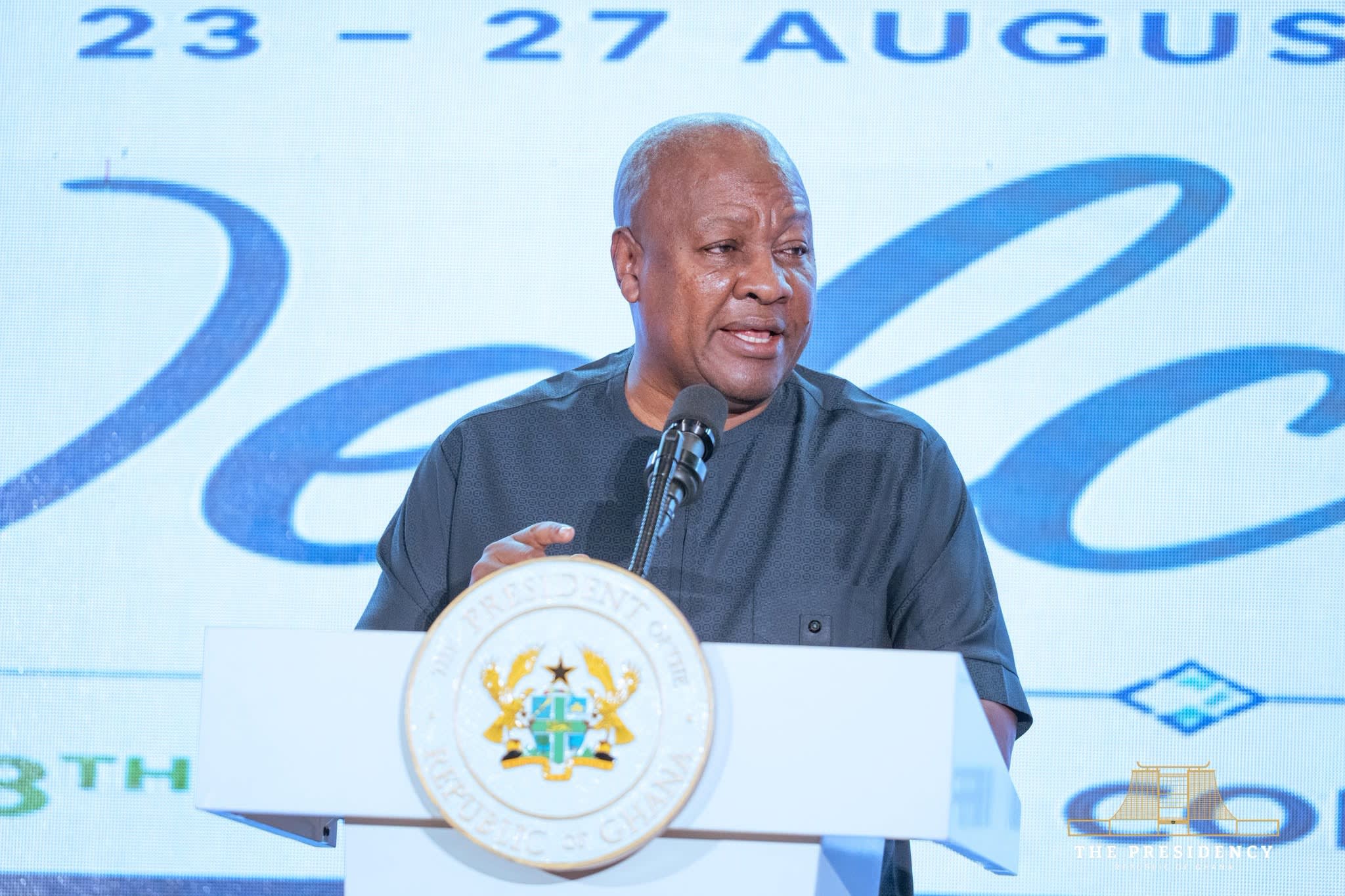
President John Dramani Mahama has set a firm deadline for Ghana's raw mineral export ban, announcing that unprocessed ores will stop leaving the country's shores by 2030 as government pushes to build local processing capacity instead.
Speaking at the Mining in Motion Conference on Monday, October 19, Mahama said the phased prohibition would cover bauxite, manganese, iron, lithium and other key minerals, backed by legal measures, mineral-specific requirements and clear timelines for implementation.
"I've set a clear goal that by 2030, raw mineral ores should no longer leave our shores.
"Our bauxite, manganese, iron, lithium, and other minerals must support processing and industrial development here at home." - President Mahama
Investors Will Face New Obligations
The President made clear that companies hoping to access Ghana's mineral deposits going forward will have to meet specific processing requirements rather than simply extracting and shipping raw material abroad.
"We will pursue a phased prohibition on exports of unprocessed ores, supported by the necessary legal measures, mineral-specific requirements, and transparent implementation timetables," he said, pointing to an existing ban on iron scrap and non-ferrous metal exports as an early example.
"Investors must understand the processing obligations associated with access to our resources," he added.
Gold Value Chain Gets Similar Treatment
The same philosophy is being extended to gold, where government is working through the Ghana Gold Board and a new refining policy to keep more of the value chain within the country rather than exporting raw gold for assaying and refining elsewhere.
"Through the Ghana Gold Board and our gold refining policy, we are working to retain more value through assaying, refining, and related services," Mahama said.
Together, the measures signal a broader shift in how Ghana intends to handle its mineral wealth going forward, trading short-term export volumes for long-term industrial capacity, local jobs and a bigger share of the value generated from resources that leave the ground.
READ ALSO: AU Cites GoldBod as Model for Africa's Mineral Reforms