Ghana has introduced its first comprehensive Ghana national reserve policy, a landmark initiative aimed at building strong external buffers and safeguarding long-term macroeconomic stability.
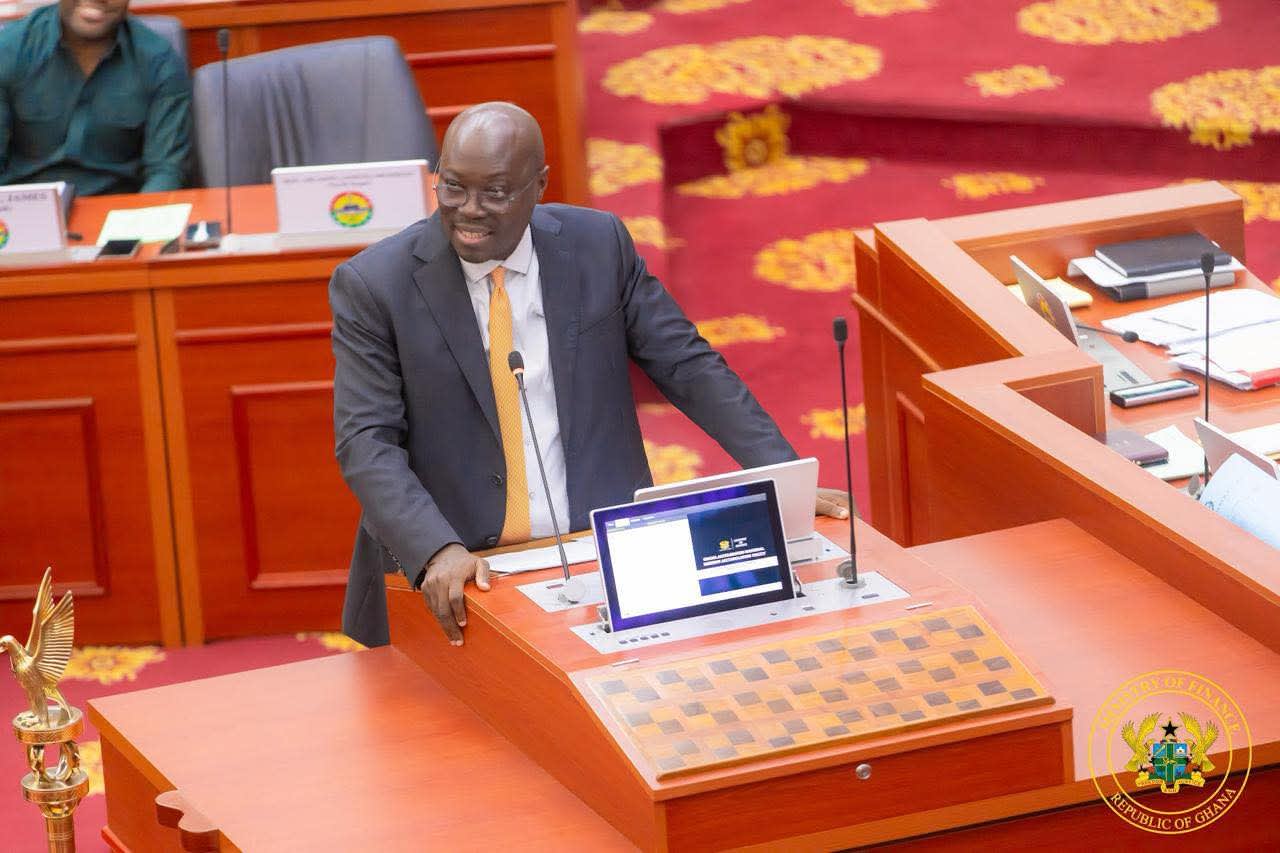
Presenting the Ghana Accelerated National Reserve Accumulation Policy (GANRAP) for the 2026–2028 period to Parliament, Finance Minister Dr. Cassiel Ato Forson described the framework as a strategic shift away from costly borrowing toward a sustainable, gold-backed reserve accumulation model.
According to the Minister, the policy represents a deliberate move to strengthen Ghana’s financial resilience through domestic resource mobilisation.
He told Parliament that GANRAP marks a transition from short-term reserve-building measures to what he called a structured approach designed to create lasting economic stability and protect the country from external shocks.
Building on Economic Recovery
Dr. Forson said the new policy is anchored on the strong macroeconomic recovery recorded in 2025 following the economic crisis of 2022–2023.
He noted that real GDP growth averaged 6.1 percent in the first three quarters of 2025, while inflation declined significantly to single digits and further dropped to 3.8 percent in January 2026.
Interest rates have also eased, with the 91-day Treasury bill rate falling sharply, while public debt declined to more sustainable levels.
Gross international reserves rose to US$13.8 billion, equivalent to 5.7 months of import cover. Despite these gains, the Minister cautioned that the traditional three-month benchmark is no longer adequate in an increasingly volatile global environment.
Under the Ghana national reserve policy, government is targeting a major increase in reserves to cover 15 months of imports by the end of 2028. The plan sets intermediate targets of 8.6 months by 2026 and 11.8 months by 2027.
Dr. Forson described the ambitious goal as the creation of an “economic war chest” to shield the country from commodity price volatility, global financing risks, geopolitical tensions and climate-related disruptions. He emphasised that stronger reserves will enhance investor confidence and strengthen Ghana’s ability to manage external shocks without resorting to expensive emergency borrowing.
Gold as the Strategic Anchor
Central to GANRAP is a gold-backed accumulation strategy anchored on the Ghana Gold Board Act, 2025. The framework assigns the Ghana Gold Board a key role in generating foreign exchange and supporting the Bank of Ghana’s reserve build-up.
Government has set a weekly gold acquisition target of about 3.02 tonnes. This includes at least 2.45 tonnes from the artisanal and small-scale mining sector and a minimum of 0.57 tonnes from large-scale mining operations through the invocation of pre-emption rights.
The Minister explained that the gold acquired will be refined and added to Ghana’s physical reserves and “may only be sold with prior approval of Cabinet and Parliament.”
Ending Costly Reserve Borrowing
The Finance Minister highlighted the high cost of previous reserve-building strategies, noting that between 2017 and 2024 Ghana relied heavily on Eurobonds, swaps and commercial borrowing.
From 2022 to 2024 alone, the Bank of Ghana accumulated US$5.65 billion in reserves through swaps at an interest cost of US$1.16 billion.
Eurobond borrowing between 2018 and 2021 also imposed significant debt service obligations on taxpayers. Dr. Forson stressed that borrowing to build reserves is unsustainable and contributed to the country’s recent debt distress.
In contrast, he revealed that the Ghana Gold Board generated about US$10 billion in foreign exchange in 2025 at a much lower cost, demonstrating the viability of the new approach.
Structural Reforms to Support Reserve Growth
Beyond gold accumulation, the Ghana national reserve policy integrates broader structural reforms aimed at increasing foreign exchange inflows and reducing persistent outflows.
These include expanding non-traditional exports, revitalising cocoa production, promoting oil palm development and accelerating new oil field projects such as the Pecan field.
The policy also includes measures to conserve foreign exchange through a Gas-to-Power Transformation programme, while maintaining fiscal discipline and a primary budget surplus to protect recent economic gains.
Dr. Forson urged Parliament to support what he described as a historic policy framework designed to strengthen Ghana’s first line of defence against external shocks.
He said the overarching objective is to build a resilient reserve management system that will sustain investor confidence, improve living standards and secure long-term prosperity.
With the launch of GANRAP, Ghana joins a small group of African countries pursuing a structured, legislatively anchored reserve accumulation strategy driven primarily by domestic resources rather than external borrowing.
READ ALSO: High Court Hearing: Second Prosecution Witness Skips Sky Train Trial Sitting