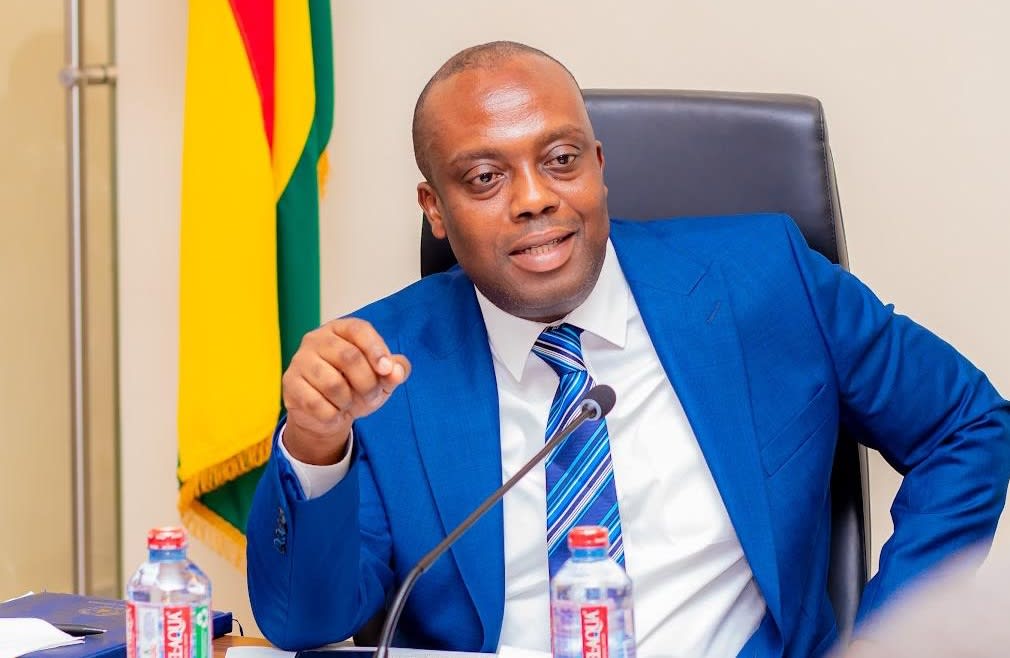
Deputy Finance Minister Thomas Ampem Nyarko has attributed the growing COCOBOD debt owed to fertilizer and agrochemical suppliers to long-standing structural and financial challenges within Ghana’s cocoa sector, revealing that procurement spending consistently exceeded approved budgets between 2021 and 2024.
Addressing Parliament, the Asuogyaman MP said the Ghana Cocoa Board inherited significant fiscal pressures arising from procurement commitments that far outstripped available budgetary provisions over several crop seasons.
According to him, the imbalance began during the 2021–2022 crop year when COCOBOD procured agrochemicals worth $455.7 million despite budgeting only $312.8 million for the period.
“The agrochemicals procured for the 2021–2022 season were not paid for, but COCOBOD continued to procure additional quantities in 2022, 2023, and 2024, all of which were above the budgeted amount in each year,” Mr Ampem Nyarko told Parliament.
Procurement Spending Far Exceeded Budget Allocations
The Deputy Minister disclosed that the situation intensified in subsequent years as procurement commitments continued to rise while outstanding debts accumulated.
He cited figures from the 2023–2024 crop season, where only $76.5 million had been allocated in the budget, yet contracts valued at approximately $668.6 million were awarded for agrochemicals.
The revelation has renewed concerns over procurement planning and financial discipline within the cocoa sector, particularly at a time when COCOBOD faces mounting financial obligations and declining revenue.
Mr Ampem Nyarko noted that stakeholders have also questioned the effectiveness of the increased spending, especially as cocoa output continued to fall during the same period.
“While procurement of fertilizers and agrochemicals was increasing, cocoa production was declining, raising questions as to what these fertilizers and agrochemicals were used for,” he said.
Reforms Underway to Restore Financial Stability
Despite the challenges, the Deputy Finance Minister assured Parliament that government is implementing reforms aimed at restoring COCOBOD’s financial health and improving accountability within the sector.
He stressed that the board’s indebtedness should not be viewed as an isolated problem but rather as part of broader structural weaknesses that have affected the cocoa industry over several years.
“COCOBOD’s indebtedness to agrochemical suppliers is part of inherited structural and financial challenges affecting the cocoa sector, rather than an isolated issue,” he stated.
According to Mr Ampem Nyarko, authorities are adopting a systematic approach to rebuilding the institution’s financial capacity to ensure that all creditors are paid in a sustainable and transparent manner.
“Government is fixing the system so that suppliers are paid not once, but always, predictably, transparently, and on time,” he assured.
The remarks come amid increasing scrutiny of COCOBOD’s financial position and growing calls for stronger oversight of procurement practices to safeguard the long-term sustainability of Ghana’s cocoa industry.
READ ALSO: ADB Profit Jumps to GH¢367 Million in 2025 Amid Strong Financial Recovery