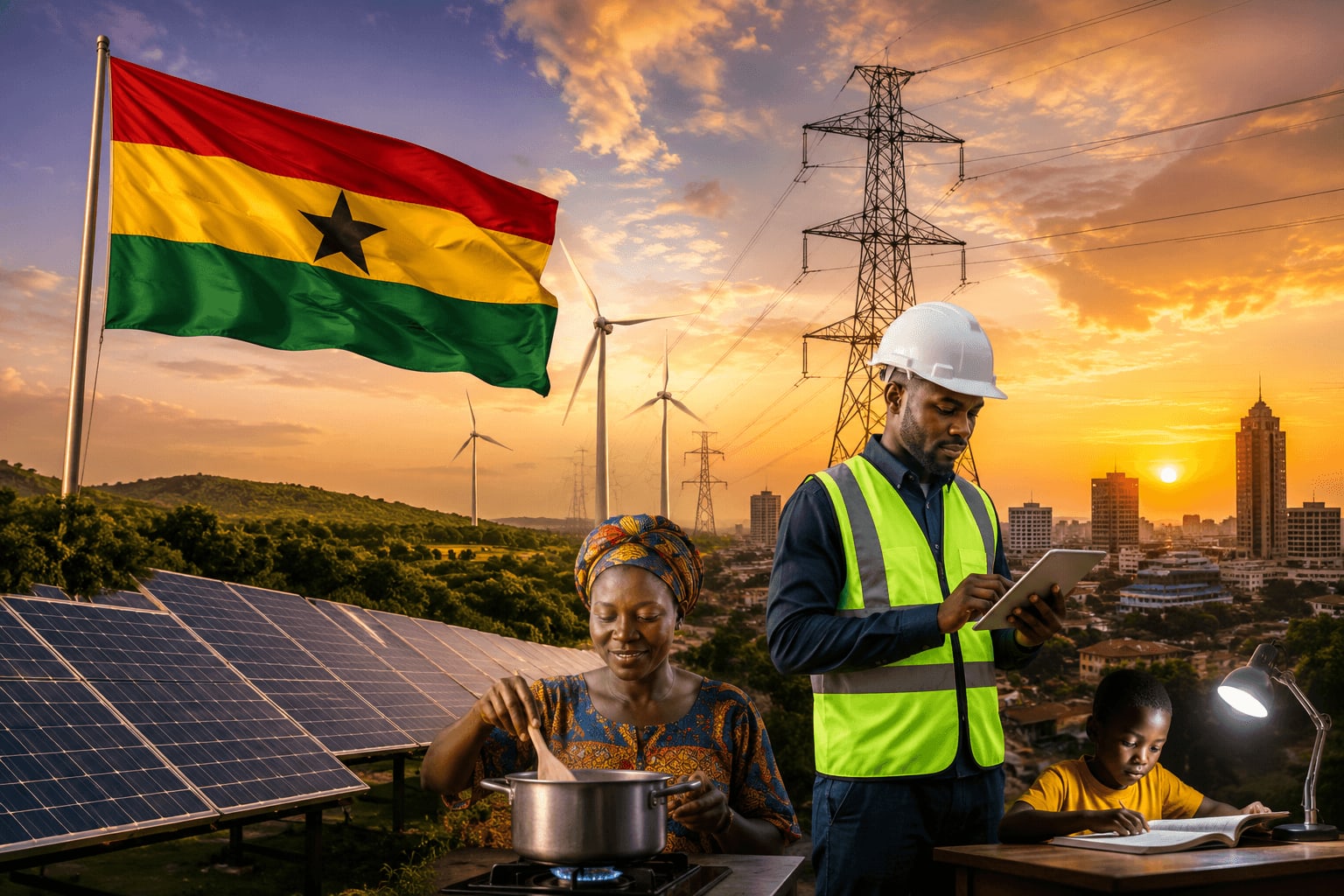
Ghana has been ranked 85th in the 2026 Energy Transition Index (ETI), earning an overall score of 52.6 after making notable progress in expanding energy access and strengthening human capital.
Although the country was not listed among the report's officially recognised "strong movers," it emerged as one of Sub-Saharan Africa's better-performing economies in areas considered critical to building a more inclusive and sustainable energy system.
The latest assessment points to encouraging gains but also serves as a reminder that deeper reforms will be needed if Ghana is to accelerate its energy transition.
Energy Access Drives Ghana's Progress
One of Ghana's strongest performances came in energy access, where it recorded a 4.9 percent improvement.
The report identifies the country among those making the largest regional gains, contributing to Sub-Saharan Africa's position as the fastest-improving region in the latest index.
Expanding access to electricity has remained a national priority, and the latest figures suggest those efforts are beginning to yield measurable results.
Improved access is widely viewed as essential for economic growth, industrial development and improving living standards, particularly in underserved communities.
The report also highlighted positive momentum in education and human capital, reflecting continued investments in workforce development and skills needed to support the evolving energy sector.
Strong Supply, Weak Grid
Despite those gains, the report notes that Ghana's transition remains constrained by structural weaknesses.
The country is classified as a "supply-led performer" in the area of energy security, indicating that it has a relatively strong domestic energy supply base. That advantage, however, is offset by persistent concerns over power system reliability.
According to the report, energy security cannot rely solely on adequate supply if electricity transmission and distribution systems continue to experience operational constraints.
Improving grid reliability is therefore expected to become one of Ghana's biggest priorities in the next phase of its energy transition.
Affordability Still a Challenge
The report also points to lingering equity concerns. While electricity access continues to improve, affordability remains a significant obstacle for many households and businesses.
Ghana's equity profile is described as "access progressing, but still constrained," reflecting the reality that expanding connections alone does not guarantee an equitable energy system.
High energy costs and limited economic opportunities continue to affect the country's overall performance in this category.
The findings suggest that future progress will depend not only on extending electricity access but also on making energy more affordable and reliable.
As Ghana pursues its clean energy ambitions, the report indicates that strengthening infrastructure, improving grid performance and investing in people will be essential to sustaining momentum and improving the country's standing in future editions of the 2026 Energy Transition Index.
READ ALSO: Ghana Stock Exchange Rally Extends as GSE Composite Index Nears 15,000 Points