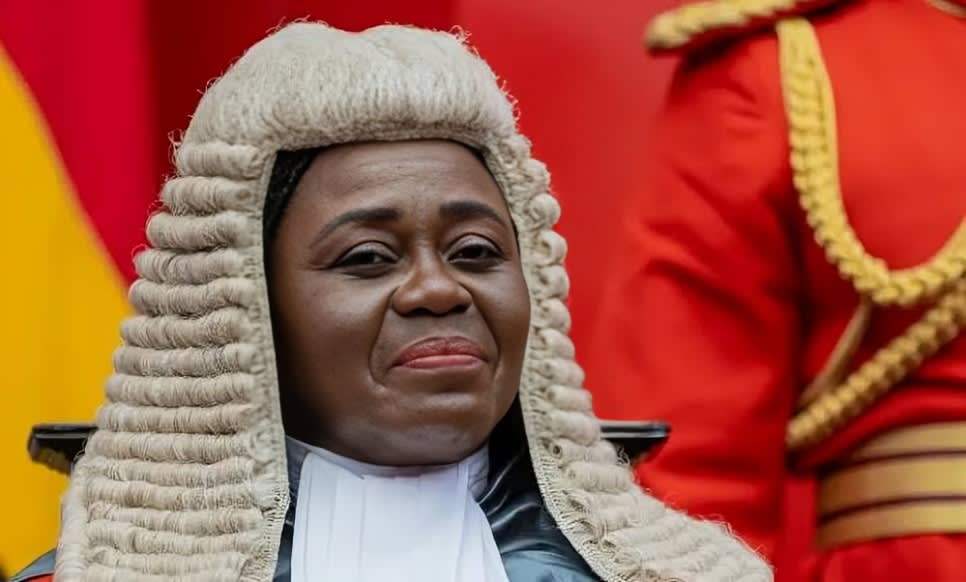
The ECOWAS Court has ruled in favour of Ghana in a case brought by former Chief Justice Gertrude Torkonoo, dismissing all claims against the state and finding that no violations of her rights occurred during the process leading to her removal from office.
The court consequently rejected her claim for $10 million in damages, concluding that Ghana had acted within the bounds of due process throughout the proceedings.
Ghana’s case was argued by Deputy Attorney General Dr. Justice Srem Sai, while the former Chief Justice was represented by prominent Nigerian lawyer Femi Falana.
Court Upholds Ghana’s Position
In its judgment, the regional court upheld all the key arguments advanced by Ghana and dismissed allegations that the suspension and removal process violated the former Chief Justice’s rights.
The court ruled that her suspension did not amount to a violation of her right to work and rejected claims that the action was arbitrary or motivated by ill will.
It further found that her removal from office followed due process and could not be described as arbitrary dismissal.
Addressing another argument raised by Torkonoo, the court dismissed her contention that she remained a member of the Supreme Court, Court of Appeal and High Court independently of her position as Chief Justice.
According to the court, membership of those courts flowed directly from her office as Chief Justice and could not be separated from it.
Committee’s Actions Found Lawful
The ECOWAS Court also rejected claims that the committee handling the matter acted unlawfully by focusing on one petition instead of considering additional petitions.
Judges held that the committee’s approach was prudent and consistent with the principle of judicial economy.
The court further dismissed allegations of undignified treatment during the proceedings, including claims relating to security searches, restrictions on family attendance and the choice of venue for hearings.
It concluded that the security measures adopted were lawful, proportionate and necessary for the conduct of the proceedings.
Information Access and Procedural Complaints Rejected
The court also found no violation in the committee’s decision to continue proceedings despite an application for provisional measures seeking suspension of the process.
On claims that she had been denied information relating to the proceedings, the court ruled that although she was entitled to receive relevant records, she failed to demonstrate that she had formally requested the full report before initiating legal action.
Following delivery of the judgment, the court reportedly described comments made by Mr. Falana after the ruling as “unacceptable,” expressing disappointment over his remarks concerning the decision.
The ruling marks a significant legal victory for Ghana and brings to a close one of the most closely watched cases involving judicial governance and constitutional processes within the subregion.
READ ALSO: Energy Levy Generated GH¢8.81 Billion in 2025, Government Reveals