President John Dramani Mahama has highlighted the Feed Ghana Programme as the cornerstone of his administration’s efforts to transform agriculture, reduce food inflation and strengthen national food security.
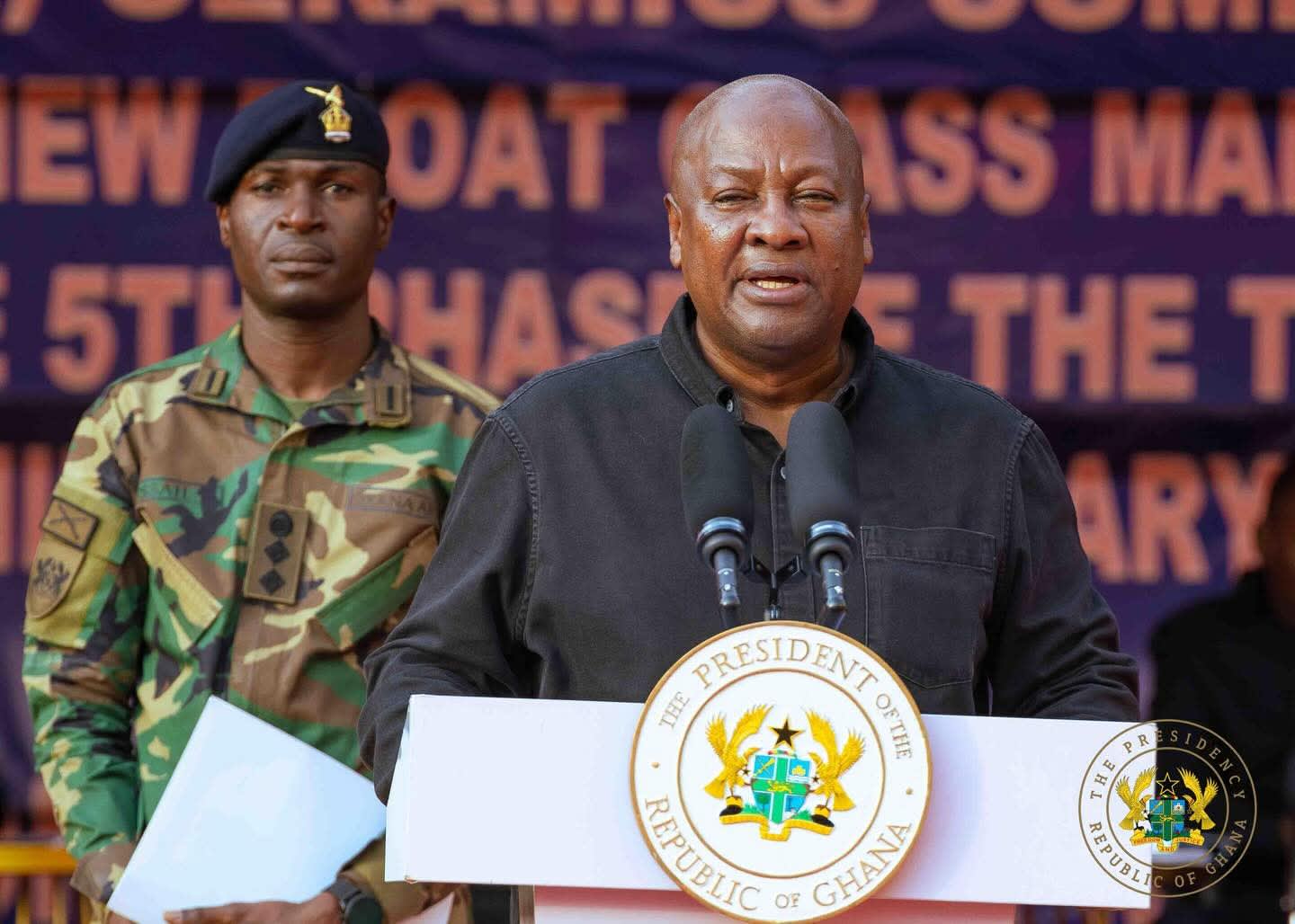
Delivering the 2026 State of the Nation Address in Parliament, the President said agriculture remains central to Ghana’s economic recovery and long-term stability.
He explained that since January 2025, government has undertaken “a decisive reset of Ghana’s agricultural sector under the Agriculture for Economic Transformation Agenda, with the Feed Ghana Programme serving as the flagship vehicle for implementation.”
According to him, the initiative aims to restore food sovereignty, reduce import dependence, create jobs for young people and position agriculture as a strategic pillar of the country’s 24-hour economy policy.
Food Inflation Drops Sharply
President Mahama noted that the programme is already delivering measurable results, particularly in stabilising food prices.
“In January 2025, food inflation stood at 28.3 per cent, following an unprecedented peak of 61 per cent in January 2023,” he said, adding that the surge had placed severe pressure on households and businesses.
“Today, food inflation has declined significantly to 4.9%, providing relief to Ghanaian families and businesses.” - President John Dramani Mahama
To further stabilise prices, government has committed GH¢300 million to the National Food Buffer Stock Company to purchase excess produce and build what he described as Ghana’s first deliberate strategic national food reserve.
Institutions and Households Join Production
The President revealed that more than 413 institutions, from basic schools to universities, are actively participating in the Feed Ghana Programme.
Institutional farming is currently being undertaken by the Ghana Armed Forces, the Ghana Prisons Service, the National Service Authority, educational institutions and faith-based organisations.
A major component of the initiative is the Home Gardening Initiative, which encourages households to grow vegetables within their homes and communities.
“This is to reduce food expenditure, improve household nutrition, and enhance food availability.” - President John Dramani Mahama
Irrigation Expansion for Year-Round Farming
To address climate risks and reduce reliance on rainfall, government is shifting agriculture toward irrigation-based production.
The President disclosed that projects underway include the construction of 10 new small dams, rehabilitation of eight irrigation dams and installation of 250 solar-powered boreholes for farming communities and schools across the northern belt, Bono and Ahafo regions.
Major schemes such as Vea, Weta, Tanoso, Kpong, Ashaiman and Aveyime are also being rehabilitated, while over 1,300 hectares of inland valleys are being developed to boost rice production.
President Mahama emphasised that the Feed Ghana Programme is designed to strengthen resilience, create jobs and ensure sustainable food security as part of Ghana’s broader national renewal strategy.
READ ALSO: Mahama Declares "Ghana Is Back" as He Delivers 2026 State of the Nation Address