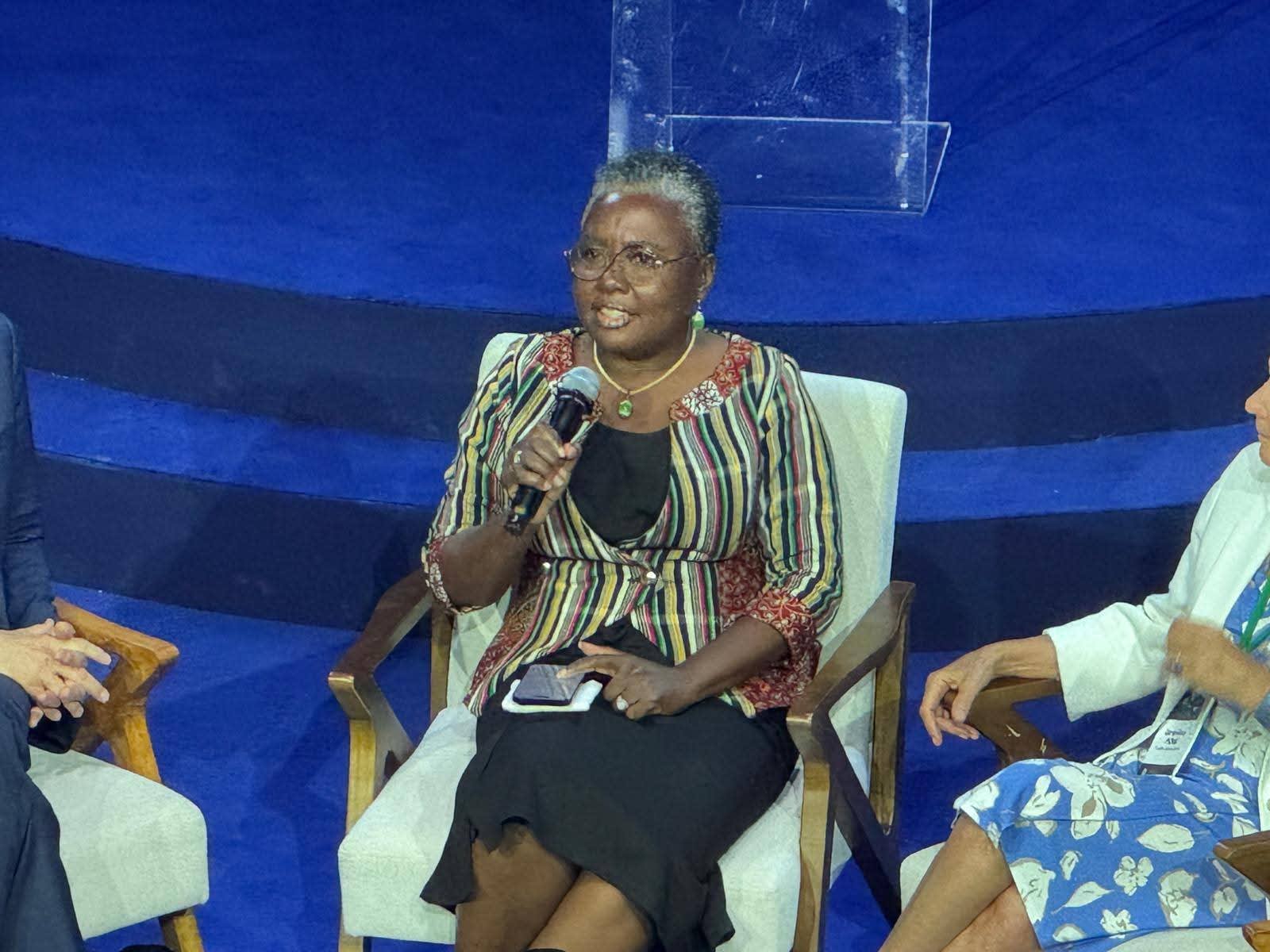
Ghana has renewed its call for a more equitable and inclusive approach to ocean governance, with the Minister for Fisheries and Aquaculture, Emelia Arthur, urging the international community to strengthen cooperation and ensure fair access to marine resources and knowledge.
Speaking at the prestigious Neptune Forum in Paris on June 8, 2026, in commemoration of World Oceans Day, the minister stressed that sustainable management of the world’s oceans must be guided by science, fairness, and shared responsibility.
The high-level forum, organised by Mission Neptune, brought together global leaders, policymakers, scientists, diplomats, and ocean advocates to discuss solutions for the protection and sustainable use of marine resources.
Ocean Central to Ghana’s Development
Addressing participants on the theme, “International Governance in a Fragmented World: Ocean Governance and Ghana’s Perspective,” Arthur highlighted the critical role oceans play in Ghana’s economy, food security, history, and cultural identity.
She noted that advances in technology, including artificial intelligence, vessel monitoring systems, marine data collection, and seabed mapping, have significantly improved understanding of ocean ecosystems. However, she cautioned that major threats continue to undermine marine sustainability.
According to the minister, declining fish stocks, biodiversity loss, maritime insecurity, and the growing vulnerability of coastal communities remain pressing concerns that require coordinated global action.
“Ocean governance must go beyond resource management and focus on equity, shared responsibility, and sustainable development,” she stated.
Arthur outlined Ghana’s commitment to building a sustainable Blue Economy through policies that promote responsible fisheries and aquaculture, marine spatial planning, stronger monitoring systems, and community participation in marine conservation.
She explained that Ghana’s approach seeks to balance economic growth with environmental protection while safeguarding livelihoods that depend on marine resources.
The minister also drew attention to the challenges confronting developing countries, particularly African coastal states, in tackling Illegal, Unreported and Unregulated (IUU) fishing.
She argued that IUU fishing extends beyond environmental concerns and has serious implications for economic justice, food security, and national sovereignty.
Call for Greater International Cooperation
Arthur urged the global community to increase investments in scientific research, technology transfer, marine data accessibility, and digital infrastructure to help developing countries strengthen ocean management capabilities.
She emphasized that Africa must play a greater role in generating and applying ocean knowledge rather than remaining solely a consumer of scientific information.
As part of her presentation, the minister proposed five principles to guide future ocean governance: Equity, Stewardship, Scientific Sovereignty, Recognition of Indigenous Wisdom, and Collective Security.
She concluded by reaffirming Ghana’s commitment to a fair and effective global ocean governance system, noting that the ocean can serve as a unifying force in a divided world when cooperation is rooted in fairness, mutual respect, and shared responsibility.
The Neptune Forum continues to serve as an important platform for advancing dialogue on climate resilience, marine conservation, scientific exploration, and sustainable development, reinforcing the ocean’s role as a cornerstone of global stability and international cooperation.
READ ALSO: Government Clears GH¢1.05 Billion SSNIT Debt, Records No Contribution Arrears in 2025