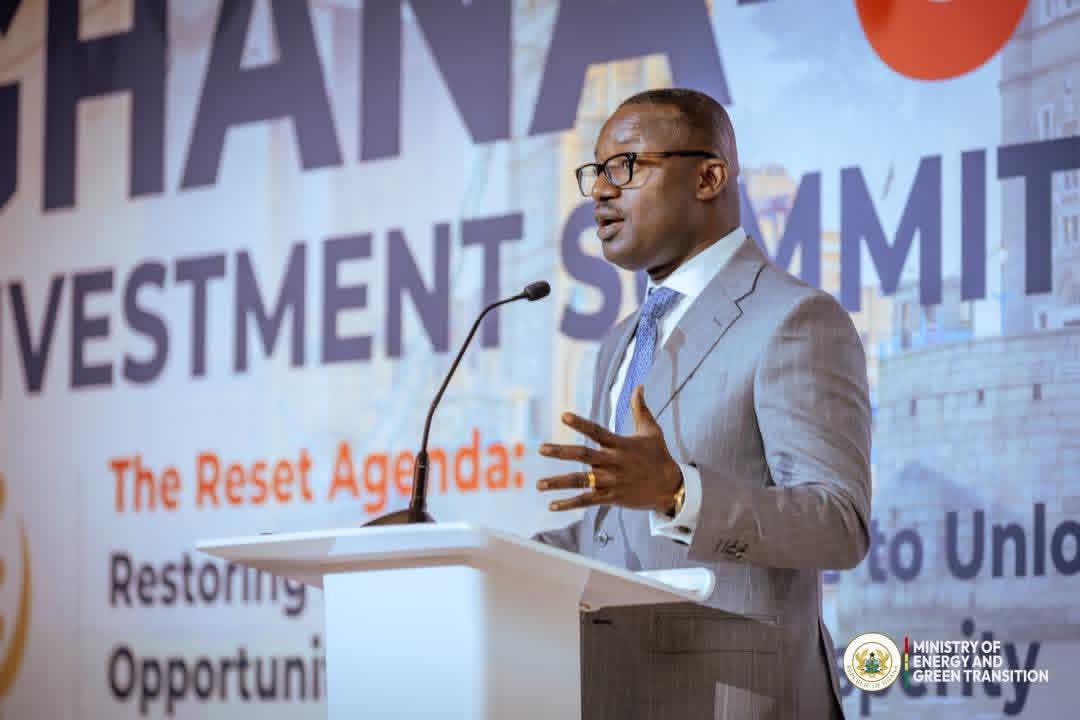
Energy Minister Dr. John Abdulai Jinapor has announced that Ghana has secured more than US$3.5 billion in upstream oil and gas investment commitments, attributing the achievement to reforms implemented under the government’s Reset Agenda.
Speaking at the Ghana-UK Investment Summit 2026, the Minister said the Ghana energy sector has experienced a significant turnaround since the current administration assumed office in 2025.
According to Dr. Jinapor, government inherited a challenging energy landscape characterised by a power deficit, declining crude oil production, and weakened investor confidence. However, he said decisive policy interventions and sustained engagement with investors have helped restore stability and attract fresh capital into the sector.
“When we assumed office in 2025, we inherited a power deficit, declining oil production, and weakened investor confidence. Through decisive reforms and sustained investor engagement, we have reversed this trend.” - Energy Minister
The Minister revealed that major drilling activities have resumed following the renewed investor interest, with Ghana expected to record an increase in crude oil production for the first time in nearly six years.
He noted that the recovery reflects growing confidence in the country’s energy sector and its long-term prospects.
Dr. Jinapor reaffirmed government’s commitment to building a secure, affordable, reliable, and sustainable energy system capable of supporting economic growth and industrialisation.
Ghana Positions Itself as Regional Energy Hub
The Minister highlighted key investment opportunities in gas infrastructure, gas-to-power projects, renewable energy, power sector modernisation, and upstream petroleum development.
He explained that these initiatives form part of a broader strategy under the National Energy Policy and Energy Transition Framework, which seeks to maximise domestic oil and gas resources while expanding renewable energy capacity and advancing plans for nuclear power generation.
According to Dr. Jinapor, Ghana is positioning itself as a regional energy hub capable of attracting long-term investment and supporting industrial transformation across West Africa.
He concluded by inviting international investors to partner with Ghana, stressing that a stable policy environment, ongoing reforms, and a commitment to private-sector-led growth make the country an attractive destination for energy investment and sustainable economic development.
READ ALSO: Ayariga Distances Himself from Post-Passage Process of Anti-LGBTQ Bill