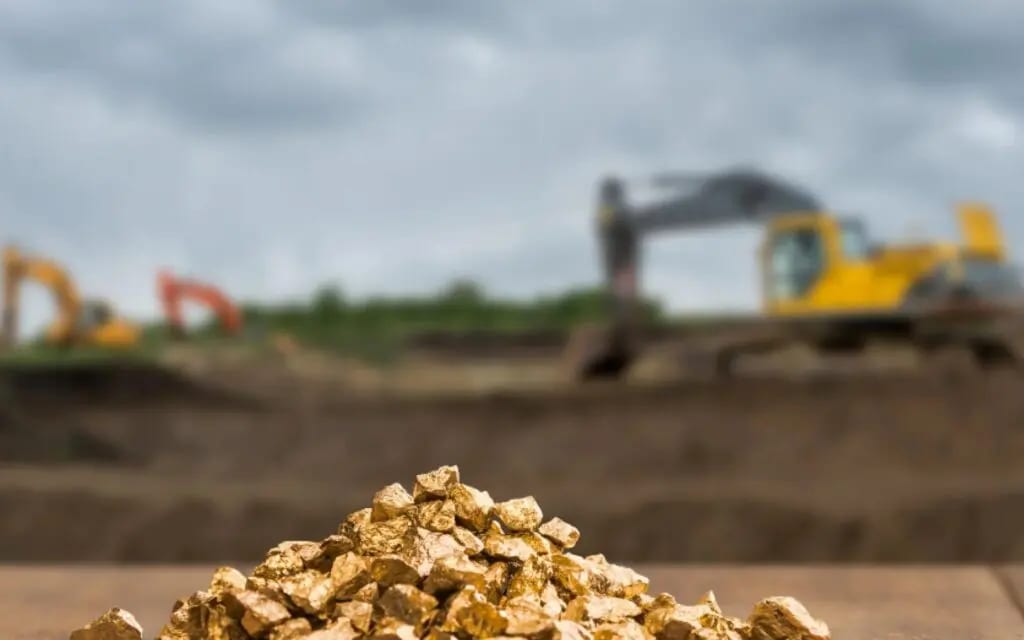
Ghana’s mining industry delivered a record-breaking performance in 2025, driven by unprecedented gold production and a sharp increase in fiscal contributions to the state, reinforcing the sector’s position as a cornerstone of the national economy.
According to the latest figures released by the Ghana Chamber of Mines, attributable gold production rose by 23.4 percent to a historic 5.94 million ounces in 2025, up from 4.82 million ounces recorded the previous year.
The surge was largely fueled by strong growth in the small-scale mining sector, which emerged as the country’s leading gold producer for the first time in over a century.
Speaking at the Chamber’s 98th Annual General Meeting in Accra, outgoing President Michael Edem Akafia described the performance as a significant milestone for the industry, highlighting its continued role in supporting economic growth, employment, exports and government revenue.
Small-Scale Mining Takes the Lead
One of the most notable developments in 2025 was the shift in the structure of Ghana’s gold production. Small-scale mining output surged by 63.8 percent to 3.11 million ounces, accounting for 52.4 percent of total national production.
This marked the first time small-scale miners outperformed large-scale operators in overall output. In contrast, large-scale production declined slightly by 2.98 percent to 2.83 million ounces, although member companies of the Chamber continued to contribute 98 percent of total large-scale production.
“The gold mining sub-sector was the standout performer, driven largely by a near doubling of small-scale gold output,” Mr. Akafia stated.
He noted that gold’s contribution to Ghana’s Gross Domestic Product increased significantly, making it the largest sub-sector of the economy.
The sector’s strong production performance translated into higher revenues for the state. The mining and quarrying industry remained Ghana’s largest source of direct domestic tax revenue, contributing GHS23.11 billion in taxes in 2025, compared with GHS20.87 billion in 2024.
When dividend payments are included, the industry’s total fiscal contribution climbed to GHS24.22 billion, representing a 10.6 percent increase year-on-year.
Mineral export earnings also recorded remarkable growth, rising nearly 78 percent from US$11.98 billion in 2024 to US$21.36 billion in 2025. The sector accounted for 68.2 percent of Ghana’s total merchandise exports, underlining its importance as a major source of foreign exchange.
Concerns Over Policy and Competitiveness
Despite the impressive performance, the Chamber cautioned that emerging policy challenges could affect future growth and investor confidence.
Industry leaders expressed concerns over ongoing reviews of the Minerals and Mining Act, discussions surrounding mining lease renewals, and recent changes to the royalty framework. The Chamber also warned that Ghana’s effective mining tax burden, estimated at between 54 and 58 percent, remains among the highest globally.
Mr. Akafia urged government to undertake a comprehensive review of the fiscal regime governing the sector to strike a balance between maximizing state revenues and maintaining Ghana’s attractiveness to investors.
The call comes amid renewed government efforts to strengthen oversight of the mining industry, increase local participation, and ensure that communities and the state derive greater benefits from the country’s mineral wealth.
As global gold prices remain elevated, stakeholders say Ghana has a unique opportunity to consolidate gains from the sector while implementing reforms that support long-term investment, sustainability and value retention.
READ ALSO: Oil Prices Climb as Iran-Israel Conflict Escalates, Raising Supply Concerns