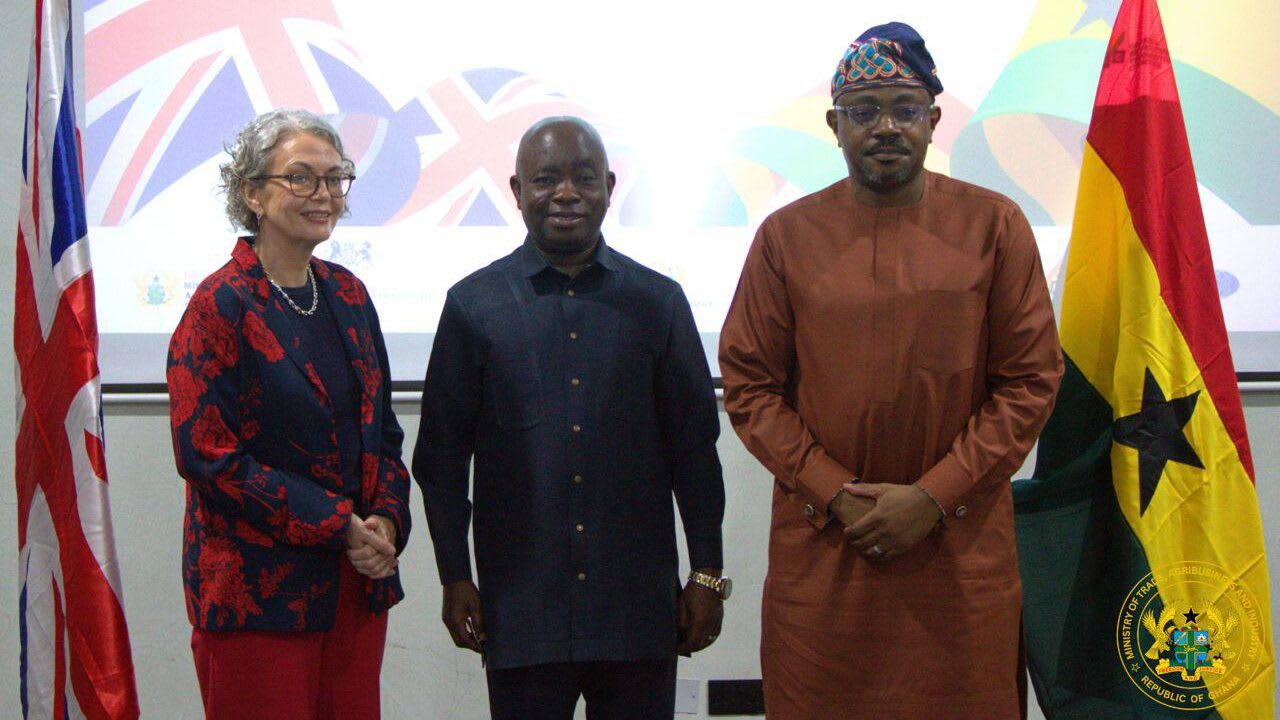
The Ghana-UK Trade Partnership Agreement has reached a significant five-year milestone, with officials from Ghana and United Kingdom convening in Accra to assess its performance and future direction.
The Joint Technical Committee meeting, held at the Ministry of Trade, Agribusiness and Industry, marked a comprehensive review of the bilateral pact since its inception. According to the Ministry, the agreement has driven trade growth, with volumes rising by nearly 10 percent over the past year.
“The meeting… brought together government officials, development partners and trade institutions… to review progress, address outstanding issues and chart a path for enhanced cooperation.” - Ministry of Trade, Agribusiness and Industry
Push for Diversified Trade
Despite the gains, Ghanaian officials highlighted concerns over trade imbalances, noting that the current structure still favours the UK. The review therefore focused on transitioning from a commodity-based exchange to a more “future-oriented” partnership.
Ghana is pushing for increased exports in non-traditional sectors, particularly processed agribusiness products, to strengthen its position within the agreement.
Deputy Minister Sampson Ahi described the timing of the review as symbolic, aligning with the momentum of Ghana’s recent independence celebrations, while also stressing the need for deeper economic transformation.
A key outcome of the meeting was the agreement to finalise the Rules of Procedure for Dispute Settlement, including the establishment of a formal arbitration panel.
Officials say this will give the agreement “legal teeth” by ensuring that trade disputes are resolved transparently and efficiently, thereby reducing risks for investors and maintaining confidence in the bilateral framework.
On the technical front, the Ghana Revenue Authority is implementing tariff liberalisation measures for 2024–2025. These reforms are expected to ease the importation of industrial machinery while improving access for Ghanaian goods to UK markets.
Expanding into Services and Regional Impact
Beyond goods, the dialogue signaled a shift toward services trade, including digital commerce, financial services, and professional consulting.
UK Co-Chair Paul Whittingham noted that services would be central to the agreement’s next phase, emphasising “the importance of building a future-oriented trade relationship.”
The agreement is also gaining regional significance. Representatives from the Economic Community of West African States highlighted its potential as a model for structuring trade partnerships across West Africa.
Additionally, the UK reaffirmed support for Ghana’s implementation of the African Continental Free Trade Area, ensuring alignment between bilateral and continental trade goals.
As the agreement enters its next phase, both countries are prioritising data-driven decision-making to unlock new trade opportunities and sustain long-term growth.
READ ALSO: Mahama Announces Free Fertiliser for Farmers in 2026 to Boost Agriculture