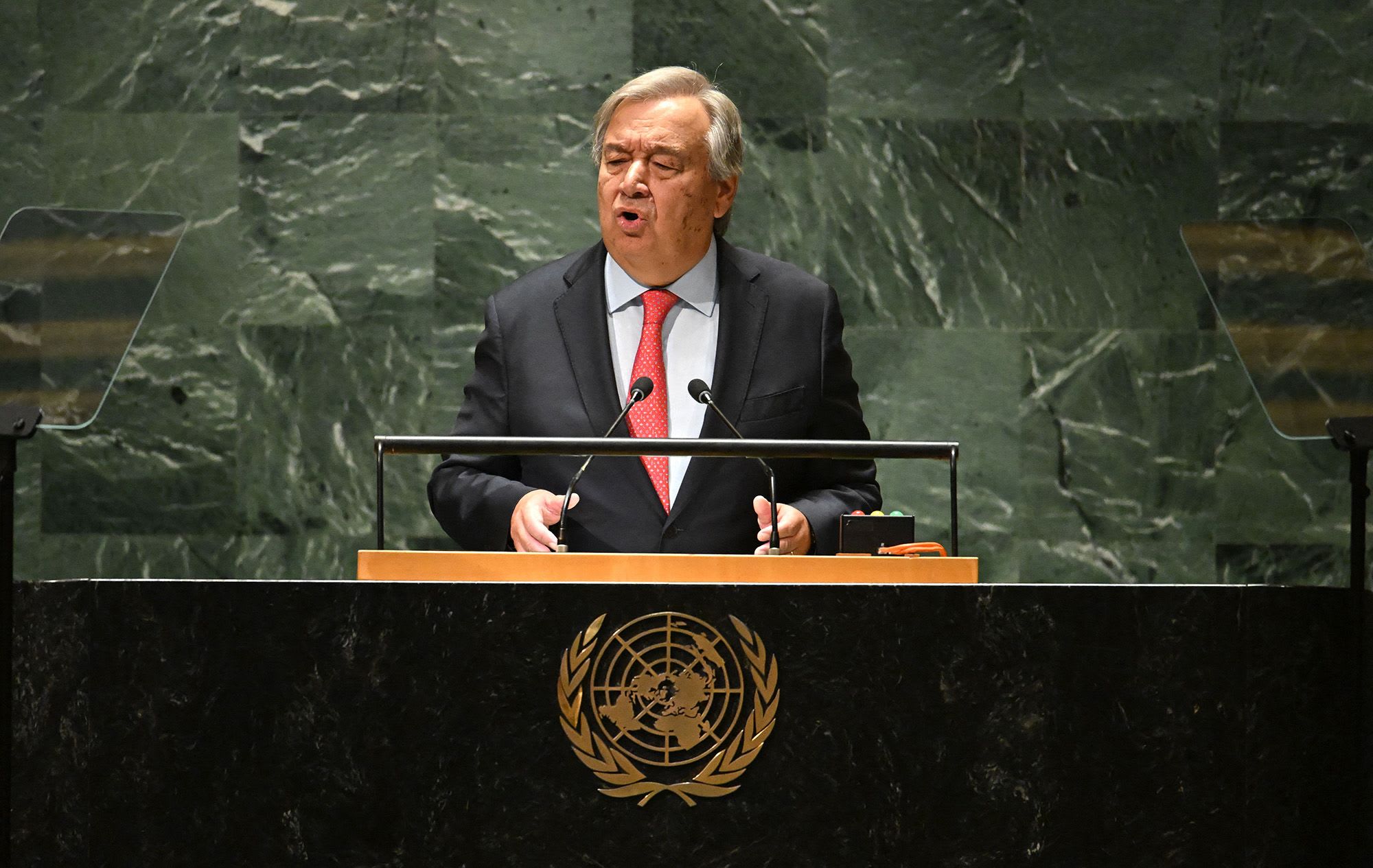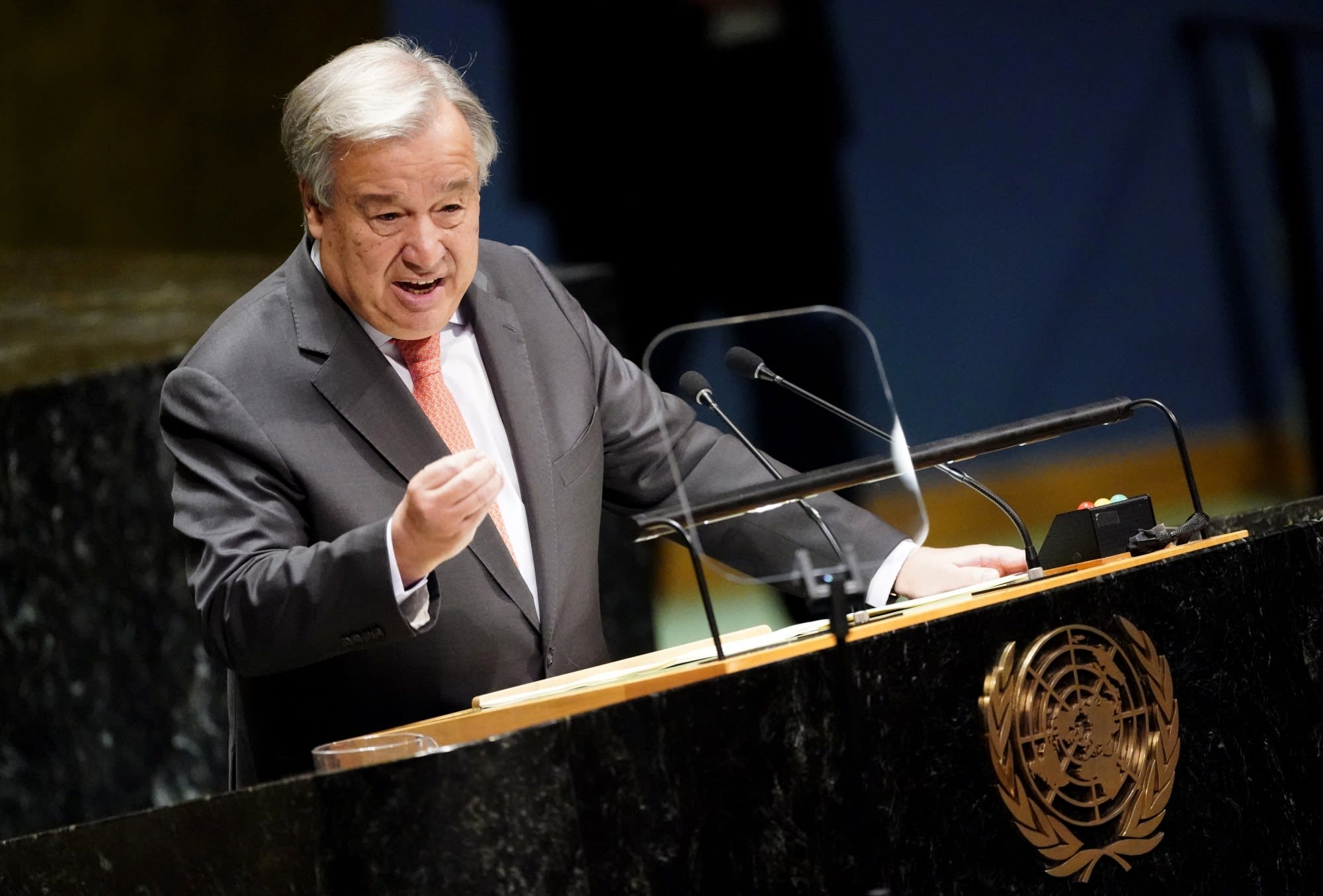
United Nations Secretary General Antonio Guterres has urged world leaders to abandon growing divisions and embrace international cooperation as wars, climate change and technological risks place mounting pressure on the global order.
In his final address to the annual gathering of world leaders on Tuesday, September 22, Guterres called for “a world built on interdependence,” warning that mistrust and competition among major powers are undermining efforts to confront shared challenges.
The speech opened the high level General Debate of the 81st United Nations General Assembly in New York.
Guterres, whose second five year term ends on December 31, used the occasion to reflect on the challenges facing the organisation after nearly a decade under his leadership.
Global Divisions Threaten Collective Action
“The fault lines in our world are widening,” the UN chief warned.
He pointed to persistent armed conflicts, rising temperatures, inequality and artificial intelligence as problems requiring coordinated international action.
Guterres challenged the belief that powerful countries can resolve global problems through military or economic strength alone.
Recent conflicts, he argued, demonstrate that military superiority does not automatically deliver peace or stability.
His remarks came as leaders from the UN’s 193 member states gathered for the annual diplomatic meeting, with conflicts in Ukraine, Gaza, Iran, Sudan, the Democratic Republic of Congo and Myanmar among the pressing issues confronting delegates.
Guterres Pushes for Stronger International Institutions
The outgoing Secretary General also renewed his call for reforms to the United Nations and other institutions established under an international order shaped largely by the Second World War.
The UN Security Council remains particularly contentious because its five permanent members, the United States, Russia, China, Britain and France, retain veto powers.
That structure has repeatedly complicated international responses to conflicts involving major powers or their allies.
Guterres argued that institutions must evolve to reflect present realities if they are to retain credibility and deliver results.
Member states have agreed to pursue reforms, but translating those commitments into institutional changes remains difficult.
Climate Change and AI Add to Global Pressures
Beyond armed conflicts, Guterres warned that climate change and artificial intelligence are creating challenges that no single country can manage independently.
Rising global temperatures threaten lives and livelihoods, while rapid technological development is raising questions about safety, security and accountability.
He called for stronger international cooperation to manage these risks rather than allowing technological competition and national interests to dictate the response.
The Secretary General’s appeal comes as the UN faces financial pressures and questions about its effectiveness, particularly following funding reductions and withdrawals from some agencies by the United States.
‘Peace Is Possible’
Guterres ended his address on a personal note, acknowledging that he will leave office at the end of the year.
He pledged to continue defending the values of the United Nations Charter and advocating peaceful solutions to international disputes after his departure.
The outgoing UN chief received a sustained standing ovation as he concluded his remarks.
His final message was a defence of international cooperation at a time when the organisation he has led for almost 10 years faces growing questions about its influence and ability to resolve global crises.
READ ALSO: GPRTU Rejects Transport Fare Increase Below 25% Ahead of Final Government Talks