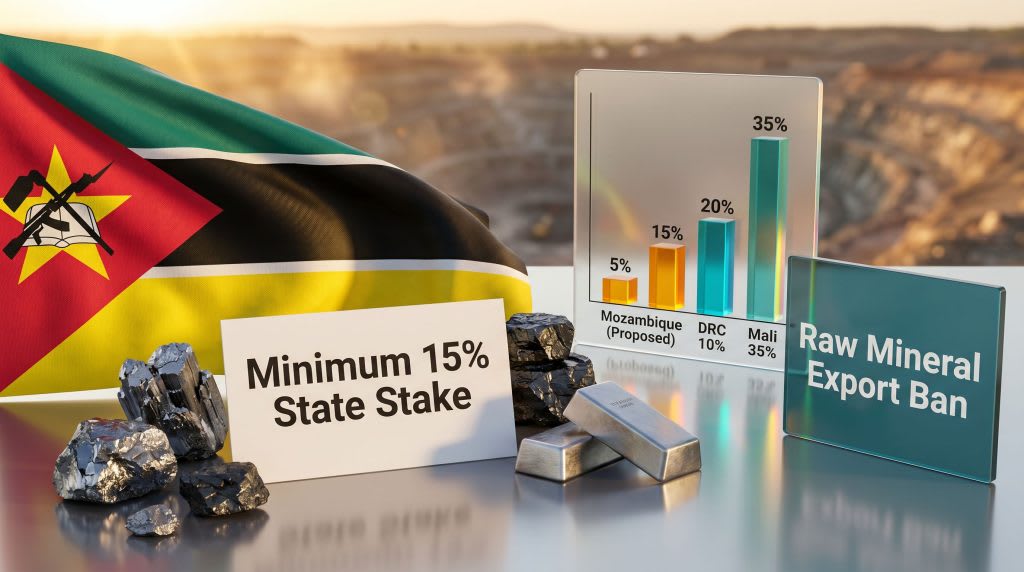
Mozambique has introduced sweeping reforms to its mining sector after President Daniel Chapo signed a new law requiring the state to hold a minimum 15 percent ownership stake in all mining ventures across the country.
The legislation, approved by Parliament in May and signed into law this week, is designed to strengthen national control over strategic mineral resources and increase the economic benefits derived from the country's mining industry.
According to a government notice issued on June 3, the law seeks to improve Mozambique’s management of natural resources in line with national development objectives.
“The state, through the National Mining Company (ENM), shall have a minimum, free-carried and non-dilutable participation of 15% in all mining projects, at any stage of the value chain,” the law states.
Focus on Local Value Addition
The new regulations also prohibit the export of unprocessed or semi-processed mineral products unless companies receive specific ministerial authorisation tied to approved plans for local processing.
The move reflects a growing trend among African resource-rich nations seeking to maximise value from their mineral wealth by promoting domestic beneficiation and industrialisation rather than exporting raw materials.
Mozambique is the world's third-largest producer of graphite, a critical mineral used in electric vehicle batteries and energy storage technologies.
The country is also home to some of the world's largest graphite reserves, including the Balama mine operated by Syrah Resources.
Industry Implications
While the government has not clarified whether the new rules will apply to existing mining operations governed by long-term agreements, the legislation is expected to reshape future investment decisions in the sector.
Mozambique joins countries such as Zimbabwe and Democratic Republic of the Congo in introducing measures aimed at increasing local participation and retaining greater economic value from mineral extraction.
Industry observers say the reforms could strengthen state revenues and encourage domestic processing industries, while also raising questions about their impact on future foreign investment in one of Africa's most resource-rich economies.
READ ALSO: Urban Development Fueling Accra Flooding, Roads Engineer Warns