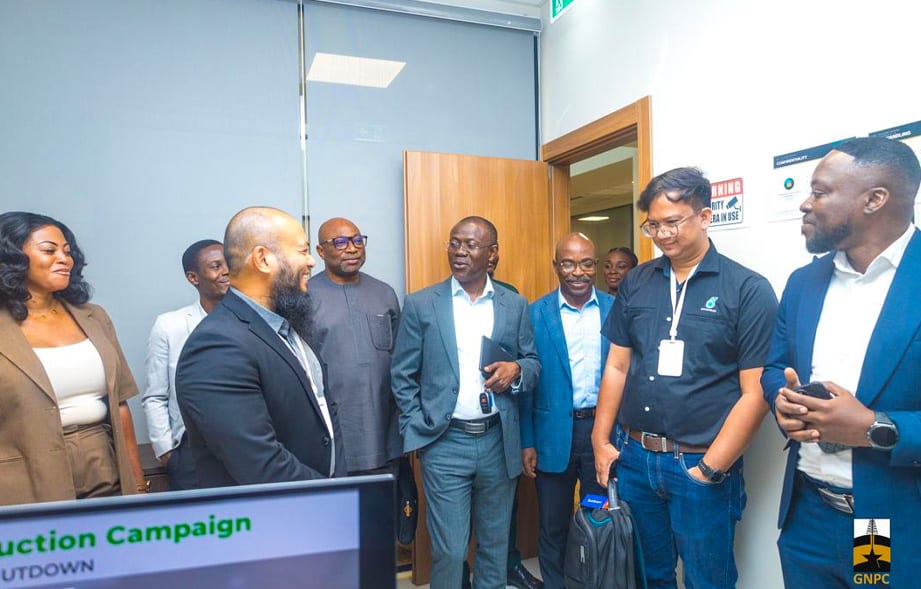
The Tema Oil Refinery revival has entered a new phase after President John Dramani Mahama commissioned the refurbished Crude Distillation Unit in Tema, declaring that Ghana would no longer allow a strategic industrial asset to slide into decay.
The commissioning ceremony, held on August 1, also marked the processing of locally produced Jubilee crude into finished petroleum products. Mahama said the moment carried meaning beyond repaired machinery and a fresh crude delivery.
“Today is more than just the commissioning of refurbished refinery units,” he said. “It is above all a declaration of purpose.”
Since May, TOR has received three separate crude cargoes of one million barrels each. Two million barrels have already been processed into several refined petroleum products, according to the President.
That matters because crude availability has repeatedly shaped the refinery’s ability to operate consistently. The refurbished unit now gives TOR another opportunity to turn domestic and imported crude into products within Ghana rather than relying heavily on finished fuel imports.
TOR placed at centre of industrial agenda
Mahama framed the refinery as part of the government’s wider industrial programme, including the 24 hour economy and Accelerated Export Development Programme.
A functioning TOR, he argued, should create jobs, deepen technical skills and give Ghana greater control over the value generated from its petroleum resources.
“A functioning refinery represents confidence, jobs, technological capability and energy security,” he said.
The Crude Distillation Unit is TOR’s primary processing plant, separating crude oil into components used to produce fuels. The refinery says the unit works alongside its secondary conversion plant and supporting utilities.
The rehabilitation also covered the Residual Fluid Catalytic Cracking Unit, a new F61 crude heater and the return of Boiler Number Eight to service. These upgrades are expected to improve reliability and raise local refining capacity.
Long term viability becomes next test
Mahama said TOR’s return challenged the assumption that state owned enterprises can only survive through privatisation.
He credited management, workers and strategic partners for restoring operations, describing the turnaround as evidence that Ghana can rebuild institutions when leadership and commercial discipline meet.
The refinery now carries a heavier expectation. Restarting the plant is one achievement; keeping it supplied with crude, safely maintained and commercially viable will determine whether this rebound lasts.
“The revival of Tema Oil Refinery demonstrates that Ghana can rebuild its strategic institutions,” he said.
For Mahama, the broader ambition is national self reliance. He wants TOR to support industrial production, expand exports and retain more petroleum value at home.
READ ALSO: ETHOCON 2026 Raises Alarm Over AI Cybersecurity Risks in Ghana