Author: Prince Agyapong, Energy & Extractives Journalist
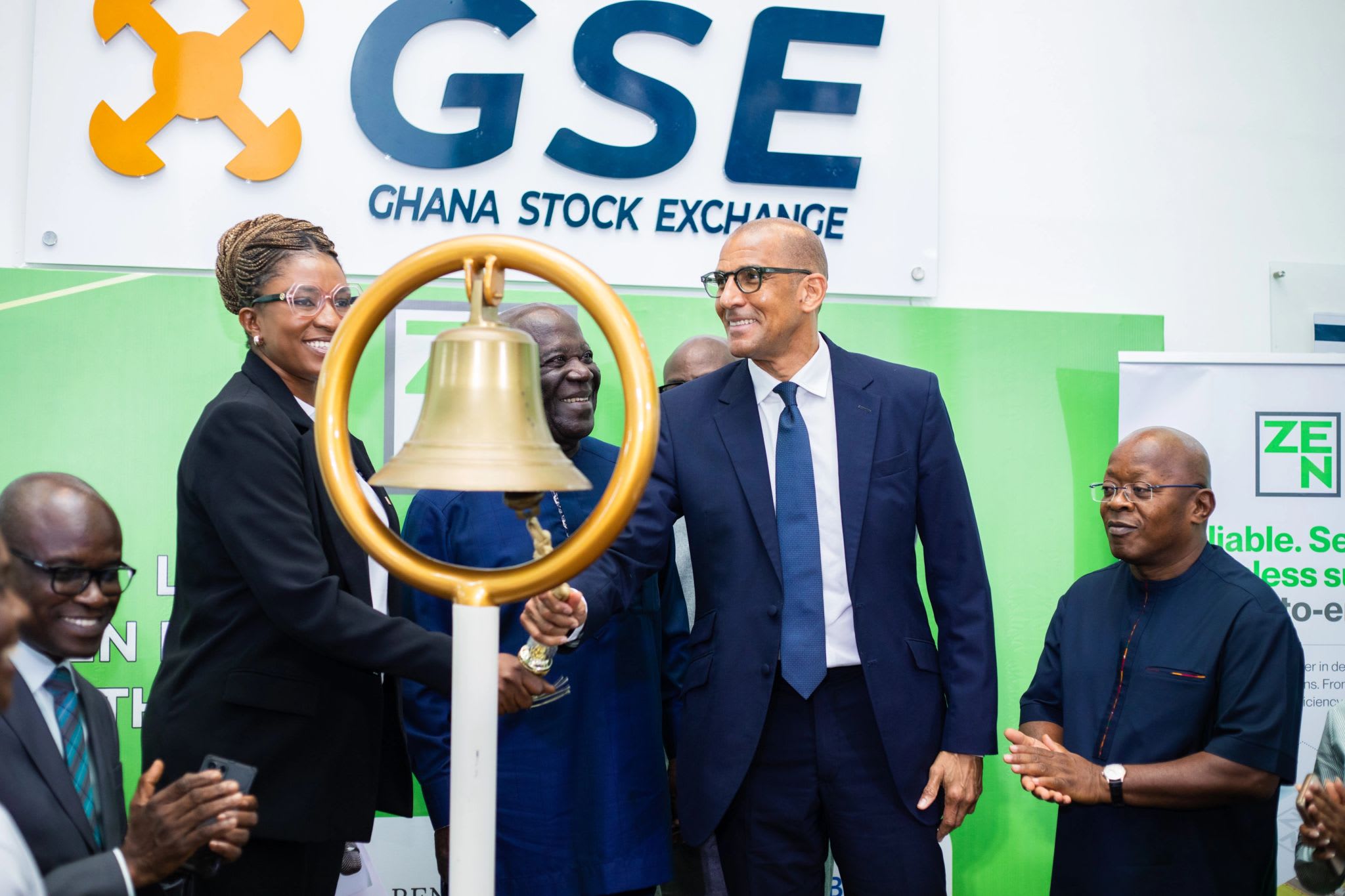
In a ceremony that brought together regulators, investors, industry partners, and stakeholders, ZEN Petroleum Holdings PLC has officially taken its place on the Ghana Stock Exchange, capping a journey defined by long-term thinking, institutional discipline, and a vision that now extends well beyond its founder.
The listing, which followed a private placement IPO that was 94 percent oversubscribed and raised close to GH¢1 billion, is not merely a corporate milestone.
It is a statement about what Ghanaian-owned energy businesses can become when governance, resilience, and capital market ambition converge.
A Decision That Was Never Straightforward
For all the fanfare that surrounded the listing ceremony, Founder and Chief Executive Officer William Tewiah was candid about the road that led to it. The decision to list was neither quick nor unanimous.
"There were a lot of internal discussions as to the pros and cons of us listing," he acknowledged. It is a rare admission from a chief executive at the height of a public triumph, and it makes the eventual outcome all the more meaningful.
What ultimately tipped the balance was not a financial calculation alone. It was a question of legacy.
"We have always set out to run a trans-generational business, be around for a long time, long after I have gone. "So, listing on GSE, opening up shares for others to participate, makes you a true Ghanaian company." - CEO of ZEN Petroleum
In a sector where ownership structures have frequently been opaque and governance frameworks inconsistently applied, those words carry real weight.
Market's Verdict: Close to a Billion and More Than They Needed
Whatever the internal deliberations, Ghana's investment community delivered a resounding answer. The IPO, executed through a private placement with institutional investors, was 94 percent oversubscribed, a performance that ranks among the most emphatic capital market validations in the country's downstream energy history.
"It was a private placement by institutions. It was pretty much spoken about before we opened up to the public as required," Tewiah explained. "We ended up raising more, close to a billion. More than we needed."
That last phrase, more than we needed, is worth pausing on. In an environment where capital raising in Ghana's energy sector is often a grinding exercise in investor persuasion, exceeding a near-billion-cedi target is a signal of institutional trust that very few companies ever earn.
The oversubscription did not happen by accident. It is the direct product of years of operational discipline and deliberate governance that Tewiah himself traced back to the company's founding philosophy.
"It reinforces the discipline we have had all along, which is discipline with compliance, corporate governance," he said. Investors, in other words, were not just buying shares in an oil marketing company — they were buying into a management culture.
Industry Recognition: A Milestone for the Whole Sector
The significance of ZEN Petroleum's listing was not lost on the broader industry. Speaking on behalf of the Ghana Chamber of Bulk Oil Distributors, CEO Patrick Ofori offered congratulations that went beyond courtesy.
"The remarkable 94% oversubscription is a clear reflection of your strong leadership and commitment to growth, while contributing to the development of the petroleum downstream and giving every Ghanaian the opportunity to own a part of your success."
That phrase, giving every Ghanaian the opportunity to own a part of your success, crystallises what a GSE listing means in the context of Ghana's energy sector.
It democratises ownership of a critical national infrastructure business, turning what was a privately held downstream operator into a publicly accountable institution with shareholders across the country.
Competitive Stakes Just Changed
ZEN Petroleum's listing also reshapes the competitive dynamics of Ghana's downstream market at a particularly charged moment.
The sector is already navigating an intense rivalry at the top, GOIL PLC recently reclaimed its position as the country's largest petroleum distributor after a two-month price war with Star Oil.
ZEN, previously identified as the No. 5 OMC in the market, now enters this competitive arena with near-billion-cedi institutional capital behind it, a publicly listed governance structure, and the credibility that comes with a 94 percent oversubscribed market debut.
The downstream sector's leaderboard has long felt settled. ZEN Petroleum's GSE listing is the clearest signal yet that it is anything but. A trans-generational business has just introduced itself to the market, and the market responded with conviction.
READ ALSO: Ato Forson Meets Queen Máxima to Advance Financial Inclusion Agenda