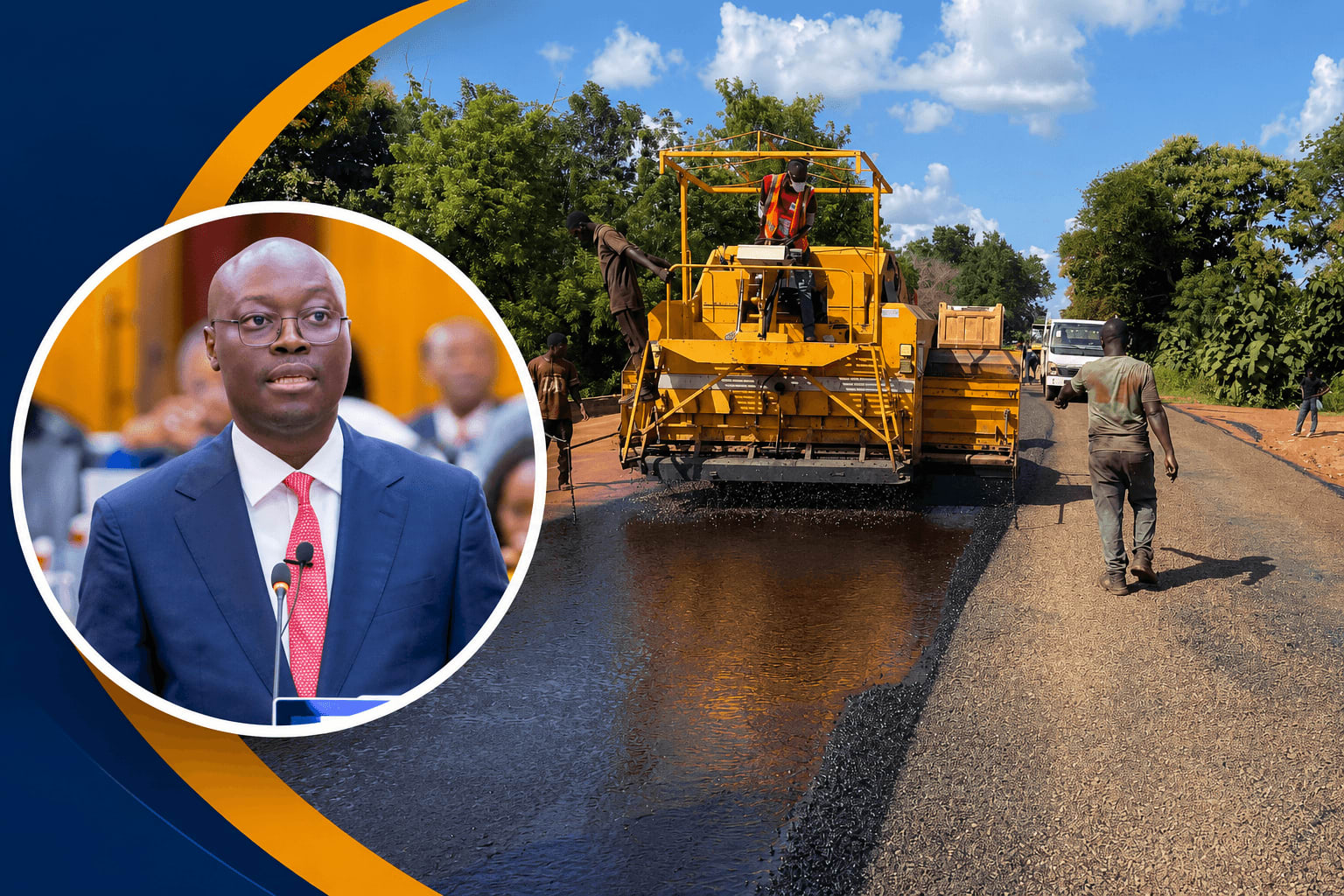
The Government of Ghana has unveiled an ambitious $300 million World Bank secondary education programme that promises to reshape the country's second-cycle education system through new school construction, major infrastructure upgrades and free textbooks for every senior high school student.
Presenting the 2026 Mid-Year Budget Review in Parliament on Thursday, Finance Minister Dr. Cassiel Ato Forson described the investment as one of the government's biggest commitments to education in recent years, with the ultimate goal of ending the double-track system within two calendar years.
The programme will finance 210 infrastructure projects across the country while strengthening science, mathematics, technical education and digital skills.
"Education remains one of the most powerful investments we can make in the future of our country.
"Government is therefore taking bold steps to transform secondary education through a 300 million United States dollar World Bank financing." - Dr. Forson
Massive School Infrastructure Expansion
The programme goes well beyond constructing new classrooms. According to the Finance Minister, government will build 10 new senior high schools, rehabilitate 150 existing schools, upgrade 30 Category C schools to Category B, and elevate 20 Category B schools to Category A.
The investment will also provide furniture for upgraded schools and ensure that every secondary school student receives free textbooks.
Officials believe expanding infrastructure is critical to easing overcrowding, improving teaching conditions and creating enough space to restore a single-track academic calendar.
Rather than concentrating investment in already established education hubs, the government says the new schools will target regions where access to secondary education remains limited.
Dr. Forson announced that one new school will be constructed in each of the Western, Western North, Greater Accra, Volta, Oti, Northern, Upper East, Upper West, Savannah and Central regions.
The regional distribution reflects an effort to narrow long-standing disparities in educational infrastructure, particularly between urban and rural communities.
Millions Expected to Benefit
The scale of the intervention is expected to touch nearly every part of Ghana's secondary education system.
Government estimates that about 2.3 million students, more than 100,000 teachers and approximately 2,000 school leaders will benefit once all 210 projects are completed.
One of the programme's most closely watched objectives is the elimination of the double-track system, which was introduced to accommodate rising enrolment but has faced sustained criticism from parents, teachers and education experts.
"The project will support government's effort to eliminate the double-track system within two calendar years," the Finance Minister said.
Focus on STEM and Future Skills
Beyond expanding infrastructure, the initiative aims to improve learning outcomes in mathematics and science while increasing opportunities for girls to pursue STEM and Technical and Vocational Education and Training (TVET).
Government also wants schools to place greater emphasis on digital, technical and green skills as Ghana prepares students for a changing labour market driven by technology and innovation.
While the announcement sets out an ambitious roadmap, attention will now shift to implementation. Education stakeholders are expected to monitor how quickly contractors are engaged, funds are released and projects begin across the country.
If delivered on schedule, the programme could mark one of the most significant investments in Ghana's secondary education sector in decades, with lasting implications for access, quality and the future of senior high school education.
READ ALSO: 2026 Mid-Year Budget Review: Government to Introduce New COCOBOD Bill