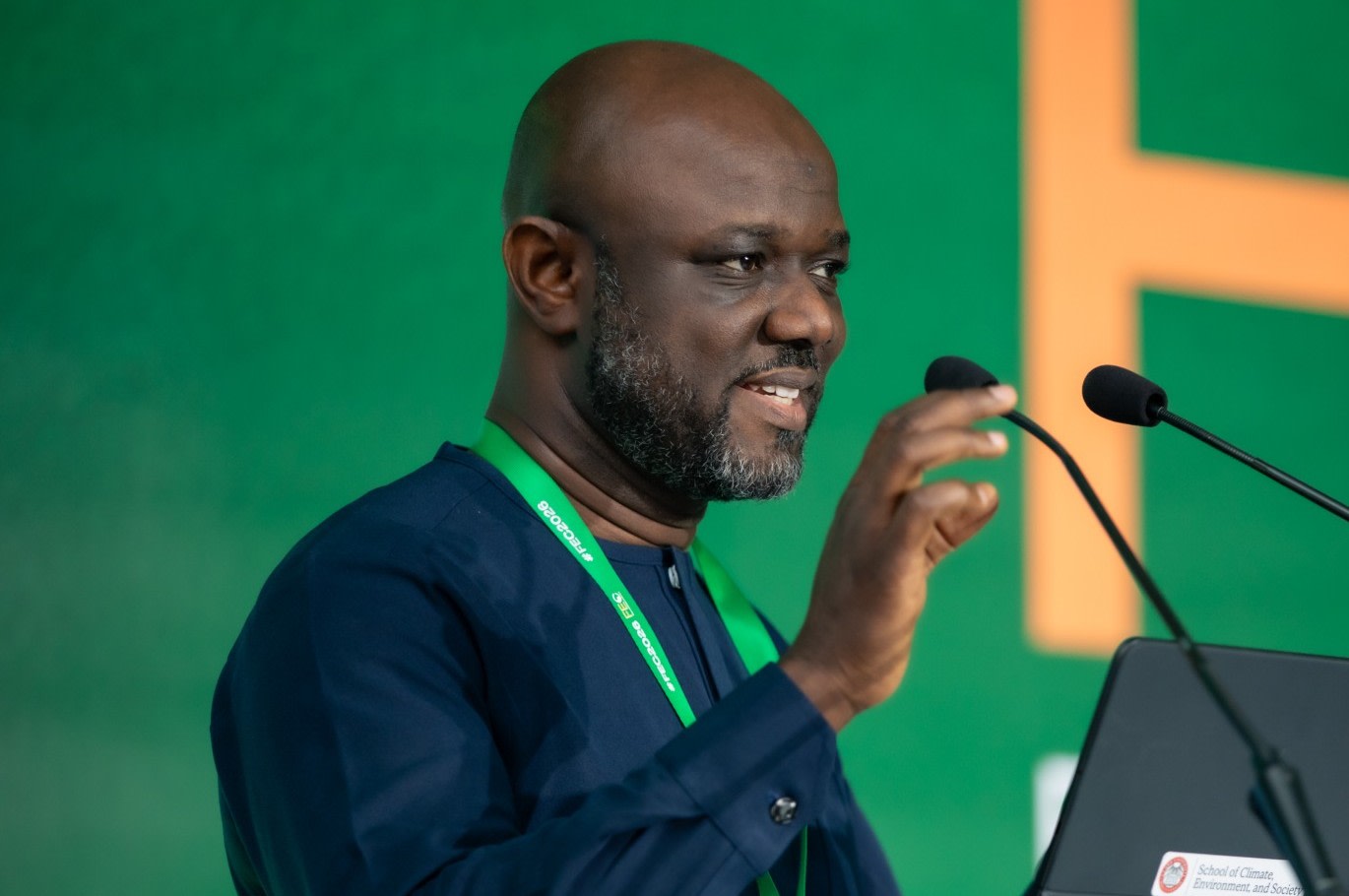
The Executive Director of the Africa Centre for Energy Policy (ACEP), Benjamin Boakye, has called for stronger bilateral partnerships to unlock climate finance for Africa, arguing that multilateral negotiations alone cannot deliver the investments needed for the continent’s energy transition.
He said despite the evolution of the original $100 billion annual climate finance commitment made in Copenhagen into a $300 billion annual goal by 2035 at COP29, Africa had yet to fully exploit bilateral relationships to mobilise investments.
“Climate finance must move beyond negotiation promises to investments that create economic value, protect livelihoods and deliver a just transition,” he stated.
Leveraging Trade Relations for Climate Investment
Mr Boakye disclosed that exploratory engagements involving Ghana, Brazil and Italy had commenced to examine how existing trade relationships, particularly in the petroleum sector, could support climate cooperation.
The engagements, involving OECD, CEFD and ECCO, seek to facilitate technology transfer, joint research and investments in energy transition projects.
He maintained that bilateral cooperation could complement multilateral negotiations while creating economic opportunities and supporting industrial transformation across Africa.
Africa Losing $7.5 Billion Annually to Gas Waste
Mr Boakye also raised concerns over the economic and environmental costs of methane emissions, estimating that Africa could recover approximately $7.5 billion annually from gas leaks and flaring.
He explained that such losses, if sustained over the 17 years since the Copenhagen climate conference, would represent approximately $127 billion in lost economic value.
“We are not only wasting valuable resources; we are also exposing our populations to harmful pollution and health risks,” he noted.
ACEP and its partners, with support from the governments of Norway and the United Kingdom, are engaging North African oil producing countries in Algiers to mobilise resources for methane mitigation.
Mr Boakye stressed that Africa must pursue bilateral and multilateral approaches simultaneously to turn climate commitments into tangible investments.