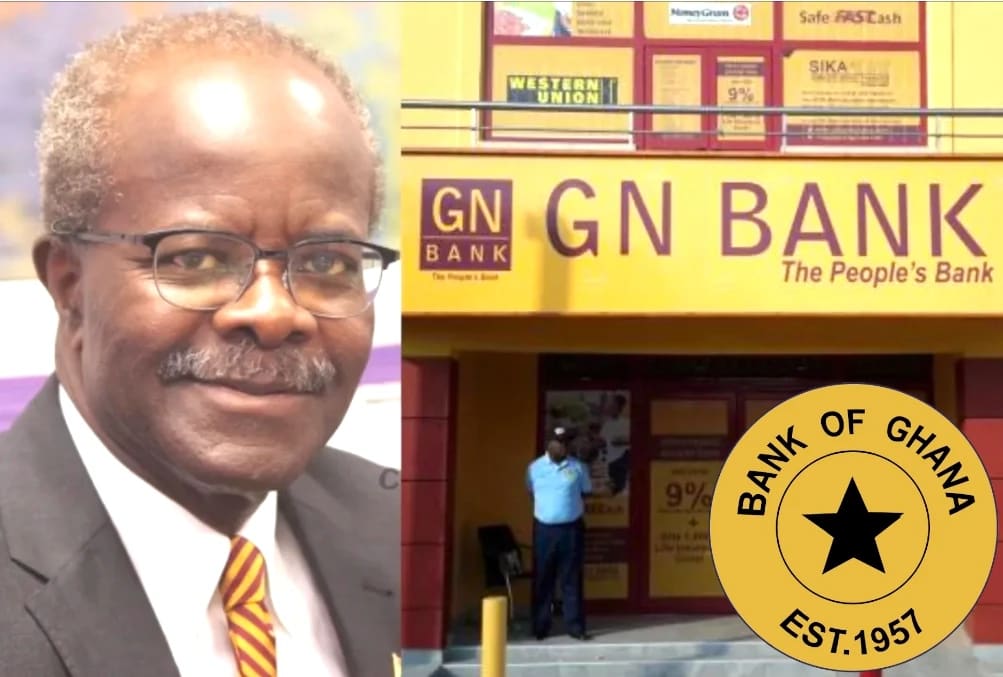
The Court of Appeal has ordered the Bank of Ghana to restore the operating licence of GN Savings and Loans, marking a major twist in the long-running legal dispute surrounding Ghana’s banking sector clean-up exercise.
The three-member panel also directed that all assets of the company be returned to its original owners and instructed the Receiver to hand over management of the institution to its former management team.
The latest ruling overturns an earlier High Court judgment that upheld the Bank of Ghana’s decision to revoke the company’s licence during the financial sector reforms introduced in 2018.
Background To The Banking Sector Dispute
The dispute dates back to January 4, 2019, when GN Savings and Loans was reclassified as a savings and loans company and subsequently renamed GN Savings and Loans Company Limited.
Seven months later, on August 16, 2019, the central bank, under the leadership of former Governor Ernest Addison, revoked the institution’s licence and appointed Eric Nana Nipah as Receiver.
The company’s owners, led by businessman Papa Kwesi Nduom, challenged the revocation at the High Court in Accra on August 30, 2019, arguing that the regulator’s actions were unlawful and unreasonable.
Earlier High Court Ruling Favoured Bank of Ghana
In January 2024, the High Court ruled in favour of the Bank of Ghana. Presiding judge Justice Gifty Addo Adjei held that governance deficiencies had left the company unable to meet its debt obligations.
The court further concluded that GN Savings and Loans failed to prove it was solvent at the time its licence was revoked.
Justice Addo Adjei also dismissed claims that the Bank of Ghana acted illegally or unfairly, maintaining that the intervention was lawful and consistent with the 1992 Constitution.
The ruling additionally rejected allegations of discrimination, noting that other financial institutions affected by the banking sector reforms were subjected to similar regulatory measures.
Appeal Changes Direction Of Case
Despite the earlier setback, GN Savings and Loans proceeded to challenge the judgment at the Court of Appeal, insisting that the revocation breached existing laws and regulatory procedures.
The new judgment now significantly alters the legal landscape surrounding one of Ghana’s most controversial financial sector interventions.
The decision is expected to reignite debate over the banking sector clean-up programme and could have broader implications for other institutions affected during the reforms.
READ ALSO: Parliament Resumes Sitting Today as Major Bills Set to Dominate Second Session