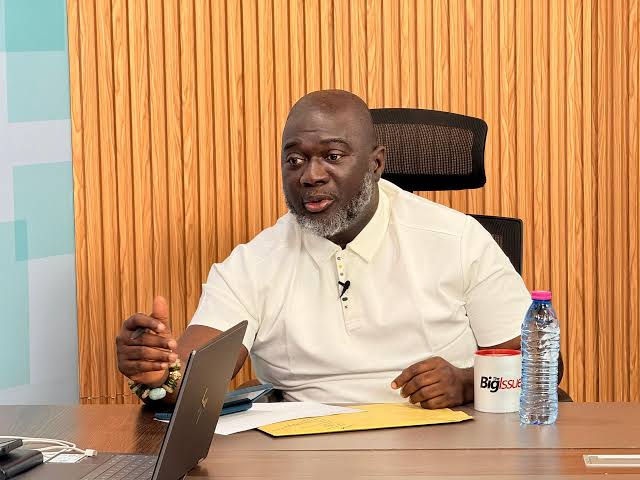
Mining governance expert Dr Steve Manteaw has called for sweeping reforms to Ghana’s mining revenue and ownership structure, arguing that the country must move beyond slogans and adopt practical strategies to increase local value capture from the extractive sector.
Dr Manteaw said Ghana’s current approach to mining ownership and mineral royalties has failed to generate the level of economic transformation expected in many mining communities.
According to him, one of the major weaknesses in Ghana’s extractive economy is that citizens often experience the environmental and social costs of mining more directly than the financial benefits.
Call for Equity-Based Mining Reforms
The former Public Interest and Accountability Committee Chair criticised Ghana’s existing 10 per cent free-carried interest in mining companies, describing the arrangement as insufficient because it depends heavily on dividends.
“There are times when companies operate for 10 years or so without declaring dividends,” he explained.
Dr Manteaw proposed that Ghana should convert its free-carried interest into a stronger form of equity participation tied directly to production output.
“My principle is that let’s convert our 10% free-carried interest into equity,” he said, adding that such a system would provide the state with a more predictable share of mining production.
He also called on profitable mining companies operating in Ghana to list on the Ghana Stock Exchange to allow ordinary citizens to participate in mining ownership.
According to him, broader public ownership would deepen local wealth creation and help strengthen national participation in the sector.
Joint Ventures Seen as Sustainable Path
Dr Manteaw warned that many Ghanaian mining firms currently lack the financial strength required to operate large-scale mines competitively.
For that reason, he said partnerships between international mining firms and local companies could offer a more practical path toward localisation.
“Joint ventures, mentorship and gradual capacity building may offer a more sustainable path than abrupt localisation,” he stated.
The mining governance expert stressed that localisation policies should not be reduced to political slogans or simplistic calls for replacing foreign operators with local firms.
Instead, he said Ghana must focus on building domestic manufacturing capacity, strengthening mining-related industries and improving governance over mineral revenues.
He also renewed concerns over how district assemblies and traditional authorities utilise mineral royalty allocations, insisting that accountability for underdevelopment must extend beyond mining companies.
“If mineral royalty allocations are not being applied to transformative local development, then the accountability question cannot stop at the door of mining companies,” he said.
Dr Manteaw maintained that Ghana’s long-term mining strategy should balance investor confidence with local participation, transparent governance and stronger economic linkages that allow citizens to benefit more directly from the country’s mineral wealth.
READ ALSO: Chelsea Appoints Xabi Alonso as New Manager on a Four-year Contract