President John Dramani Mahama has announced that Ghana’s flagship 24-Hour Economy policy has entered its implementation phase after he assented to legislation establishing the authority responsible for overseeing the programme.
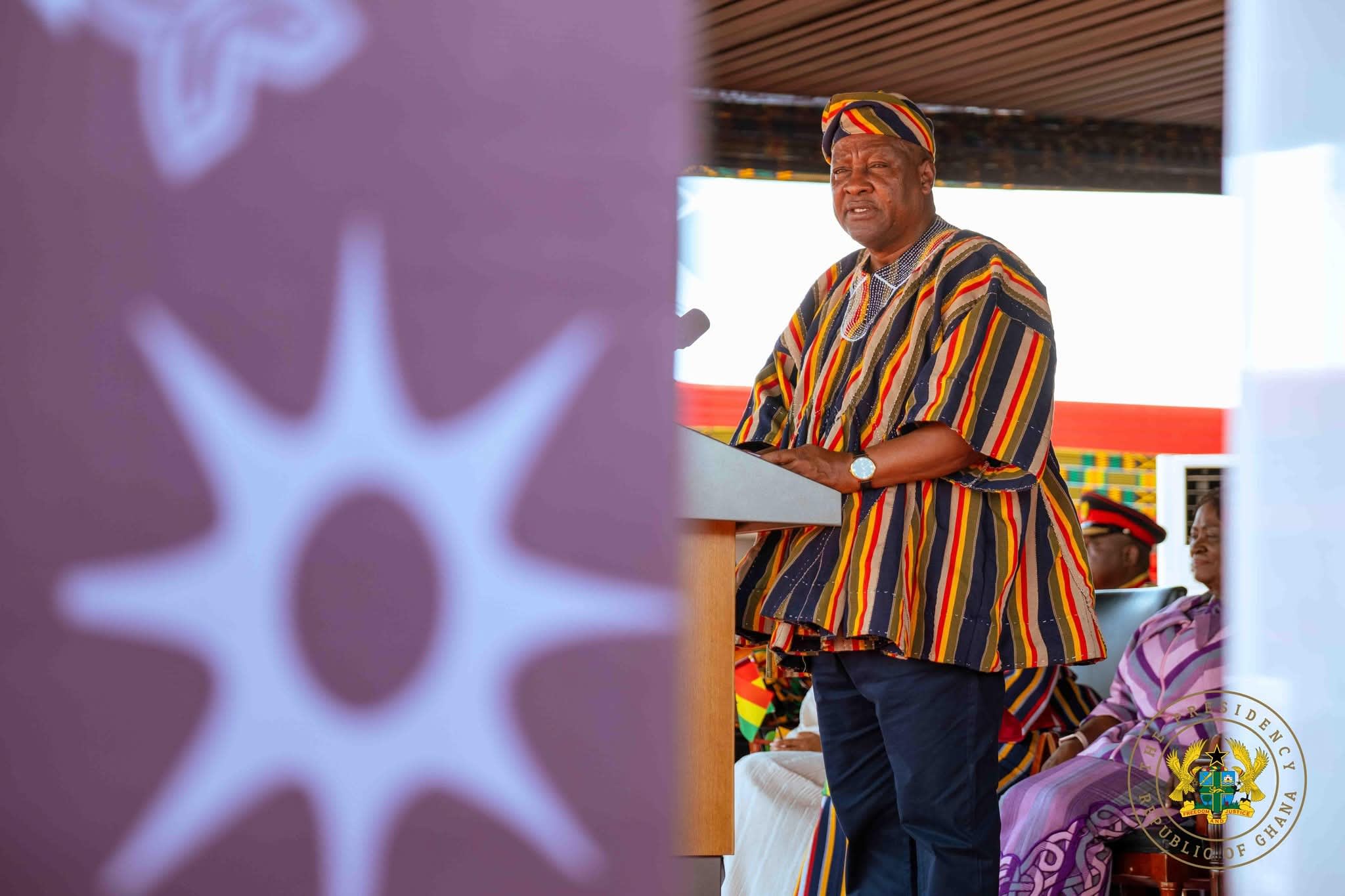
The president made the announcement during his national address marking Ghana’s 69th Independence Day celebration at the Jubilee House in Accra, describing the initiative as a transformative economic reform designed to boost productivity, expand exports and create thousands of jobs across the country.
“I am pleased to announce that I have assented to the 24-Hour Economy Authority Bill, and it has now become law.
“This historic reform will boost Ghana’s productivity. Businesses will be incentivised to run across multiple shifts. Factories will operate around the clock, and services will become more accessible.” - President John Dramani Mahama
Implementation of Flagship Economic Policy
According to the president, the law provides the legal and regulatory framework for the full rollout of the 24-Hour Economy and Accelerated Export Development Programme, which was launched in 2025 as one of the government’s central economic strategies.
The legislation, passed by the Parliament of Ghana on February 6, 2026, establishes a dedicated authority to coordinate policy implementation, monitor performance and facilitate partnerships with the private sector.
To support the initial phase of the programme, government has allocated GH¢110 million in the 2026 national budget. The funds will help incentivise businesses to extend operating hours while strengthening partnerships with institutions such as Development Bank Ghana and the Ghana Infrastructure Investment Fund.
These collaborations are expected to mobilise private capital for investments in industrial parks, logistics systems, infrastructure and digital networks needed to sustain continuous economic activity.
President Mahama said the policy is also aimed at addressing structural challenges in the economy, including underutilised production capacity and limited industrial output beyond standard working hours.
He cited recent government-backed industrial projects—including factory expansions, new manufacturing facilities and agro-processing investments—as early steps toward expanding production under the new framework.
The president emphasised that the programme could significantly increase productivity in sectors such as manufacturing, agriculture and logistics while creating employment opportunities, particularly for young people.
“This is about building prosperity and restoring hope through concrete action,” he stated, adding that the success of the policy will depend on strong private sector participation and coordinated support from public institutions.
READ ALSO: Mahama Assures Businesses of Stable Policy Environment