Ghana's Energy Minister has told an audience of African policymakers and international financiers that the country's power sector reforms are no longer a future promise, they are producing measurable results that are already reshaping the investment case for one of West Africa's most strategically important energy markets.
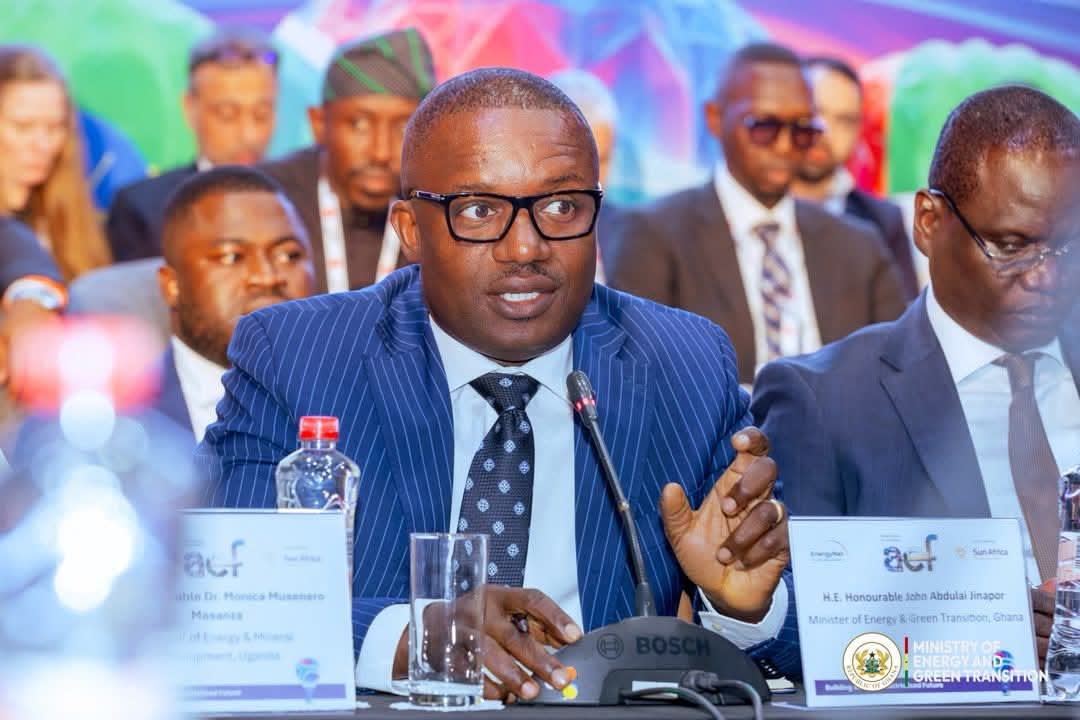
Speaking at a high-level Town Hall panel at the Africa Energy Forum, Minister for Energy and Green Transition John Abdulai Jinapor used one of the continent's most prominent gatherings of energy ministers, regional policymakers, and international financiers to present Ghana's reform programme as a credible and progressing effort, not simply a policy agenda on paper.
The panel focused on how regional production hubs can be developed to accelerate continental industrialisation, and Ghana's minister positioned the country's energy sector interventions squarely within that ambition. The forum setting mattered.
Addressing international financiers with data on improving utility collections is a direct attempt to rebuild credibility in a sector where investor confidence has historically been eroded by delayed payments, mounting arrears, and unpredictable cash flows.
"I shared the reforms we are implementing in Ghana, which have made our country a competitive hub for industrial production and regional trade," Jinapor said.
"These reforms are already yielding positive results. We have recorded significant improvements in payments to utility service providers, helping to strengthen the financial sustainability of the energy sector and enhance investor confidence." - Energy Minister
Why Utility Payments Matter So Much
The significance of improved utility payments extends well beyond routine financial management.
For years, payment delays within Ghana's energy value chain have functioned as a systemic risk that spread financial pressure from distribution utilities through to independent power producers, transmission companies, fuel suppliers, and other sector participants.
When utilities struggle to settle obligations on time, the entire value chain absorbs the stress, and investors attach a higher risk premium to the market as a result.
Stronger collections and more reliable financial settlements therefore represent a structural improvement in how the sector functions, not merely an accounting improvement.
If investors come to believe that utility payment obligations will be met more consistently, the perceived risk of financing energy projects in Ghana could decline, potentially unlocking concessionary finance, private equity, and long-term capital for new generation and transmission infrastructure.
Targeted Investment in Generation and Transmission
The reform programme also includes targeted capital expenditure directed at expanding generation capacity, strengthening transmission infrastructure, and improving the integration of clean and renewable energy into the national grid.
These investments are intended to stabilise power delivery to critical manufacturing enclaves across the country, a prerequisite for Ghana's broader ambition to anchor industrial parks, processing zones, and export-oriented production with reliable and competitively priced electricity.
The minister's message at the Africa Energy Forum was clear: Ghana's energy sector is being reset, payments are improving, and infrastructure investment is being aligned with the country's industrial and regional trade ambitions.
Whether that message translates into durable institutional change will be the defining test of the reform programme's ultimate success.
READ ALSO: Vice President Jane Opoku-Agyemang Rallies Black Stars Ahead of FIFA World Cup Opener