Several Ghana energy sector projects are moving towards completion as the government works to strengthen electricity supply, expand clean energy access and reduce financial pressure across the power industry.
Finance Minister Dr Cassiel Ato Forson provided the update while presenting the 2026 Mid Year Fiscal Policy Review to Parliament, saying the government had continued efforts to improve system reliability.
“Government continued to stabilise electricity supply, strengthen system reliability and reduce the financial risks within the power sector,” he told lawmakers.
Thermal Projects Boost Generation Capacity
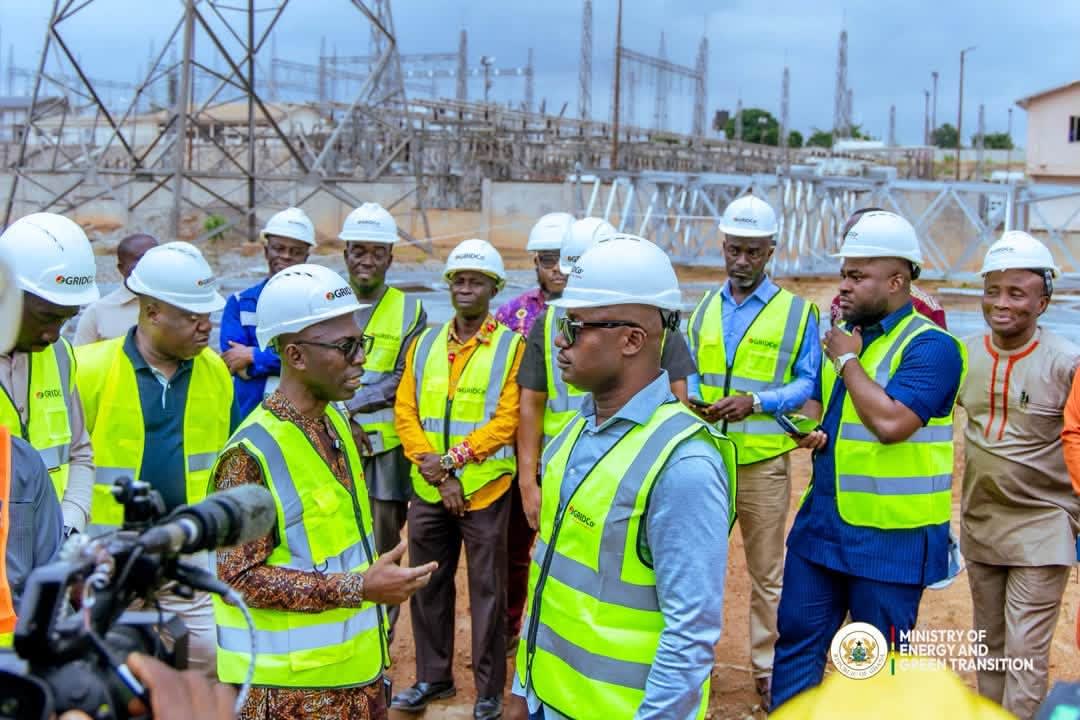
The first phase of the AKSA Anwomaso Thermal Project, with a capacity of 171 megawatts, has been commissioned and connected to the national grid.
Its steam component is expected to raise the plant’s total generation capacity to 200 megawatts before the end of 2026.
Construction of the 100 megawatt Cenit Thermal Plant is about 90 per cent complete. The Volta River Authority’s Anwomaso Thermal Plant is also expected to make its full 250 megawatt capacity available by year end.
Reconstruction work at the Akosombo switchyard, damaged by a fire in April 2026, is progressing and should be completed within the same period.
The government is procuring about 2,000 distribution transformers to replace damaged units, ease pressure on overloaded networks and improve electricity delivery nationwide.
Local Refining and LPG Access Expand
Dr Forson said the return of Tema Oil Refinery after turnaround maintenance had increased Ghana’s local refining capacity.
Domestic crude supply arrangements have also been facilitated for TOR and the Sentuo Oil Refinery. Government expects the move to strengthen energy security and reduce Ghana’s dependence on imported petroleum products.
Cabinet has approved a new National Petroleum Authority Bill, which has been submitted to Parliament to modernise regulation and governance within the downstream petroleum sector.
Clean cooking is another part of the programme. Government is scaling up the distribution of 457,000 LPG cookstoves to improve household access to cleaner cooking fuels.
Renewable Energy Projects Reach Underserved Communities
Thirty five mini grids are being implemented across 47 island and lakeside communities where access to conventional electricity infrastructure remains difficult.
Government has procured about 3,600 smart net meters under the Scaling Up Renewable Energy Programme, while the installation of 750 solar home systems for public institutions and households is underway.
Studies on a Battery Energy Storage System have also been completed to support grid stability and the integration of more renewable power.
Under the All in One Solar Street Lighting Project, 6,834 streetlights have been installed, with foundations prepared for more than 10,000 additional units.
Solar powered irrigation projects at Buipe and under the Water Energy Food Nexus Programme are also advancing.
The government has drafted a Renewable Energy Authority Bill and a Green Transition implementation framework. The documents are expected to provide the institutional backbone for a transition agenda that is beginning to move from policy language into physical projects.
READ ALSO: Joe Jackson Urges Government to Maintain Fiscal Discipline Despite Political Pressure