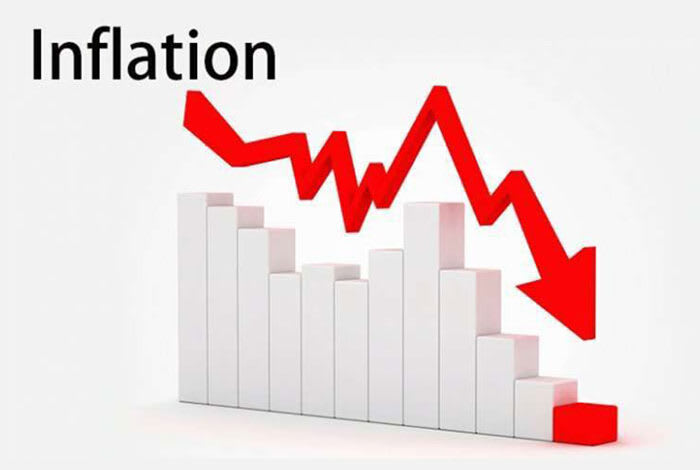
Ghana's inflation story continued to defy expectations in March 2026, with the country recording its fifteenth consecutive month of declining prices, a streak that analysts say reflects a more durable return to price stability than many had anticipated.
Headline consumer price inflation edged down by 10 basis points to 3.2% year-on-year in March 2026, according to a macroeconomic update published on by IC Insights, the research arm of IC Group Ghana.
The monthly price change delivered an even bigger surprise, falling 70 basis points to just 0.1% month-on-month, signalling that average price levels were essentially flat between February and March.
The reading came in below IC Insights' own forecast of a modest uptick to 3.9%, which had anticipated cost pressures from rising energy prices and cross-border disruptions to vegetable imports ahead of Ghana's planting season.
According to Courage Kingsley Martey, Economist and Head of Insights at IC, the outcome revealed a miscalibration in how quickly those pressures would feed through to consumer prices.
"The outturn confirms that we overweighted the immediate pass-through of emerging upside risk while underweighting the lingering price stabilisation measures," the report noted.
Food and Non-Food Components Both Decline
Food inflation eased marginally by 10 basis points to 2.3% year-on-year, supported by disinflation across 11 sub-groups.
The heavily-weighted vegetables and tubers category did show renewed price pressure, inflation for that sub-group surged by 190 basis points, partly reflecting disrupted tomato imports from neighbouring Burkina Faso.
However, the sub-group remained in deflation territory at -1.3% year-on-year for the second consecutive month, absorbing what could have been a sharper shock to food prices.
Non-food inflation mirrored the food trend, declining by 10 basis points to 3.9% year-on-year.
Transport costs, a key channel through which energy price increases typically pass through to broader consumer prices, remained in annual deflation for the tenth consecutive month, providing what the report described as a strong buffer for future cost shocks.
Services inflation, however, surged by 350 basis points to 7.2% year-on-year. The IC report played down near-term concern over this reading, noting that goods inflation, which carries a heavier weight in the consumer price index, fell by 150 basis points to 1.7% year-on-year.
Shock-Ready, But Watching Energy Costs
With inflation at 3.2%, Ghana now sits 280 basis points below the Bank of Ghana's minimum inflation target, 480 basis points below the midpoint, and a full 680 basis points below the upper ceiling of the central bank's target band.
"We believe the current inflation print reinforces Ghana's return to price stability and the policy grip on inflation expectations may prove more resilient than generally anticipated amidst the re-emerging cost pressures." - IC Insights
The IC report characterised this as a "shock-ready" framework, one where the combination of substantial policy headroom and a real policy rate of 10.8% provides meaningful insulation against the upside risks building on the horizon, particularly from the ongoing conflict in the Middle East and its impact on global energy prices.
READ ALSO: Dodowa-Afienya-Dawhenya Road Project hits 35% completion Ahead of Schedule