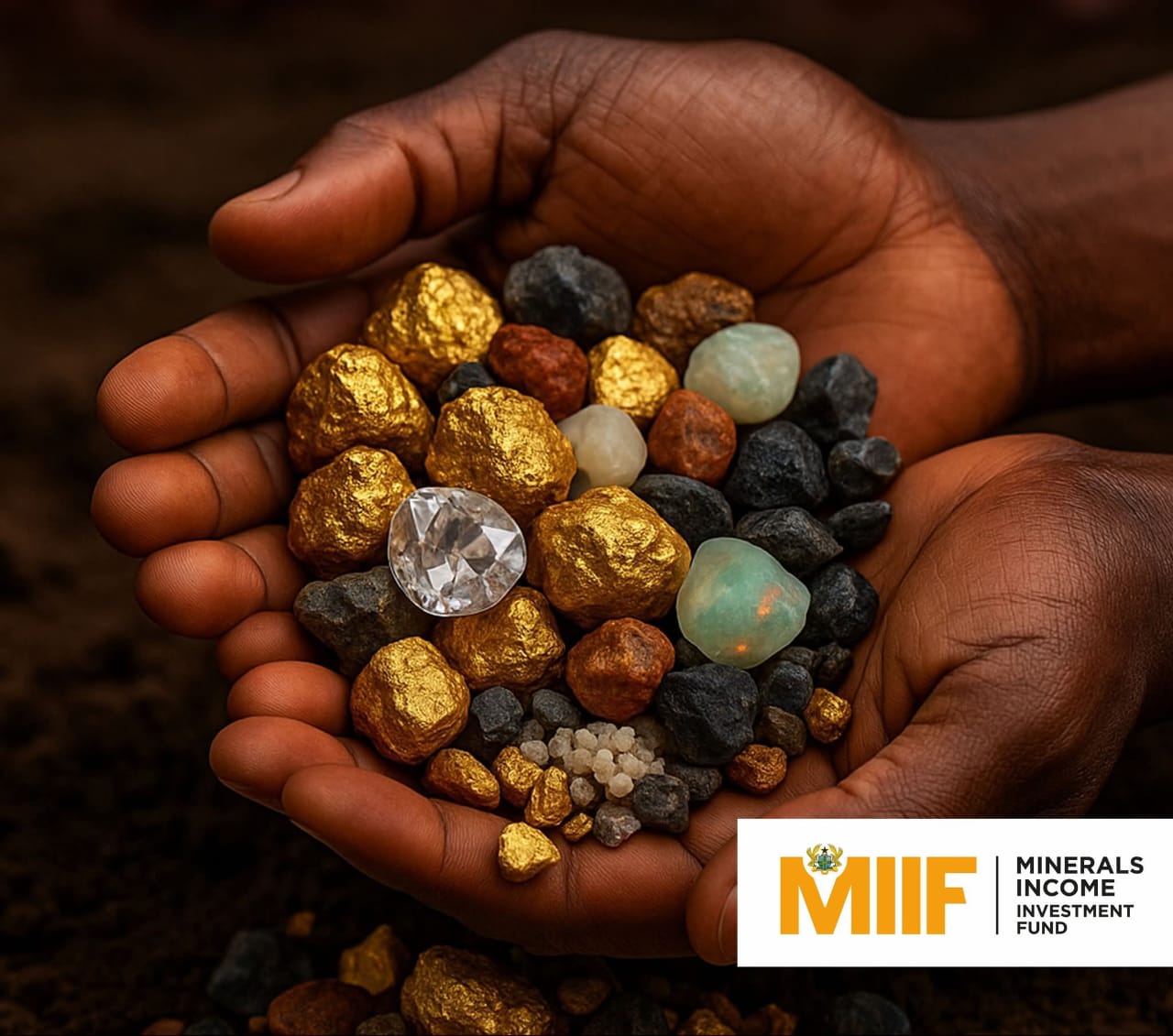
Ghana’s mineral royalty receipts recorded a sharp increase in the first quarter of 2026, crossing the GH₵2 billion mark for the first time in a single quarter as strong gold prices and improved compliance boosted revenues across key mining segments.
New data released by the Minerals Income Investment Fund showed that total mineral royalty inflows rose from GH₵1.43 billion in the first quarter of 2025 to GH₵2.01 billion during the same period in 2026, representing a 40 per cent increase.
The performance exceeded the Fund’s projected first-quarter target of GH₵1.57 billion by 28 per cent, reinforcing optimism about Ghana’s mining sector outlook for the rest of the year.
The latest figures also follow a historic performance in 2025, when the Fund surpassed GH₵5 billion in royalty receipts for the first time since its establishment.
Gold Sector Drives Revenue Growth
The strong first-quarter performance was driven primarily by the large-scale gold mining sector, which remained the dominant contributor to mineral royalty collections.
According to the data, royalties from large-scale gold mining increased from GH₵1.35 billion in the first quarter of 2025 to GH₵1.97 billion in the corresponding period of 2026.
The increase represents a 46 per cent year-on-year growth and exceeded the sector’s forecast target of GH₵1.49 billion by 33 per cent.
Officials attributed the surge largely to sustained high international gold prices and increased production levels from major mining companies operating in Ghana.
The latest figures reinforce gold’s continued dominance within Ghana’s extractive industry and suggest that investor confidence in the sector remains strong despite ongoing global economic uncertainties.
Mid-tier gold mining operations also recorded significant gains during the quarter under review.Royalty collections from the segment rose from GH₵15.30 million in the first quarter of 2025 to GH₵25.78 million in 2026, reflecting a 69 per cent increase.
The performance also exceeded projections by 53 per cent, with improved royalty monitoring and compliance efforts cited as key drivers of growth.
Mixed Performance Across Other Mineral Segments
Beyond gold, the quarry subsector posted moderate growth, with royalty collections increasing from GH₵2.95 million to GH₵3.26 million within the comparative period.
The growth was similarly linked to enhanced monitoring and compliance systems implemented by the Fund and regulatory agencies.However, not all segments recorded positive performance.
Limestone royalties declined slightly to GH₵1.77 million due to reduced production activity within the sector.The manganese sector also experienced a significant drop in expected royalty inflows.
While the subsector generated GH₵60.97 million during the first quarter of 2025, projections for the same period in 2026 indicate receipts of approximately GH₵31 million.
Officials attributed the decline to operational challenges, particularly high stripping costs that affected production volumes, as well as the appreciation of the Ghana cedi against the US dollar.
Meanwhile, sand mining revenues remained largely stable, increasing marginally from GH₵361,184 to GH₵362,536, while salt royalties stood at GH₵330,464.
MIIF Optimistic About 2026 Outlook
Commenting on the results, Chief Executive Officer of the Minerals Income Investment Fund, Justina Nelson, expressed confidence that the strong first-quarter performance would support another robust year for Ghana’s mining industry.
She noted that the revival of a multi-agency committee focused on royalty monitoring and revenue collection would further strengthen compliance across the sector.
According to Mrs Nelson, discussions during the committee’s maiden meeting centred on improving coordination between institutions responsible for monitoring production declarations, royalty payments and broader mining sector compliance.
“The renewed collaboration among the agencies is expected to result in a major turnaround in royalty monitoring and collection across the country’s mining industry,” she explained.
The strong royalty growth also aligns with MIIF’s broader mandate of maximising value from Ghana’s mineral resources while supporting long-term national development and economic sustainability.
With global gold prices remaining favourable and production levels holding firm, analysts say Ghana’s mining sector could continue to serve as a critical anchor for government revenue mobilisation and foreign exchange generation throughout 2026.
READ ALSO: Mahama Pushes for Global Health Reform Through Accra Reset Initiative