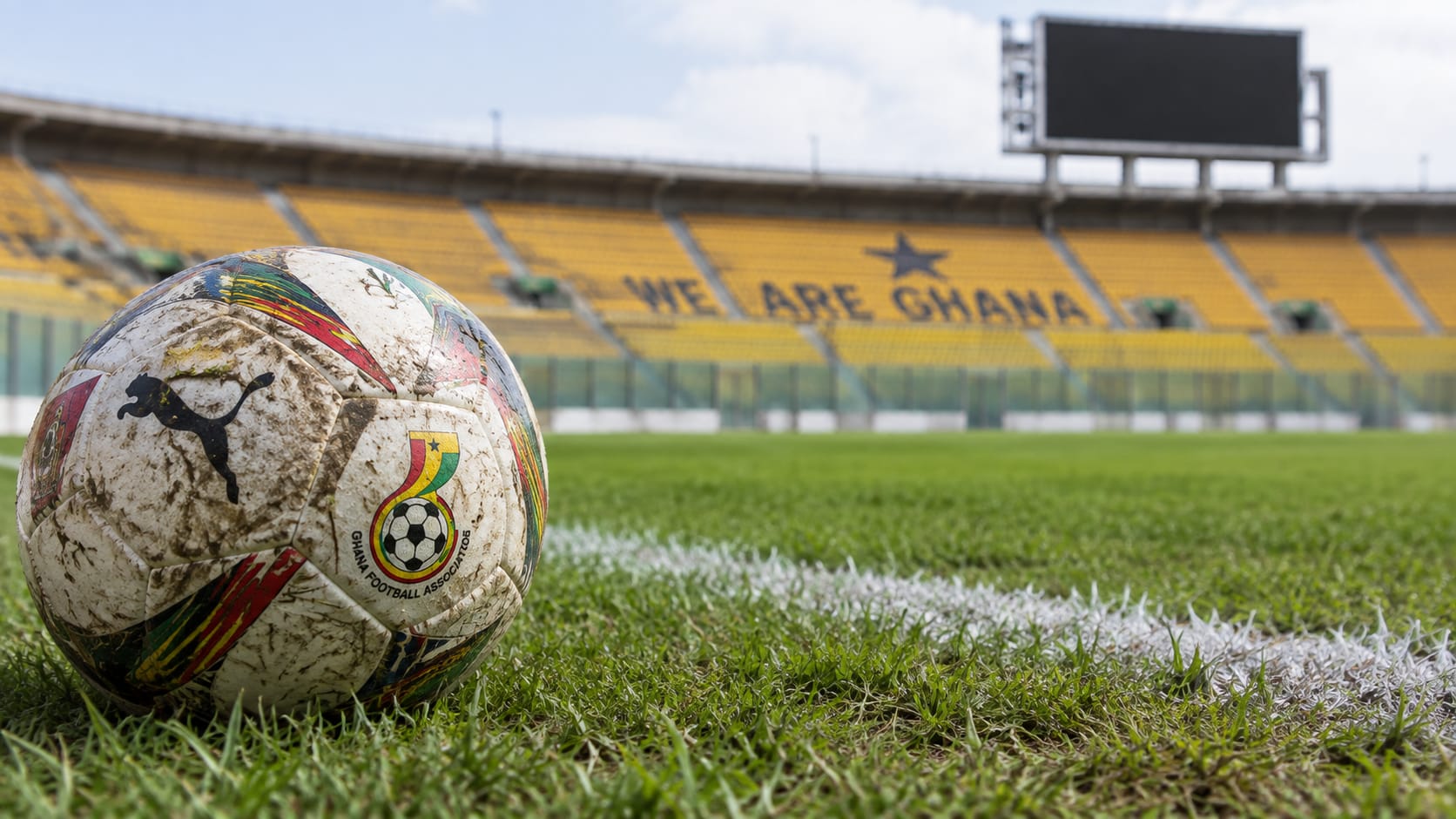
For years, the narrative surrounding the decline of domestic football in Ghana has followed a predictable script: blame the leadership. Whenever stadiums sit empty, pitches deteriorate, or the country's brightest talents pack their bags for lower-tier leagues in North Africa or the Middle East, fingers point directly at the Ghana Football Association (GFA) headquarters. The common consensus dictates that a change in administrative leadership or a larger injection of cash from the top will magically restore domestic competitions to their former glory.
But this singular focus on administrative salvation ignores a harsh reality. The financial and structural crisis facing Ghanaian football is not a malady that a GFA president can fix with a magic wand. If domestic football is to become a prestigious, globally attractive product, the clubs themselves must stop waiting for an institutional savior and take responsibility for their own stagnation.
The Dependency Trap of Financial Handouts
The GFA’s rollout of a GHS 1 million upfront baseline payment to clubs—funded by a television broadcasting partnership—has been widely praised across the football fraternity as a massive relief. Club executives have lauded it as an unprecedented financial cushion. In reality, this cash handout risks becoming a dangerous distraction. It acts as a temporary bandage on a deeper wound, rather than a permanent structural fix.
When a governing body consistently bails out its member clubs, it inadvertently creates a "dependency trap." Relying on the football association to cover roughly a third of an annual operating budget removes the institutional pressure and incentive for clubs to build sustainable, independent revenue models. A cash handout does not teach an executive board how to market a brand, secure independent corporate sponsorships, or aggressively engage a local fan base. It simply keeps struggling entities on life support until the next season. With total league prize pools failing to match even a single month’s salary for elite players elsewhere on the continent, relying on top-down prize money will never sustain a truly professional ecosystem.
Blueprints of Self-Reliance
However, the tide is slowly shifting, proving that when clubs stop complaining and start executing, structural progress follows. Forward-thinking blueprints are emerging from clubs determined to build their own commercial foundations rather than relying entirely on central administration.
Defending top-flight champions Medeama SC recently illustrated this proactive approach by securing an independent corporate partnership with Phenom Industries to back their campaigns. This move proved that corporate brands are entirely willing to invest in Ghanaian football, provided a club presents a credible, professionally run corporate identity.
This shift in mindset is not exclusive to top-flight giants either. Even in the lower tiers of the football pyramid, ambitious frameworks are actively challenging the old status quo. Look at Nukunu SC, a club that rapidly climbed from Division Three to earn promotion to the Access Bank Division One League in just three years. Under the leadership of club president Hon. Eric Edem Agbana, the team refused to wait for a federation handout to fix its operational problems. Instead, the club broke ground on its own dedicated Nukunu FC Sports Complex in Tadzewu to secure a permanent, revenue-generating home venue while actively installing a distinct board of directors, corporate partners, and professional management teams. This trajectory serves as a stark reminder that a club's growth is dictated by its own structural ambition, not by federation hand-outs.
Football as an Entertainment Business
Ultimately, the responsibility for turning casual viewers of European soccer back into paying local matchday fans lies with the clubs, not the GFA. A federation president cannot force spectators into the stands of the Accra Sports Stadium or the Baba Yara Stadium. Clubs must take complete ownership of the matchday experience. This requires treating football primarily as an entertainment and media business: modernizing digital media content, engaging local communities via targeted marketing, creating accessible merchandise lines, and prioritizing stadium safety and comfort.
Traditional powerhouses like Asante Kotoko and Accra Hearts of Oak must look at these rising blueprints and lead by example. For too long, Ghana's historic clubs have survived on past prestige rather than modern business infrastructure. True professionalism requires strict adherence to club licensing regulations, transparent financial audits, and heavy investment in youth academies that produce highly marketable talent. Relying on wealthy individual benefactors to absorb annual operational losses remains an inherently unstable model.
With the GFA's statutes allowing for a potential third presidential term, the political reality is clear: the current administrative structure at the top is set for continuity. Waiting for a political overhaul to save domestic football is a losing strategy. The poor form of local league football is a direct reflection of clubs operating as day-to-day survivalists rather than forward-thinking businesses. Until more clubs follow the proactive examples being set on the ground and take full responsibility for their financial independence, commercial innovation, and fan engagement, no amount of institutional bandages will heal the game.