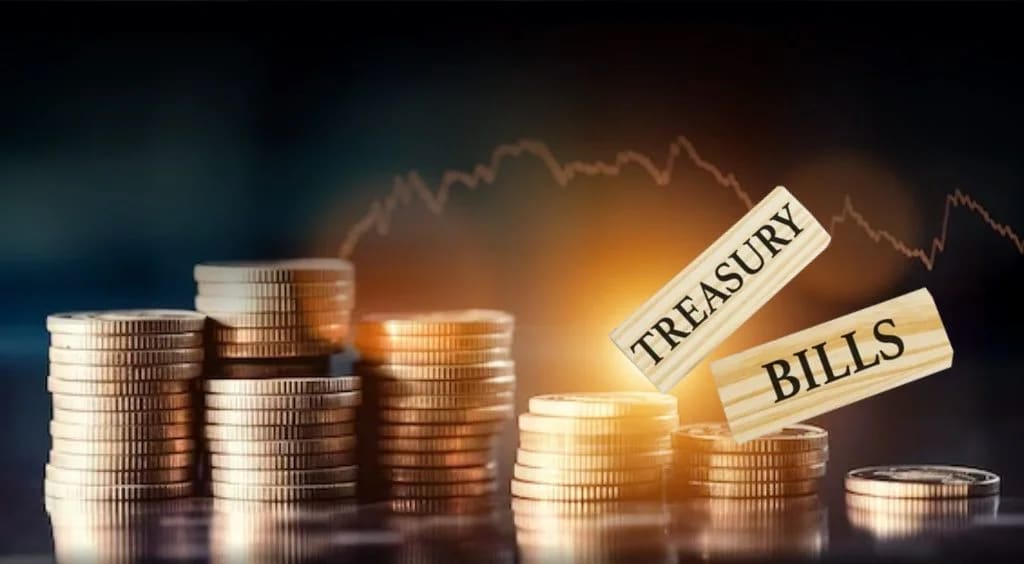
The latest Ghana Treasury bills auction delivered a different picture from the bumper sale seen just a week earlier, with the government accepting GH¢3.16 billion in bids, falling short of its GH¢3.37 billion financing target despite receiving offers worth more than GH¢4 billion.
Results of Tender 2014, conducted on July 2 for settlement on July 6, showed total investor bids reached GH¢4.16 billion across the 91 day, 182 day and 364 day Treasury bills.
The Treasury, however, opted to reject a sizeable portion of the offers, leaving accepted bids at 93.8 percent of its target and creating a funding gap of about GH¢207.73 million.
The outcome marks a sharp contrast with the previous auction, where demand surged and the government raised GH¢6.01 billion from bids totalling GH¢7.37 billion.
The 91 day bill continued to dominate investor activity and government borrowing. It attracted GH¢1.69 billion in bids, with GH¢1.63 billion accepted, accounting for more than half of the total amount raised.
The instrument cleared at a weighted average discount rate of 5.7880 percent, translating into an interest rate of 5.8730 percent.
Successful bids were accepted within a discount rate range of 5.2307 percent to 5.9113 percent. The numbers tell a familiar story. Investors continue to favour shorter dated securities, and so does the Treasury.
Longer Tenors Face Tighter Screening
The one year bill attracted the strongest investor interest by value, drawing GH¢1.86 billion in bids. Yet only GH¢1.10 billion was accepted.
That means just over 59 percent of submitted bids made the cut. "The government continued to manage funding costs by rejecting a portion of bids, particularly at the longer end of the Treasury bills curve," the auction results indicated.
The 364 day security cleared at a weighted average discount rate of 11.4492 percent, equivalent to an interest rate of 12.9295 percent. Accepted bids ranged between 11.0000 percent and 11.5044 percent on a discount rate basis.
The 182 day bill attracted GH¢618.90 million in bids, with GH¢435.82 million accepted. It settled at a weighted average discount rate of 7.4963 percent, translating into an interest rate of 7.7883 percent.
The most striking feature of the latest auction was not the rates. It was the decline in demand. Accepted bids fell by GH¢2.85 billion compared with the previous tender, suggesting investors were less aggressive after last week's exceptionally strong participation.
The softer outcome may reflect changing liquidity conditions in the financial system. Some analysts also expect investors to be adjusting their positions ahead of the Bank of Ghana's 131st Monetary Policy Committee meetings scheduled for July 20 to July 22.
Markets will be watching for signals on inflation, liquidity conditions and the direction of interest rates during the second half of the year.
Next Auction Faces Bigger Test
The government has already raised the stakes for its next Treasury bills sale, setting a target of GH¢5.67 billion. Whether that goal is achieved remains uncertain.
The latest auction demonstrated that investor appetite still exists, with bids comfortably exceeding GH¢4 billion. Yet it also showed the Treasury is unwilling to accept every offer if pricing does not align with its borrowing strategy.For investors, one message stood out.
Treasury bill yields remain relatively contained, with the 91 day bill below 6 percent, the 182 day bill below 8 percent and the 364 day bill below 13 percent on an interest rate basis. Attention now shifts to the next auction.
If demand rebounds, the latest results may be remembered as a brief pause after an unusually strong week. If not, the July 2 tender could mark the beginning of a more cautious phase in Ghana's domestic debt market, where liquidity remains available but investors appear increasingly selective about the price at which they are willing to lend.
READ ALSO: Ghana-Canada Trade Surges 56% to $752 Million as Economic Ties Deepen