Government has announced plans to submit the Damang Gold Mine lease agreement to Parliament for ratification, while defending the mine’s continued operations following its takeover by Engineers and Planners (E&P) after the expiration of Gold Fields’ mining lease.
The Minister for Lands and Natural Resources, Emmanuel Armah-Kofi Buah, said suspending operations pending parliamentary approval would have had severe economic consequences, including job losses and disruptions to local economic activity.
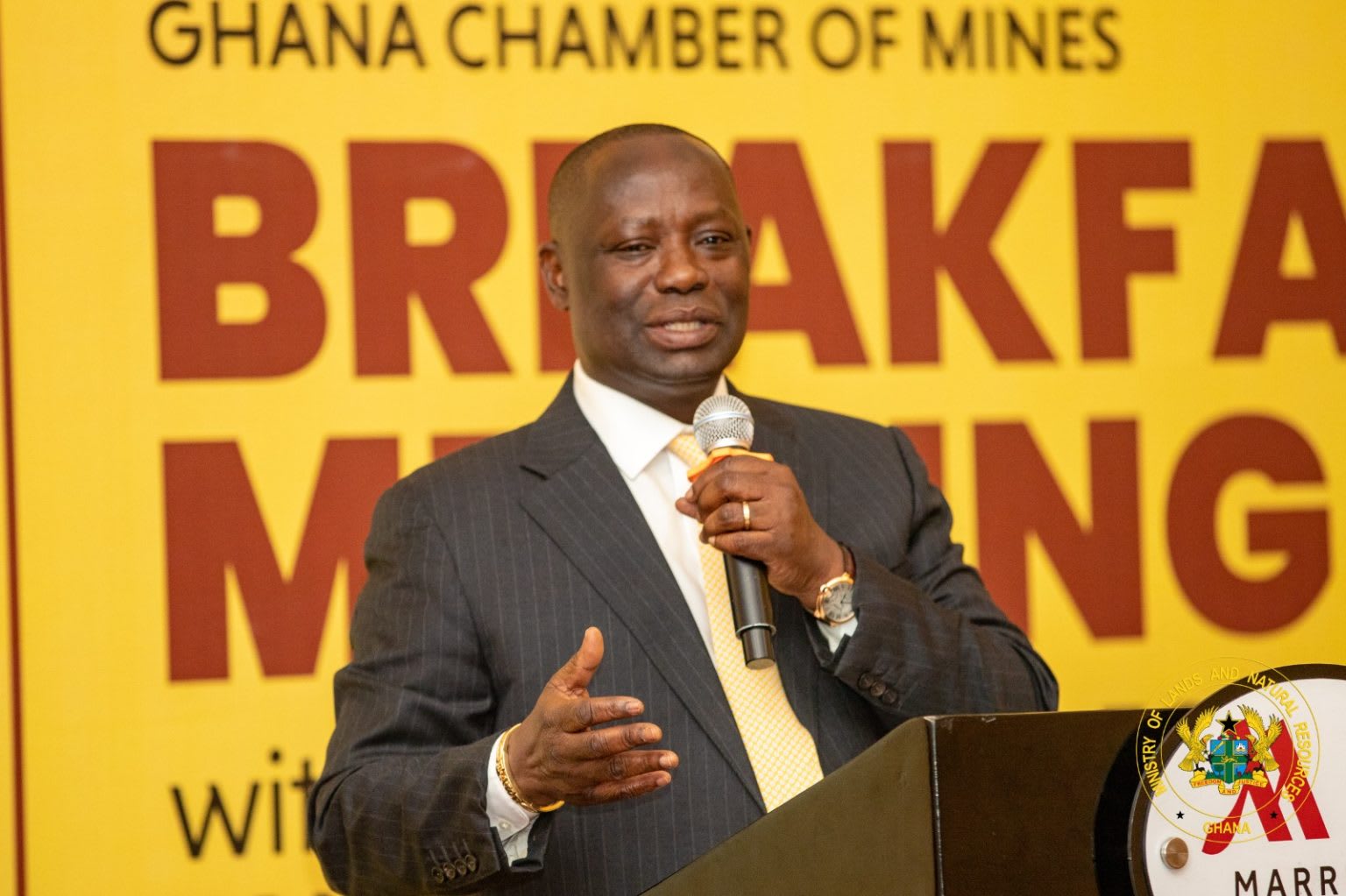
Speaking in an interview with Business & Financial Times on the sidelines of a meeting with the Ghana Chamber of Mines in Accra, the minister disclosed that the Damang agreement forms part of a broader package of mining-related agreements awaiting parliamentary approval.
“We are very shortly going to Parliament with a lot of ratifications, not only with Damang but also other outstanding ratifications,” Mr. Buah said.
According to him, government has already engaged Parliament’s leadership and submitted a list of agreements expected to be presented for consideration in the coming weeks.
Operations Continue Despite Pending Ratification
The Damang issue has attracted significant public attention because Ghana’s mining laws require mineral rights and mining leases to receive parliamentary ratification.
However, Mr. Buah maintained that existing regulatory provisions allow mining activities to continue while the approval process is underway.
He argued that halting operations would have negatively affected workers, contractors, host communities, and government revenue streams tied to the mine.
“It is a practice in the industry that even as we work on those ratifications, by the power vested in the authority of the Minerals Commission, we can make sure benefits to the people of Ghana are not stopped,” he explained.
The upcoming parliamentary review is expected to provide lawmakers with an opportunity to scrutinise the legal and commercial arrangements governing the mine’s continued operation.
The debate intensified after Vice-President in charge of Research at the IMANI Centre for Policy and Education and founder of mPedigree, Bright Simons, questioned the legality of mining activities before parliamentary ratification.
According to Mr. Simons, the law is clear that mineral resources remain the property of the state until a lease has been ratified by Parliament, raising concerns about the legal basis for commercial operations at the concession.
His comments revived a broader discussion about regulatory certainty and parliamentary oversight within Ghana’s mining sector.
Industry Practice and Calls for Reform
Responding to the controversy, resource governance expert and Co-Chair of the Ghana Extractive Industries Transparency Initiative (GHEITI), Dr. Steve Manteaw, said the concerns were understandable but should be assessed within the context of established industry practice.
He explained that neither the 1992 Constitution nor the Minerals and Mining Act, 2006 (Act 703), sets a specific timeline for parliamentary ratification of mining leases. As a result, several large-scale mining companies have historically operated for years before obtaining formal parliamentary approval.
Dr. Manteaw argued that all legal procedures required for the Damang concession were followed and that allowing operations to continue was necessary to protect jobs, preserve state revenue, and avoid disruption to mining activities.
He added that the controversy highlights the need for reforms, including statutory timelines for lease ratification, reduced bureaucratic delays, and clearer guidelines governing operations while parliamentary approval remains pending.
As Parliament prepares to consider the Damang lease, the outcome is expected to shape future discussions on mining governance, regulatory certainty, and the management of strategic mineral assets in Ghana.
READ ALSO: West Africa Must Boost Rice Production to Cut Costly Imports – Deputy Finance Minister