Ghana's Minister of State for Climate Change and Sustainability, Seidu Issifu, has called for a deeper Africa-China climate investment framework to turn international environmental pledges into bankable industrial projects across the continent.
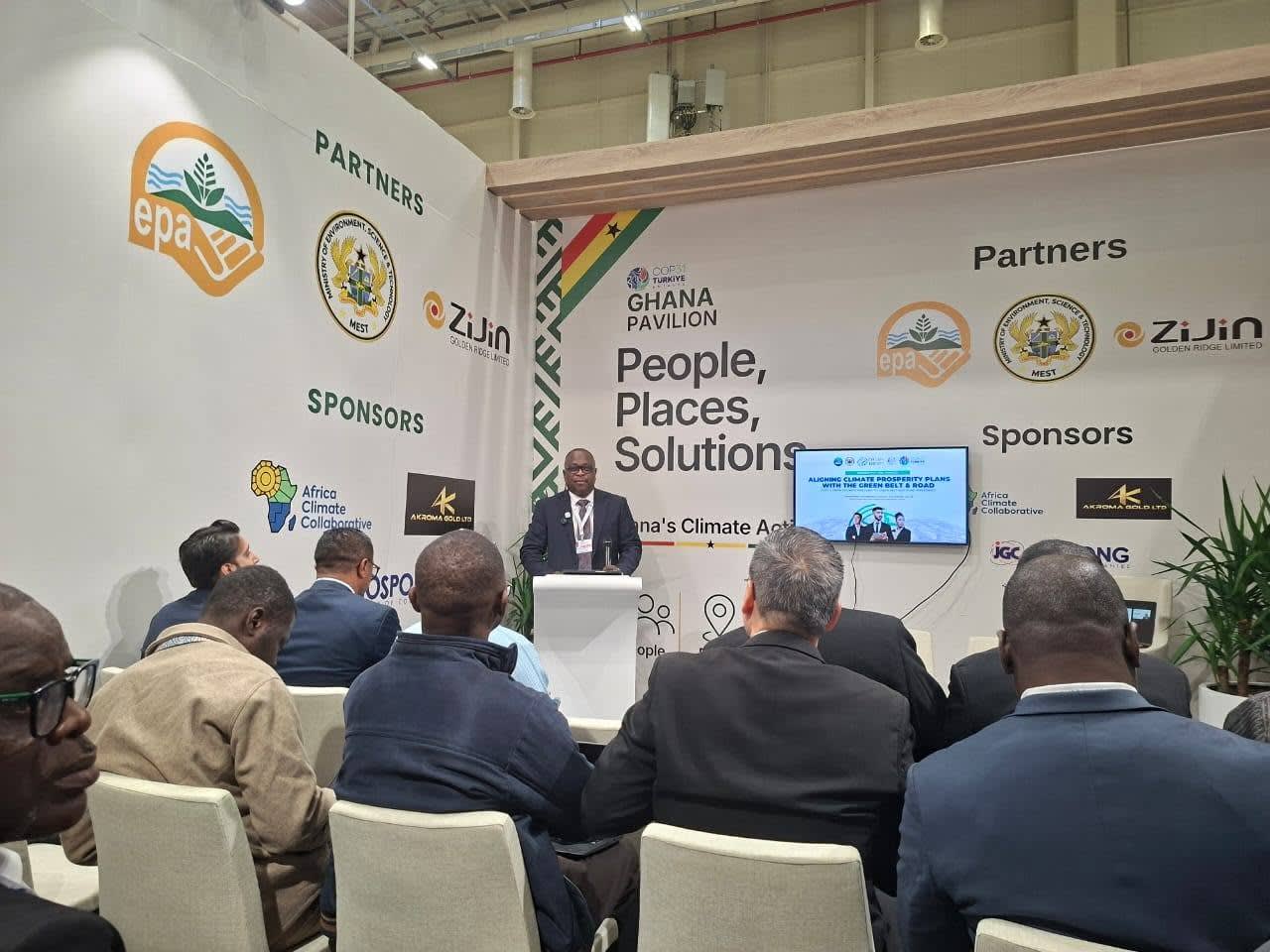
Speaking at the Ghana Pavilion during the COP31 summit in Antalya, Türkiye, Issifu addressed an event themed "Shared Future, Shared Prosperity: Aligning Climate Prosperity Plans with the Green Belt and Road".
Translating Climate Promises Into Bankable Projects
Issifu insisted that climate policies under President John Dramani Mahama are viewed as core economic investments aimed at creating permanent jobs, expanding green manufacturing, and securing clean energy grid stability.
He noted that Ghana has built a clear regulatory ecosystem using its updated Nationally Determined Contributions, the National Green Finance Taxonomy, and a national Climate Prosperity Plan to guide private equity into clean energy.
Addressing Chinese delegates, Issifu pointed to the Forum on China-Africa Cooperation Beijing Action Plan for 2025–2027, which pledges Chinese financial and technical backing for 30 major renewable energy projects across Africa.
He warned, however, that signing agreements is not enough without fast-tracked execution.
"The success of the partnership depends on moving beyond commitments toward real project deployment," Issifu noted, emphasizing that African governments must use country platforms to structure deals that attract long-term capital.
Green Belt and Road Must Serve African Priorities
The Minister highlighted the potential of Beijing's Green Belt and Road Initiative to supply solar tech, build resilient roads, and establish green industrial zones in West Africa.
To maximize these opportunities, Issifu advocated for a formal strategic alignment between the Climate Vulnerable Forum and V20 group of nations and the Belt and Road Initiative International Green Development Coalition.
"Issifu concluded by urging stakeholders to measure the success of climate partnerships through tangible results, including investments mobilised, projects developed, jobs created and improved resilience for vulnerable communities." - Climate Change Minister
He stressed that African governments must retain direct control over designing, funding, and executing their own green development strategies rather than accepting pre-packaged foreign concepts.
READ ALSO: Spend to Stimulate Growth, Prof. Bokpin Urges Ahead of 2027 Budget