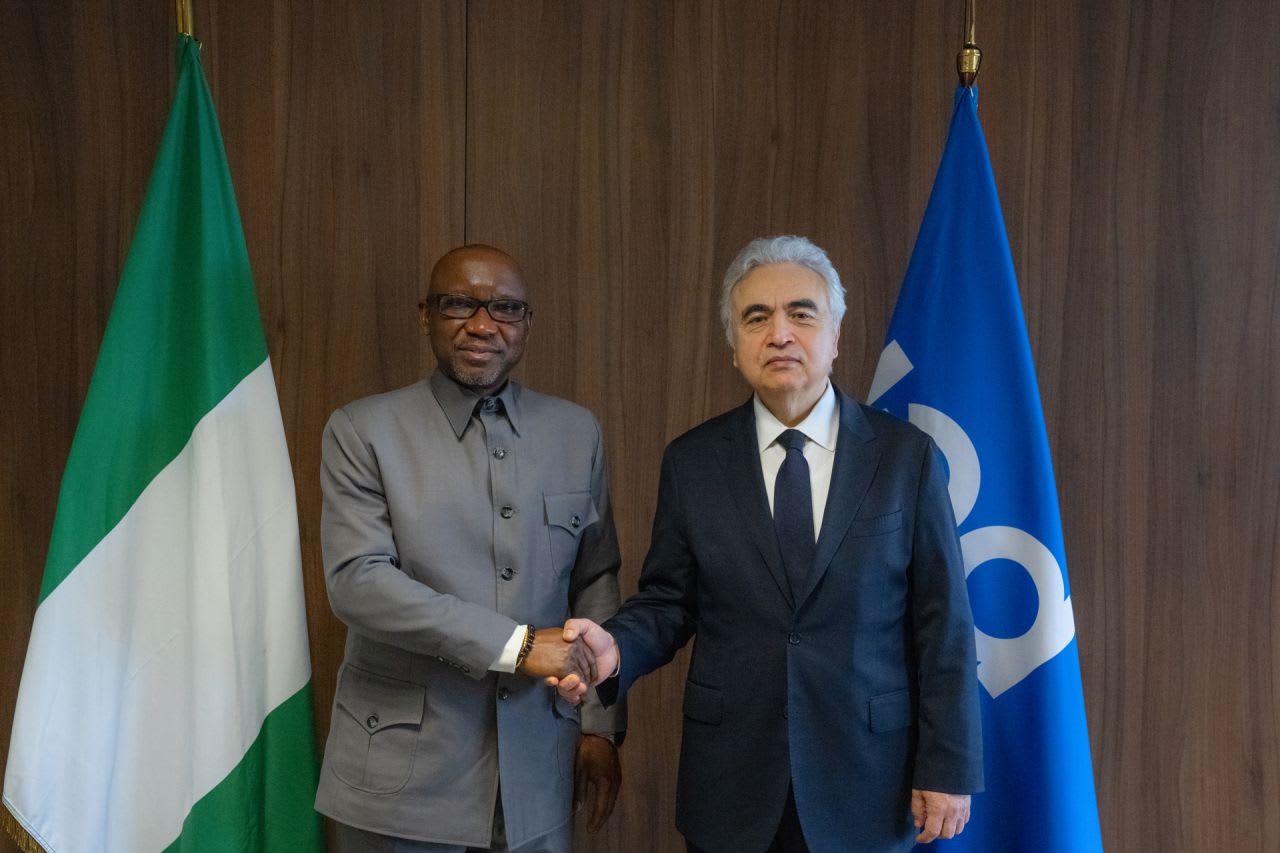
Nigeria joins IEA as an Association country after the Governing Board of the International Energy Agency unanimously approved the move, marking a significant moment for global energy governance and strengthening cooperation with Africa's largest energy producer and most populous nation.
The decision brings Nigeria into the IEA Family, a network that now represents more than 80 percent of global energy demand, reflecting the country's growing influence in international energy markets and its strategic importance in the global energy transition.
The announcement, made on July 2, comes as Nigeria continues to balance its role as a major oil and natural gas producer with ambitious efforts to expand renewable energy, improve electricity access and accelerate clean cooking solutions for millions of households.
IEA Executive Director Fatih Birol described the development as a milestone for both Nigeria and the global energy community.
"I am thrilled that Nigeria is joining the IEA. It is Africa's most populous country and a major international energy player. Nigeria becoming part of the world's energy authority marks a milestone for global energy governance." - IEA Executive Director
Recognition of Nigeria's growing energy influence
Nigeria's admission reflects more than its hydrocarbon resources. The country has increasingly positioned itself as a key player in Africa's evolving energy landscape, with investments spanning refining, natural gas, renewable energy and electricity access.
Recent expansion in Nigeria's refining capacity has attracted international attention. During periods of global supply disruption, increased fuel exports from the country helped improve fuel availability across African and international markets.
At the same time, Nigeria has emerged as one of the world's fastest-growing markets for decentralised solar energy, providing off-grid electricity solutions to underserved communities while supporting efforts to reduce energy poverty.
The IEA noted that despite these advances, significant challenges remain, particularly in ensuring reliable electricity and access to clean cooking for millions of Nigerians.
Partnership to deepen energy cooperation
Nigeria's Minister of State for Petroleum Resources (Gas), Ekperikpe Ekpo, welcomed the decision, describing it as an important step for both the country and the African continent.
"I am elated with the decision of the IEA Members to officially welcome Nigeria to the IEA Family as an Association country," he said.
"It is an honour for Nigeria to join this leading energy agency and I will take this opportunity to encourage the African continent to embrace the IEA, as we all work together to achieve key development goals including universal energy access and industrialisation." - Ekperikpe Ekpo
As an Association country, Nigeria will collaborate more closely with the Agency on energy security, market development, clean energy deployment, emissions reduction and broader energy policy across sub-Saharan Africa.
Longstanding relationship enters a new phase
The latest decision builds on more than a decade of engagement between Nigeria and the IEA. The two sides have worked together since 2014 on several energy initiatives, including efforts to reduce methane emissions from the oil and gas sector.
In September 2025, the IEA, Nigeria's Ministry of Petroleum Resources and the African Energy Commission jointly hosted a regional roundtable in Abuja focused on turning methane reduction pledges into practical action.
Created in 2015, the IEA Association programme was designed to strengthen collaboration with major energy-producing and energy-consuming countries beyond its traditional membership.
Nigeria now becomes the 14th Association country, extending the Agency's global reach at a time when energy security, affordability and sustainability are increasingly interconnected.
For Nigeria, the move offers greater access to international expertise, policy dialogue and technical cooperation. For the IEA, it reinforces its growing engagement with Africa as countries across the continent pursue economic development while navigating an increasingly complex global energy transition.
READ ALSO: Bank of Ghana Withdraws GH¢10.12bn Through 14-Day Bills to Tighten Liquidity