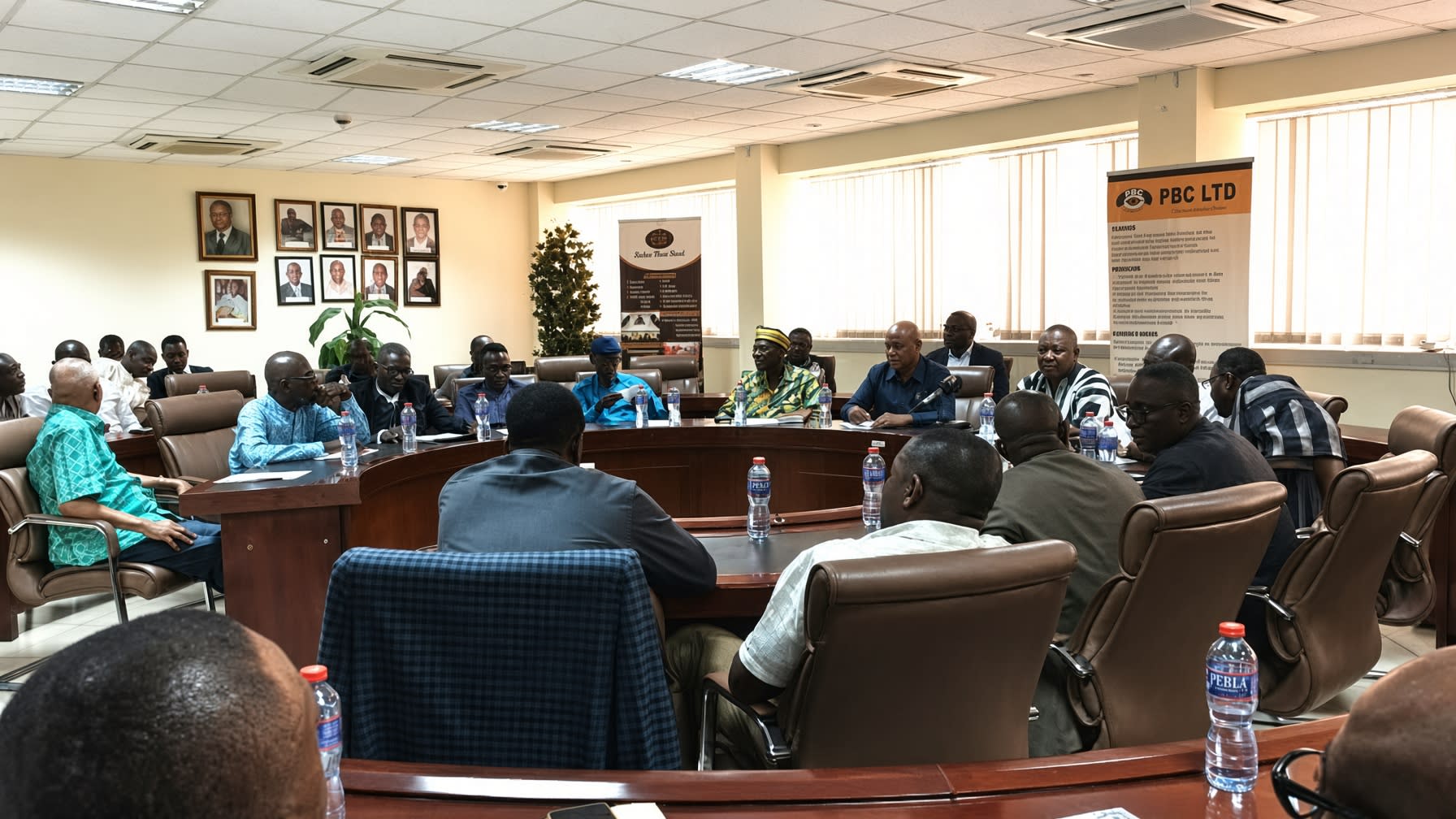
Shareholders of the Produce Buying Company (PBC), described as the biggest licensed cocoa purchaser in Ghana, have endorsed a proposal to mobilise GH¢300 million on the capital market, MyJoyOnline reported, as part of efforts to overhaul its finances and restart its cocoa buying activities.
The approval was reported on Wednesday, November 25, 2026, by MyJoyOnline.
A company with a long history
PBC traces its origins to the Produce Buying Division, which was incorporated as a limited liability company on November 13, 1981, as a wholly state-owned subsidiary of the Ghana Cocoa Board (COCOBOD). It took its present kind of name, Produce Buying Company, on October 27, 1983, when a haulage unit responsible for cocoa evacuation was added.
In 1993, the Government of Ghana accepted World Bank recommendations as part of the cocoa sector reform and granted the company autonomy. COCOBOD also brought private firms into internal cocoa marketing to compete with it, and these licensed buying companies (LBCs) have since grown to about 28.
PBC was granted full autonomy in September 1999 and listed on the Ghana Stock Exchange in May 2000. According to the company, it remains the only LBC listed on the exchange. In 2012, shareholders approved a change of name from Produce Buying Company Limited to PBC Limited, so the company could venture into auxiliary fields alongside cocoa purchasing.
Government push to revive PBC
The State Interests and Governance Authority (SIGA) opened high-level discussions in 2025 on reviving the company. It said the talks formed part of work to deliver on a pledge made by President John Dramani Mahama to bring back the former strength of the state-owned enterprise, which once thrived.
SIGA said a key meeting at the Jubilee House, led by its Director-General, Prof. Michael Kpessa-Whyte, gathered stakeholders from government, industry and the financial sector. Those present, it said, voiced a common resolve to back the transformation of PBC through targeted interventions, a restructuring of its finances and stronger corporate governance.
SIGA said PBC has for many years been an important player in Ghana’s cocoa sector and its rural economy.
A difficult financing environment
The plan comes as financing difficulties persist across the wider cocoa purchasing system. Food Business Middle East & Africa reported that COCOBOD depended for decades on yearly syndicated loans raised abroad to pay for cocoa purchases ahead of the receipt of export proceeds, and that this arrangement was discontinued in 2024, before a comparable domestic facility had been fully put in place. LBCs have since leaned more heavily on pre-financing from buyers, credit from commercial banks and other short-term funding.
In a press release dated February 12, 2026, COCOBOD said Cabinet had met in emergency session on February 11 to consider developments in the sector. It said the present financing model, introduced in 2024/25 after the syndicated loan failed, had proved unsustainable, because it rests entirely on whether a buyer is prepared to carry the cost of financing and pre-finance purchases. Cabinet decided on a new financing model for cocoa purchases and related operations.
The Chamber of Cocoa Marketers Ghana has separately warned that unpaid COCOBOD obligations, which it estimates at nearly GHS4 billion, are making it harder for LBCs to secure fresh credit ahead of the 2026/27 season. Its chief executive, Victus Dzah, said certain buyers are paying interest of as much as 40 percent on their borrowing.
“Cocobod has not paid us. How are we going to go back to the field to buy cocoa?” Dzah said. “You buy the cocoa, and in seven months, you cannot pay. You are totally out of the business. Some companies have collapsed because of this.”
COCOBOD has admitted that some payments are still outstanding, but said such balances are common at the close of a cocoa season and do not signal that it cannot honour its obligations. It has not independently confirmed the chamber’s estimate. The board said farmers have been given priority in payments and that it intends to meet cocoa-buying companies to reconcile the amounts owed before the new season starts.
Capital market and production outlook
COCOBOD itself intends to turn to the local capital market to underpin its financing model for 2026/27. Under the plan, 270-day commercial paper denominated in cedis would be issued under a five-year programme, and the board expects domestic investors to supply about GHS16 billion each year. It also has annual debt-service obligations of about GHS2.6 billion.
Institutional investors were reported in September to want higher coupon rates and bigger risk premiums before they commit funds. COCOBOD expects cocoa production to fall by at least 16 percent in the 2026/27 season.
A June study of how cocoa is financed in Ghana since the end of syndication concluded that local banks may lack the capacity to cover cocoa sourcing needs, leaving smaller, locally owned LBCs especially vulnerable.