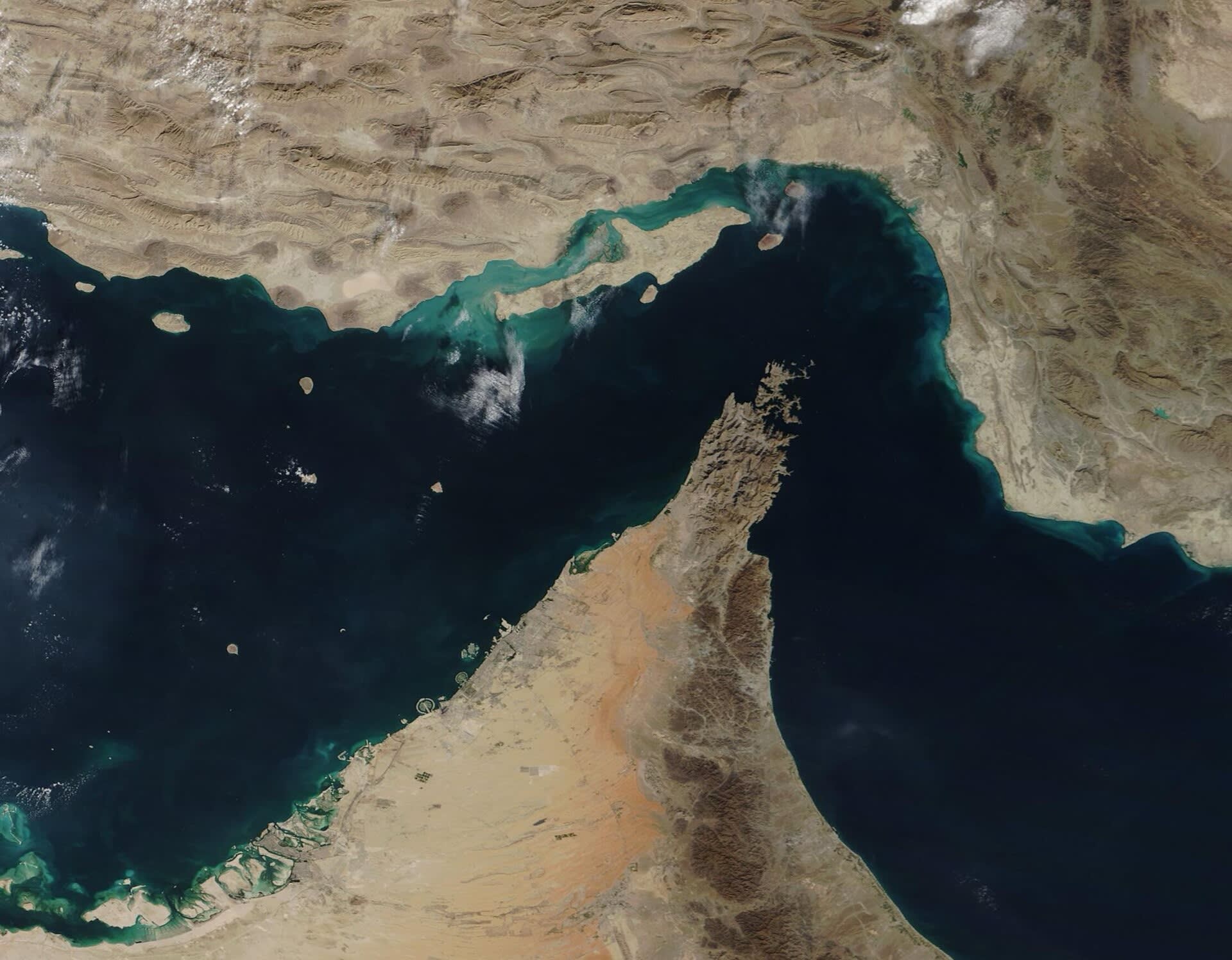
The Strait of Hormuz has been declared “completely open” to commercial shipping by Iran, offering cautious relief to global energy markets rattled by weeks of disruption.
Abbas Araghchi announced that all commercial vessels can transit the strategic waterway for the duration of the ceasefire, stating that passage will follow a “coordinated route” set by Iranian maritime authorities.
The announcement drew a swift response from Donald Trump, who publicly welcomed the development, describing the strait as “fully open and ready for full passage.”
Ceasefire Context and Ongoing Tensions
The reopening coincides with a 10-day ceasefire involving regional actors, including Israel and Lebanon, which has temporarily eased hostilities across parts of the Middle East.
However, tensions remain. While navigation through the strait has resumed, the United States has maintained a naval blockade targeting Iranian ports. President Trump clarified that the blockade would continue “until such time as our transaction with Iran is 100% complete,” signalling that broader negotiations are still unresolved.
The strait, a critical chokepoint through which about 20 percent of global oil supply passes daily, had been closed by Iran following airstrikes by the United States and Israel earlier this year.
Despite the reopening, uncertainty persists over how smoothly maritime traffic will return to normal levels. Initial signs of movement have emerged, including a Pakistan-bound tanker that successfully passed through the strait after loading crude from the United Arab Emirates.
Still, analysts note that hundreds of vessels remain in the Gulf region without fully resuming regular transit patterns, reflecting continued caution among shipping companies.
Major global shipping firms had previously suspended operations in the area, citing security concerns after missile and drone exchanges heightened risks in the corridor.
Economic Stakes Remain High
The reopening of the Strait of Hormuz carries significant implications for global energy markets. Prolonged disruption had already pushed oil price forecasts higher, with analysts warning that extended closure could drive crude prices above $100 per barrel.
Such a spike could slow global economic growth and increase the risk of recession, particularly for import-dependent economies.
While the current development may ease immediate supply concerns, experts caution that market stability will depend on sustained access rather than short-term declarations.
Questions remain about the durability of the reopening. Iran’s reference to a “coordinated route” suggests that access could still be controlled, and past actions during the crisis have shown that navigation can be restricted at short notice.
International efforts are ongoing to stabilise the situation, with Western allies exploring measures such as mine-clearing operations to ensure safe passage through the waterway.
Ultimately, analysts say the true test will be whether commercial shipping fully resumes at scale. For now, the announcement marks a tentative step toward de-escalation, but the path to lasting stability remains uncertain.
READ ALSO: ECG Completes Transformer Upgrade at Lashibi Substation Ahead of Schedule