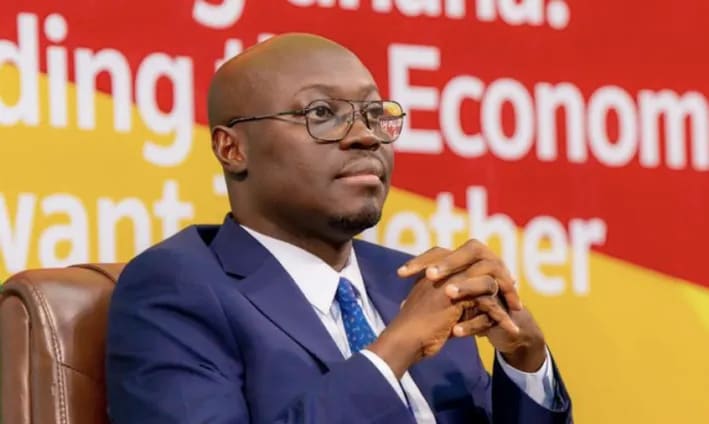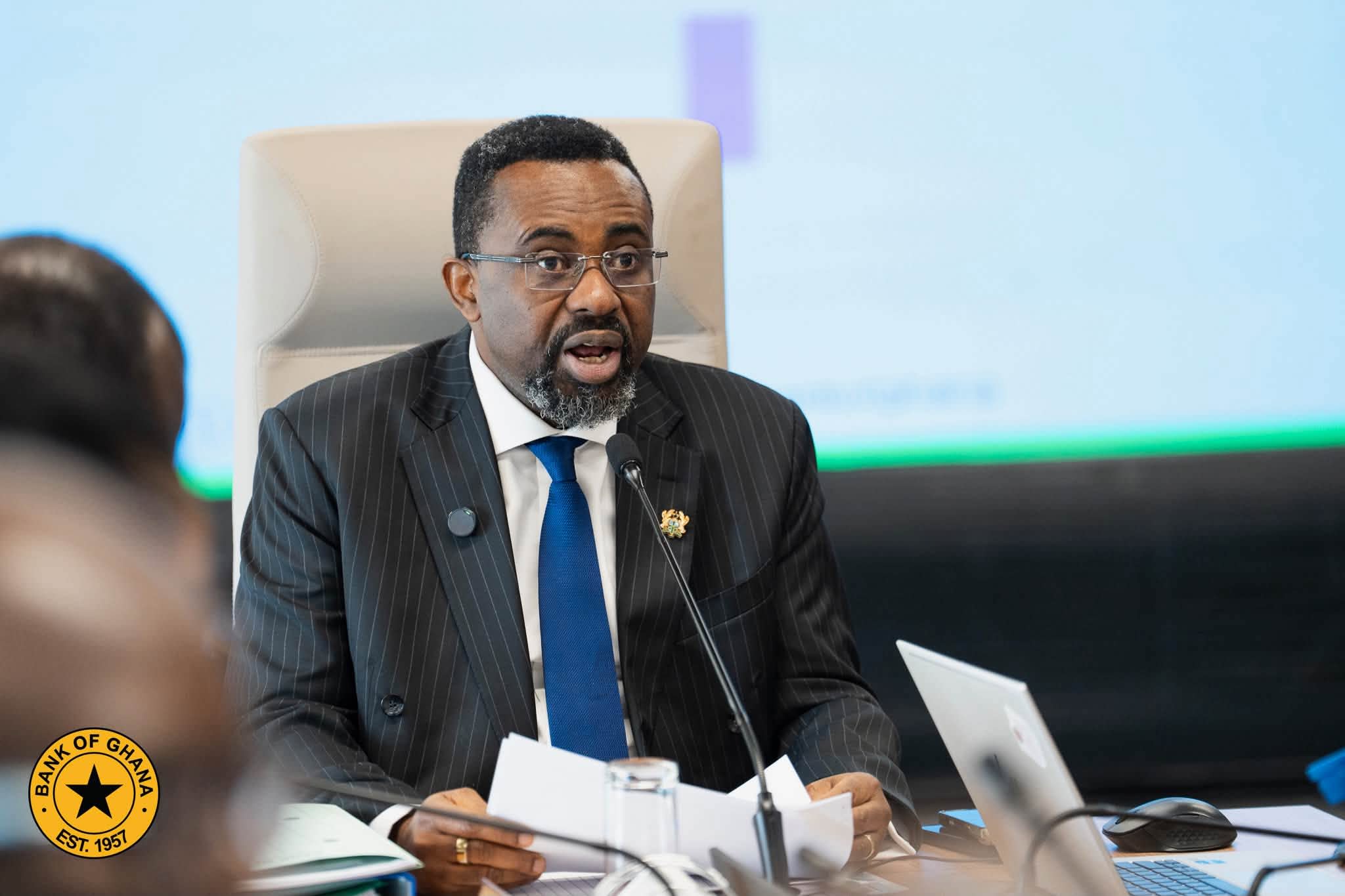
Bank of Ghana Governor Dr Johnson Pandit Asiama has unveiled a Bank of Ghana digital payments agenda designed to reshape how money moves across Sub-Saharan Africa, moving the conversation from simple adoption to deeper efficiency and stability.
Speaking at the Joint AFR-MCM High-Level Event on Digital Innovations in Payments in Bangkok, Dr Asiama argued that the debate is no longer about whether Africans will use digital channels.
Transaction growth has already settled that question. The policy challenge now is ensuring scale translates into efficiency, inclusion and stability.
Ghana's own mobile-money market illustrates both the progress and the responsibility created by that scale. Mobile-money transactions exceeded one billion in a single month for the first time in August 2026, reaching GH¢519 billion in value.
The value was 46.5 percent higher than a year earlier. Those figures reflect an extraordinary shift in how households and businesses transfer money, pay bills and conduct commerce.
They also mean that disruption, fraud or poorly designed regulation can affect millions of users and large portions of economic activity almost immediately.
Dr Asiama told fellow central bank governors and representatives of the International Monetary Fund that the question before us now is how to ensure that this scale delivers efficiency, inclusion and stability across the region.
The event brought together governors from across Sub-Saharan Africa to exchange national experiences and help shape the IMF's future work on central bank digital currencies and digital payments.
Cutting Cross-Border Costs
The Governor's first priority was turning domestic payment progress into efficient regional infrastructure. Although mobile wallets have transformed national markets, many transfers between African countries continue to pass through correspondent banks outside the continent.
That routing adds time, foreign-exchange conversion and intermediary charges to transactions that should support regional commerce. According to the Governor, the cost remains above 8 percent, compared with an international target of 3 percent.
For small businesses, traders and families, the difference is not abstract. High transfer costs reduce the value received by beneficiaries, discourage formal transactions and weaken the commercial promise of the African Continental Free Trade Area.
Ghana is testing cross-border interoperability through the Ghana–Rwanda and Ghana–Nigeria corridors, using central bank digital currencies, stablecoins, bank accounts and mobile wallets.
The Bank has also extended the Pan-African Payment and Settlement System to mobile wallets in the Ghana–Nigeria corridor. The objective is to move beyond controlled pilots and launch services that ordinary consumers and businesses can use.
The second priority is moving from financial access to financial health. Ghana reports that 81 percent of adults have access to financial services, but the figure falls to 52.7 percent when actual usage and service quality are considered.
The gap is a warning against treating account ownership as the final measure of inclusion. A person may possess a wallet or bank account without using it to save, obtain affordable credit, purchase insurance or build long-term financial security.
Private-sector credit in Ghana remains about 10 percent of gross domestic product, indicating that the growth of payment accounts has not yet produced a comparable expansion in productive financing.
Dr Asiama said digital rails must now support responsible savings, credit, insurance and investment. The Bank's Digital Credit Service Provider framework is intended to bring digital lenders under formal supervision.
It is also developing market-wide visibility of borrower exposures to reduce the risk that customers take multiple loans across platforms without lenders seeing their total obligations.
Restoring Trust Amid Rising Fraud
The Governor's third priority was trust. Reported fraud cases in Ghana increased by 48 percent in 2025, with the rise occurring almost entirely among payment service providers, although the total value at risk remained broadly unchanged.
The combination suggests fraud is shifting towards a larger number of relatively small incidents. While each loss may appear limited at the system level, it can be devastating to an individual household and gradually weaken confidence in digital finance.
The Bank's response includes consumer education, confirmation of a recipient's identity before payment and stronger controls around SIM replacements.
These protections aim to make safety part of the transaction process instead of placing the full burden on consumers after money has been lost. Institutional defences are also being expanded.
The revised Cyber and Information Security Directive, the extension of the Financial Industry Command Security Operations Centre beyond universal banks and forthcoming guidance on artificial intelligence are intended to strengthen ecosystem-wide monitoring.
Harmonising Regulation Across Borders
The fourth priority concerns regulatory fragmentation. African fintech companies often repeat licensing processes in every market, even when they provide similar services and face comparable risks. Ghana's Licence Passporting Framework with the National Bank of Rwanda offers an alternative.
More than 10 countries are being engaged to join, potentially creating a regional model under which regulatory assessments can be recognised across participating jurisdictions.
Dr Asiama proposed common standards for payment messaging, confirmation of payees and the sharing of fraud data. These may appear technical, but they determine whether cross-border systems can function safely and whether criminals can exploit gaps between jurisdictions.
The Bank of Ghana offered to share its experience in interoperability, licence passporting and the FICSOC cybersecurity model. That offer strengthens Ghana's claim to be not merely an adopter of financial technology but a contributor to the continent's regulatory architecture.
The Governor nevertheless rejected the idea that central banks should choose the technology that ultimately dominates African payments. He said central banks should not determine which technology succeeds.
Their role is to ensure that emerging systems are safe, efficient, resilient and inclusive. That principle may prove central to the next phase of innovation.
Regulators must allow competition among technologies while remaining firm about outcomes, including lower costs, wider inclusion, secure transactions and financial stability.
Ghana's billion-transaction milestone shows that digital payments have achieved scale. The harder task is now to convert that scale into cheaper regional trade, responsible credit and durable public trust.
If Ghana's pilots become functioning services and its regulatory partnerships widen, the country could help shape how Africa's increasingly digital economy moves money across borders.
READ ALSO: GoldBod Sells US$255 Million to Banks Through New GoFX Platform