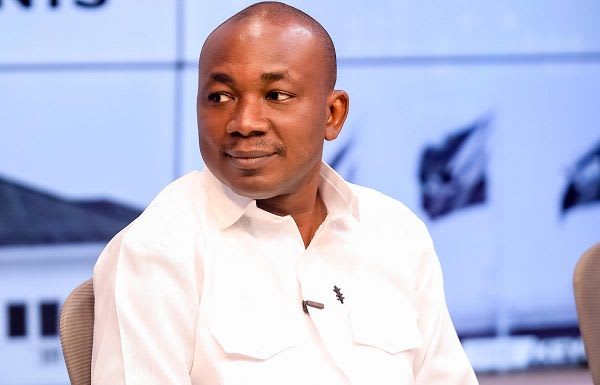
Professor of Finance at the University of Ghana Business School, Godfred Bokpin, has cautioned that Ghana BRICS membership should not be treated as a shortcut to economic transformation, arguing that the country must still fix longstanding weaknesses at home.
His comments follow Cabinet’s decision to formally apply for membership of BRICS as government seeks to diversify Ghana’s international economic partnerships.
Foreign Affairs Minister Samuel Okudzeto Ablakwa announced the decision on October 6, saying the application would now be prepared for consideration by existing members.
Prof Bokpin said closer engagement with the grouping could offer opportunities, but membership itself would not automatically deliver investment, growth or stronger public finances.
“Merely joining BRICS necessarily does not transform your economy overnight, or even over a 15 year period.
“It is not a substitute for what you have to do in managing your own economy competitively.” - Prof Bokpin
BRICS Still an Evolving Bloc
Prof Bokpin also urged caution about expectations surrounding the grouping itself.
He noted that BRICS continues to evolve, particularly after its recent expansion, and said questions remain over how its institutional arrangements and long term economic agenda will develop.
BRICS currently has 11 full members, including Brazil, Russia, India, China, South Africa, Egypt, Ethiopia, Iran, the United Arab Emirates, Saudi Arabia and Indonesia. It also has 10 partner countries.
“I think we should just bear in mind that BRICS is still evolving,” Prof Bokpin said, adding that a number of details around the bloc’s future direction still need to be worked through.
For Ghana, he argued, the central question should remain whether domestic policies can make the economy productive and internationally competitive.
That includes the conditions under which businesses operate, the ability to attract and retain investment and the capacity of local firms to compete beyond Ghana’s borders.
Opportunities Still Worth Pursuing
Despite his warning, Prof Bokpin backed government’s decision to pursue membership.
“If I look at it from an economic perspective, it's a good move that the government plans to join BRICS,” he said.
He pointed to the growing economic weight of emerging economies and argued that Ghana cannot ignore changes taking place in global trade, investment and financial relationships.
The potential benefit, he suggested, lies in expanding Ghana’s options rather than expecting a new international affiliation to solve domestic problems.
That distinction is important as government presents BRICS as another platform through which Ghana could deepen South South cooperation, attract investment and diversify its international partnerships.
Prof Bokpin said the country would gain more from those opportunities if it entered the relationship with a stronger domestic economy.
“So specifically for Ghana, I think that merely joining BRICS would not necessarily transform our economy,” he said. The harder work, in his view, remains at home.
READ ALSO: NHIS Active Membership Rises to 70% in 2026 – Health Minister