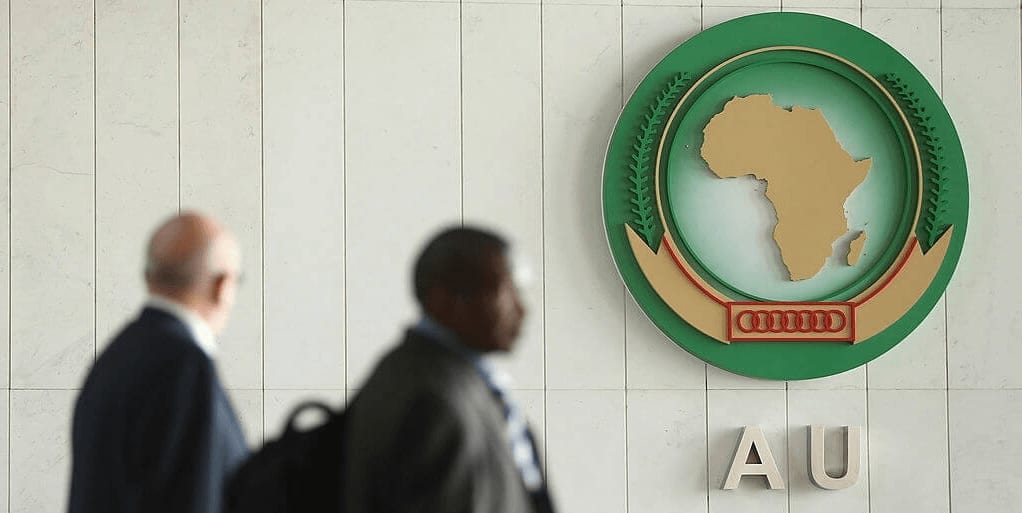
The African Union has formally launched the Africa Credit Rating Agency, the continent’s first homegrown rating institution, as African governments push for more context specific assessments of sovereign risk and better access to global capital.
AfCRA was launched on October 7 in Port Louis, Mauritius, where the new institution will be based. African leaders first endorsed its creation in 2018, with its governance and methodology developed in subsequent years under the African Peer Review Mechanism.
The agency is expected to rate African sovereigns, financial institutions and private companies.
Its arrival comes after years of complaints from some African governments that assessments by S&P Global Ratings, Moody’s and Fitch do not always capture the structure and circumstances of African economies.
The three international agencies have rejected allegations of unfair treatment, maintaining that they apply consistent methodologies across markets.
A 2024 Reuters investigation found no evidence of systemic bias in sovereign ratings assigned to African countries by the three major agencies.
‘Africa Continues to Pay for the Fog’
Denys Denya, Executive Vice President of Afreximbank, one of the institutions backing the initiative, said the agency could give lenders additional information when assessing African borrowers.
“When lenders don’t see clearly, they charge for the fog,” he said at the launch. “Africa continues to pay for the fog that is generated by western centric examinations.”
The AU describes AfCRA as an independent institution intended to complement rather than simply replace international rating agencies. Its assessments are expected to draw more heavily on African data, expertise and economic conditions.
The argument behind the project is that fuller information could help investors price risk more accurately, potentially widening access to capital for African governments and companies.
That matters at a time when debt servicing is taking up an increasing share of government revenue across several countries.
The AU says Africa’s annual external debt service climbed from US$61 billion in 2010 to US$163 billion in 2024. In some countries, interest payments have placed severe pressure on budgets for health, education and other public services.
Credibility Will Be the Hard Part
Launching the agency is one thing. Convincing global investors to rely on its ratings will be a much tougher test.
Dennis Shen, a lecturer in finance at the International School of Management in Berlin and former sovereign analyst at Scope Ratings, said AfCRA would ultimately be judged by the quality and independence of its decisions.
“A new rating agency begins with a promise while investors ultimately require a track record,” he said.
That scrutiny is likely to become sharper when an African government is under severe fiscal or political pressure. An agency seen as reluctant to issue difficult assessments could quickly lose credibility with bond investors.
Former Nigerian Vice President Yemi Osinbajo also cautioned against turning AfCRA into an institution whose purpose is simply to produce more favourable ratings.
“It can't just be a chauvinistic or nationalistic agency,” he said.
23 African Economies Lack Major Ratings
AfCRA could also address a basic coverage problem.
According to the AU, 23 African economies currently have no rating from the three major international credit rating agencies. That absence can make it harder for investors to assess risk and may restrict access to some forms of financing.
The AU says African economies are rated around B to B minus on average, compared with roughly BB for other emerging regions, a gap it argues can affect investor participation and borrowing costs.
AfCRA will be financed through shareholder capital and revenue generated by its operations, while operating independently, according to the AU. Details of its shareholders have not yet been publicly outlined.
For African governments, the broader objective is not simply to obtain better ratings. The harder ambition is to establish an institution whose assessments international investors consider credible enough to influence real borrowing decisions.
That credibility will take time to build. Its first difficult sovereign rating may prove more important than its launch ceremony.
READ ALSO: BoG Warns Against Taping, Glueing Damaged Ghana Cedi Banknotes