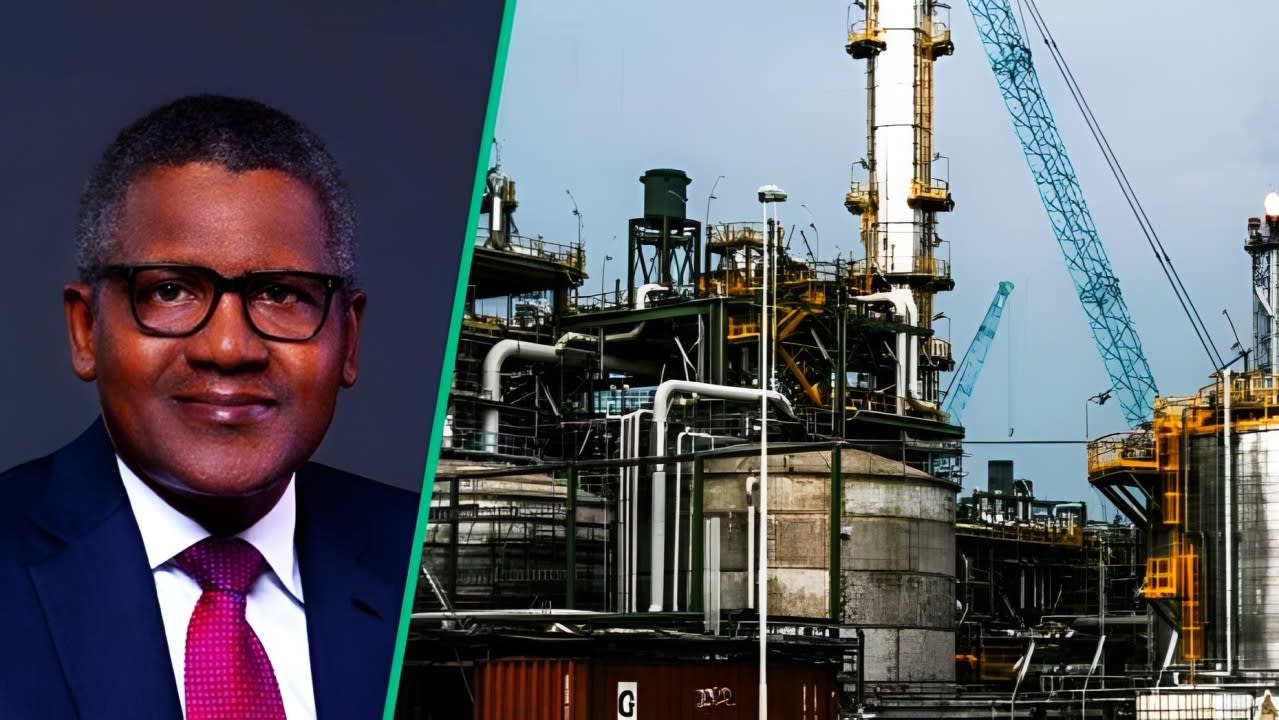
Aliko Dangote’s wealth has been sharply reassessed after the public offering of his Lagos oil refinery placed a market value of nearly US$50 billion on the business behind Nigeria’s changing fuel industry.
Forbes’ real-time billionaire tracker put the Nigerian industrialist’s fortune at US$51.3 billion on September 14, compared with US$28.5 billion earlier in 2026. The increase is largely a paper gain, reflecting how Forbes now values Dangote’s controlling interest in the refinery rather than money he has received from the share sale.
That distinction matters. Dangote has not suddenly collected more than US$20 billion in cash. The initial public offering has simply provided a clearer market price for an asset that was previously difficult for wealth trackers to assess.
Other indexes remain more cautious. Reuters reported estimates of roughly US$31 billion to US$35 billion, showing just how differently private assets, corporate debt and controlling stakes can be treated. Forbes’ latest calculation nevertheless leaves Dangote comfortably ahead as Africa’s richest person.
Refinery seeks US$1.6 billion from investors
Dangote Petroleum Refinery and Petrochemicals is offering 4.1 billion new ordinary shares at N525 each, targeting approximately N2.15 trillion, or US$1.6 billion.
The offer opened on September 14 and is expected to close on October 13. Trading could begin on the Nigerian Exchange in late November.
Based on the registered share capital and offer price, Reuters estimates that the refinery is valued at about N63 trillion, equivalent to US$47.59 billion. The Financial Times places the figure closer to US$49 billion.
The sale has been presented as a “people’s IPO”, with investors allowed to subscribe for a minimum of 10 shares costing N5,250. Applications are available through banks, financial technology platforms and other digital channels.
“There is no segregation on who can own these shares. We want everyone to own a share,” Dangote said during the signing ceremony.
Only a small portion of the company is entering public hands, meaning Dangote will retain firm control after the listing.
Refinery reshapes Dangote’s business empire
The facility cost approximately US$20 billion to build and currently processes about 700,000 barrels of crude oil each day. Its capacity is expected to double to 1.4 million barrels per day by 2029, with proceeds from the public offering supporting the expansion.
Financial results attached to the offer have strengthened the investment case. The refinery recorded an after-tax profit of US$1.82 billion during the first half of 2026 on revenue exceeding US$13 billion, reversing a US$476 million loss for the whole of 2025.
Its operations have also reduced Nigeria’s dependence on imported fuel while opening new export markets across Africa and Europe.
Investors must still decide whether a valuation approaching US$50 billion is justified. It places a demanding price on the refinery’s future growth, petrochemical operations and regional reach.
For Dangote, though, the shift is already unmistakable. Cement built his fortune. The refinery may now define it.