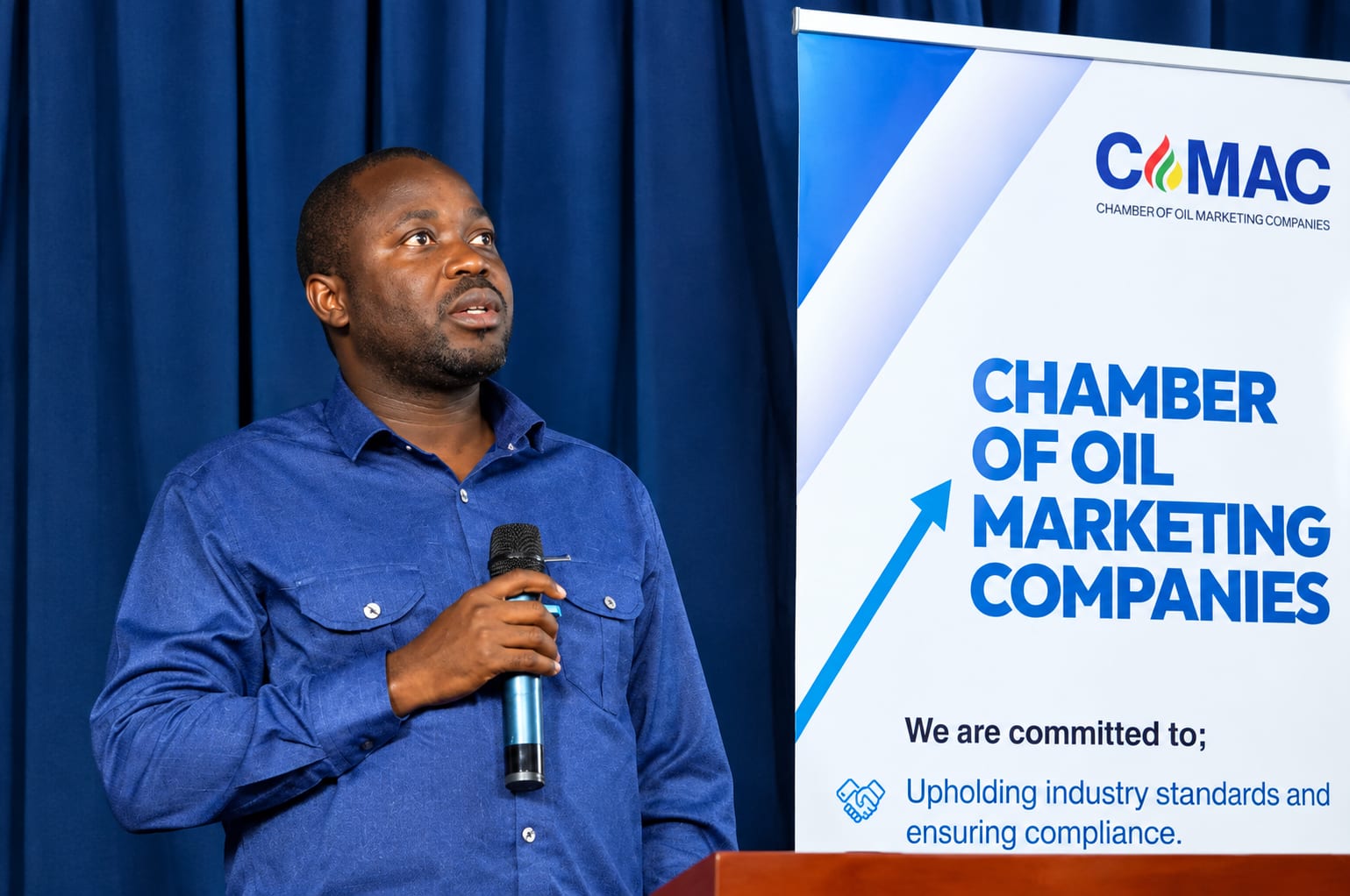
Energy analyst Ben Nsiah has called for the suspension of a key provision in the Customs Act 2026 petroleum tax framework, warning that its implementation could put severe financial pressure on companies operating in Ghana’s downstream petroleum industry.
Speaking to Sweet FM Online at the Chamber of Oil Marketing Companies Institute of Petroleum Studies One Day Media Training, the Executive Director of the Centre for Environmental Management and Sustainable Energy questioned the practicality of Section 136 of the Customs Act, 2026, Act 1179.
The provision transfers responsibility for accounting for downstream petroleum taxes from Oil Marketing Companies and LPG Marketing Companies to Bulk Import, Distribution and Export Companies, commonly known as BIDECs.
Industry group COMAC has separately asked for its indefinite suspension, citing financing and fuel supply risks.
Nsiah Warns of Financing Pressure
Mr Nsiah argued that shifting the obligation to BIDECs could disrupt existing financing arrangements across the petroleum supply chain.
“The new customs act that is supposed to mobilise revenue from the petroleum downstream is not a practical act,” he said.
According to him, many BIDECs may struggle to provide the banking guarantees required to support significant tax liabilities, while OMCs already operating under established guarantee and bond arrangements could also face cash flow pressures.
He warned that the knock on effect could extend to banks that have existing financing agreements with petroleum companies.
COMAC has similarly argued that Section 136 changes the existing tax liability structure and could increase financing costs for downstream operators.
‘Implementation Must Be Suspended’
Mr Nsiah also questioned the level of industry consultation before the law was passed.
“We know that the Act has been passed, but implementation must be suspended until further engagements are done to actually assess the feasibility,” he said.
He cautioned that companies unable to meet upfront financial obligations could reduce their capacity to lift petroleum products, potentially creating supply difficulties in parts of the country.
His warning remains an assessment of the potential impact rather than evidence that shortages have already resulted from the new provision.
Under Section 136, BIDECs are required to account for tax at the point of sale, while the Commissioner General may allow payment to be deferred for up to 21 days subject to a bank guarantee.
Calls for Wider Industry Consultation
Mr Nsiah wants the Ministry of Finance and relevant revenue authorities to engage downstream companies further before full implementation.
He said any new revenue mobilisation arrangement should tackle unaccounted petroleum products without creating financial conditions that could weaken legitimate operators.
The wider industry debate now centres on how government can improve petroleum tax collection while preserving working capital, reliable fuel supply and the financial stability of companies across the downstream value chain.
READ ALSO: GNPC, PETRONAS Begin Talks to Explore Investment Opportunities in Ghana's Oil and Gas Sector