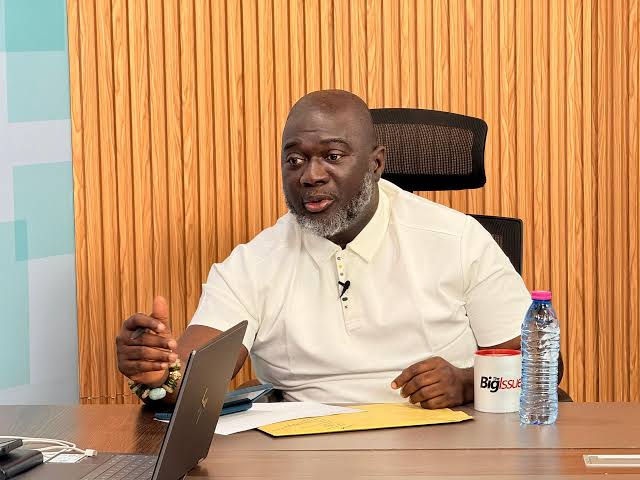
The Executive Secretary of the Chamber of Petroleum Consumers, Duncan Amoah, has called on the government to make exchange rate stability a top economic priority, warning that any sharp depreciation of the cedi would quickly ripple through fuel prices, infrastructure projects and the daily lives of Ghanaians.
Speaking on the importance of maintaining a stable foreign exchange market, Amoah praised Finance Minister Dr Cassiel Ato Forson and the government's economic management team for recent efforts to keep the cedi relatively stable. Still, he cautioned that the gains could easily disappear if the currency comes under renewed pressure.
Forex stability affects everyone
Amoah argued that exchange rate management is not merely an economic issue but one that directly influences government spending and household expenses.
"I am from the streets, and I would say this repeatedly," he remarked, insisting that every government should recognise the wider consequences of an unstable foreign exchange market.
He explained that many public infrastructure contracts are priced in US dollars. Even when contractors are eventually paid in cedis, a weakening local currency significantly raises the government's financial obligations.
According to him, a contractor who values a road project at 200 million dollars would expect the cedi equivalent at the prevailing exchange rate.
If the cedi loses value during implementation, government costs increase through revaluation, making projects more expensive and more difficult to complete.
"For me, foreign exchange is a non negotiable situation," Amoah stressed.
Fuel prices remain vulnerable
The COPEC Executive Secretary also pointed to the petroleum sector, where fuel imports are purchased in dollars but sold locally in cedis.
He explained that any depreciation immediately raises the amount importers must recover, leaving consumers to absorb the additional cost at the pumps.
"If Ato Forson doesn't work hard and the cedi depreciates to about 13, the amount required to recover the cost rises and I'll pass it on to consumers. That's what it means," he said.
Warning to government
Despite applauding recent economic management, Amoah warned that public goodwill could fade quickly if the exchange rate deteriorates again.
He urged the Finance Minister and the Governor of the Bank of Ghana to monitor the currency closely and take whatever steps are necessary to prevent another sharp depreciation.
"The street says I should tell Ato Forson and his team. If the cedi should depreciate to 13, 14 or 15, we'll forget about all the praise we are giving him now," he said.
He concluded that preserving cedi stability remains one of the most effective ways to shield consumers from rising fuel costs and protect the broader economy from further inflationary pressures.
READ ALSO: Ghana’s Downstream Petroleum Sector Moves Beyond the Bruising Pump Price War - Mo Issah