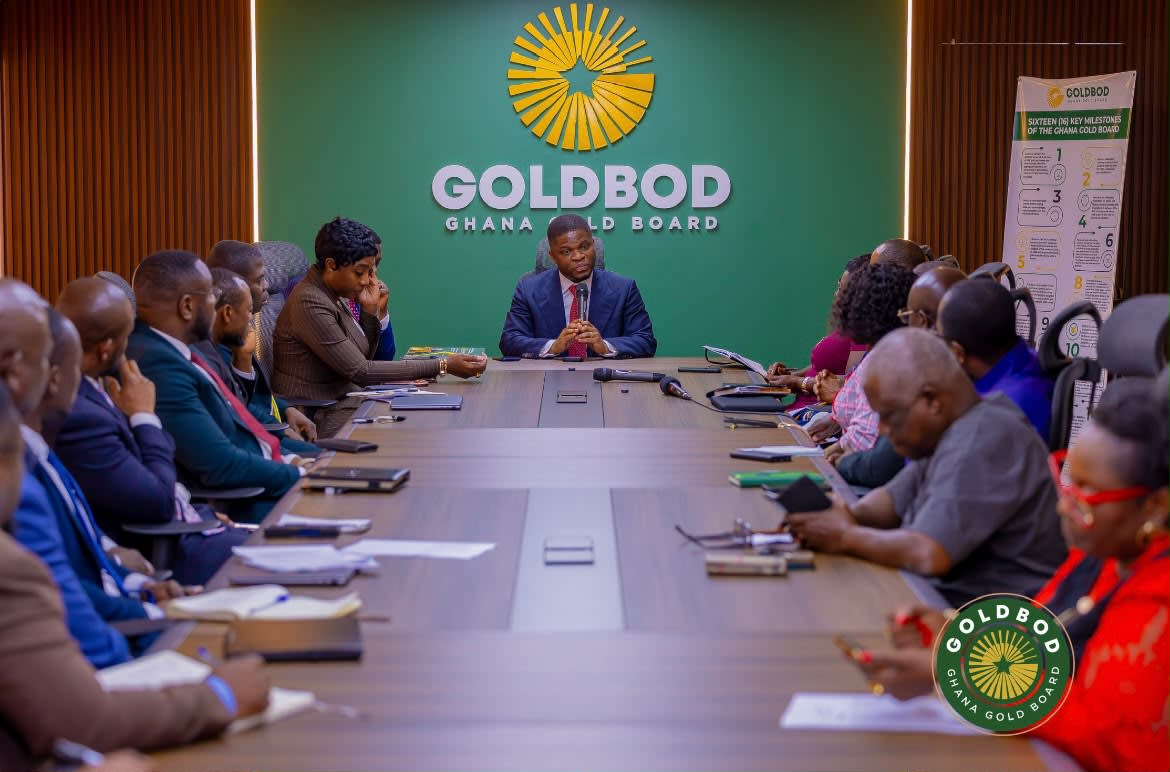
The Ghana GoldBod model has attracted official delegations from seven African countries seeking lessons on formalising gold trading, strengthening regulation and retaining more mineral value within their economies.
Officials and institutions from Sierra Leone, Mozambique, Tanzania, Zimbabwe, Zambia, Sudan and Namibia engaged the Ghana Gold Board during the 12 months ending September 2026.
Their interest has centred on Ghana’s attempt to place gold buying, assaying, licensing, refining and exports under a central regulatory structure.
The visits do not mean the countries have adopted Ghana’s system. They do show that GoldBod has quickly become part of a wider African discussion about how mineral-producing states can exercise greater control over domestic gold markets.
Sierra Leone opens engagement
The series began on September 18, 2025, when Sierra Leone’s Finance Minister, Sheku Ahmed Fantamadi Bangura, met GoldBod Chief Executive Officer Sammy Gyamfi.
Their discussions examined how Sierra Leone could adapt aspects of Ghana’s framework to improve mineral revenue management.
Mr Bangura praised GoldBod’s early performance and described the approach as a possible blueprint for sustainable gold-sector reform on the continent.
At the time, GoldBod was also exploring gold tokenisation and exchange-traded products with the Ghana Commodity Exchange, while engaging the Securities and Exchange Commission on investor protection.
Mozambique followed in October with a two-day technical visit involving officials from its Ministry of Mineral Resources and Energy.
Deputy GoldBod CEO Richard Nunekpeku took the delegation through the Board’s regulatory structure and daily operations. The discussions covered gold, gemstones, rough diamonds and certification under the Kimberley Process.
Tanzania returns for second study tour
A 15-member delegation from Tanzania’s Minerals Commission visited Accra in January 2026 to study Ghana’s gold-purchasing and regulatory systems.
Led by Dr Theresia Numbi, the team said Ghana had been selected after comparisons with other jurisdictions. It described the country as a “pioneer and centre of excellence” in African gold governance.
Four months later, officials from the Central Bank of Tanzania undertook a separate tour focused on Ghana’s Domestic Gold Purchase Programme and the Ghana Accelerated National Reserve Accumulation Policy.
Zimbabwe’s BetterBrands Team visited in April to examine the formalisation of artisanal and small-scale mining. That segment remains economically important but difficult to regulate because of informal trading, environmental damage and weak traceability.
Zambia studies emerging gold market
Zambia sent a government delegation in July after confirming commercially viable gold deposits and beginning work on a more organised domestic trading framework.
The visit was arranged through Ghana’s Ministry of Foreign Affairs. Mr Nunekpeku briefed the team on GoldBod’s operations, achievements and continuing reforms.
Public comments from ZCCM Investments Holdings later pointed to interest in Ghana’s experience as Zambia seeks to capture more value from small-scale production.
Sudan and Namibia have also engaged GoldBod, extending the geographic spread of interest in the model.
For Ghana, the study tours offer diplomatic and technical value. They create opportunities for cooperation on traceability, responsible sourcing, refining and cross-border gold trading.
They also bring scrutiny. GoldBod will ultimately be judged not by the number of visiting delegations but by whether its system improves transparency, raises public revenue, protects miners and retains more value from Ghana’s gold.
The Board says it is the sole authority responsible for buying, selling, assaying, valuing and exporting precious minerals in Ghana. Its latest updates are available through the Ghana Gold Board.
READ ALSO: Bank of Ghana Sells GH¢13.71bn in 14-day Bills at 10.50%


