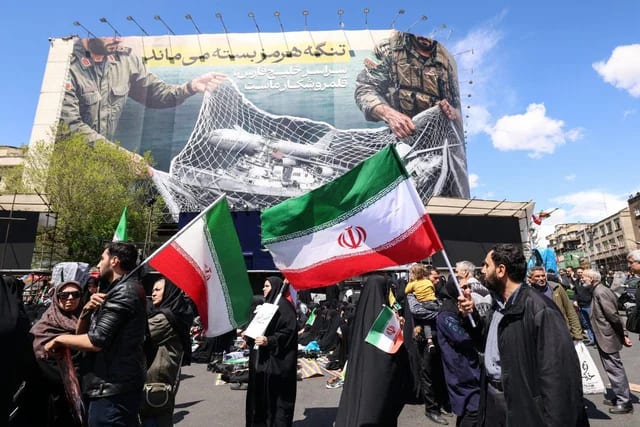
Iran has accused the United States of contributing to the latest escalation in tensions with Israel, arguing that recent exchanges of fire have further complicated an already fragile diplomatic process between Tehran and Washington.
Speaking on Monday, Iranian Foreign Ministry spokesperson Esmaeil Baghaei said the renewed hostilities have created an atmosphere of “extreme suspicion” in ongoing communications between the two countries.
He warned that the latest developments risk undermining diplomatic efforts aimed at easing regional tensions.
Baghaei alleged that Israel’s recent military actions, particularly in Lebanon, were intended to derail diplomatic progress. According to him, the United States bears responsibility for developments linked to the ceasefire framework established on April 8.
“The United States bears direct responsibility for any action the Zionist regime takes in relation to violating regional peace and security against Iran,” Baghaei stated.
He argued that regardless of whether Washington had prior knowledge of Israel’s actions, the developments have intensified uncertainty and raised concerns about the possibility of a broader regional conflict.
The spokesperson stressed that the international community should be concerned about the growing instability, warning that continued hostilities could have far-reaching consequences for peace and security across the Middle East.
Diplomatic Channels Remain Open
Despite the heightened tensions, Iran indicated that indirect communication with the United States remains ongoing. Baghaei noted that the visit of Pakistan’s interior minister to Tehran on Sunday formed part of efforts to facilitate continued exchanges between the two sides.
However, he acknowledged that discussions are taking place under increasingly difficult circumstances, with trust between the parties strained by recent events.
Beyond the security concerns, Iran also signalled that it is prepared to respond to any resolution directed against it during this week’s meeting of the Board of Governors of the International Atomic Energy Agency (IAEA).
Baghaei criticised IAEA Director General Rafael Grossi, accusing him of adopting what he described as politically biased positions that undermine the credibility of the nuclear watchdog.
The latest accusations come at a sensitive moment for regional diplomacy, as efforts to maintain dialogue between Iran, the United States and other international stakeholders face renewed challenges amid rising military tensions between Tehran and Israel.
READ ALSO: 16 Unsafe Buildings in Greater Accra Set for Demolition After Avenor Collapse