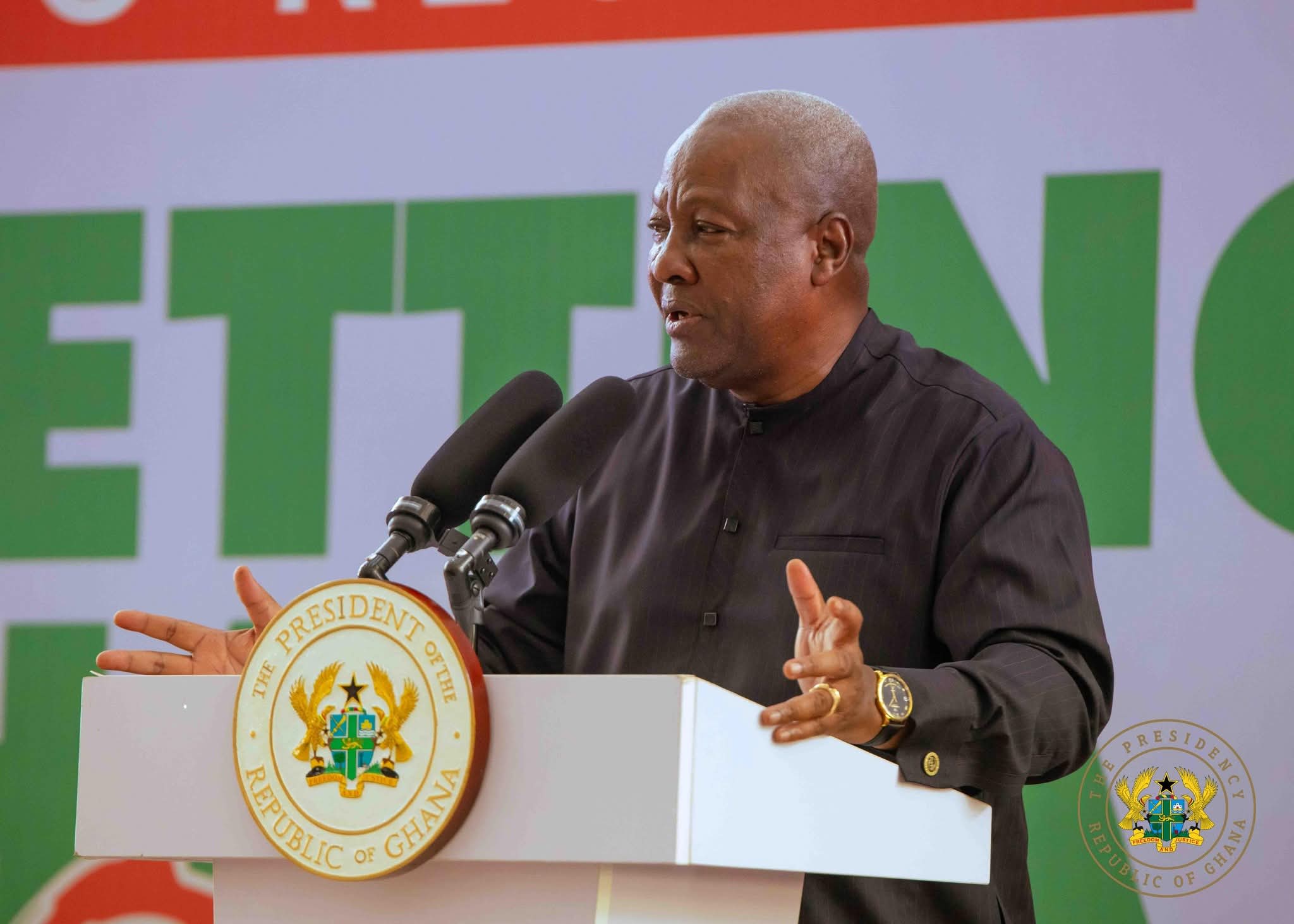
President John Dramani Mahama is expected to hold a high-level Mahama civil society meeting at Jubilee House on Monday, March 30, 2026, as pressure mounts for stronger action on governance reforms and illegal mining.
The engagement, convened by the President, is set to bring together key civil society organisations, faith-based institutions and policy advocates to deliberate on accountability, anti-corruption efforts, public sector efficiency and citizen participation in national development.
The meeting is being positioned as a key platform for direct dialogue between government and non-state actors at a time when public expectations for institutional reform remain high.
Among the groups expected to participate are the Catholic Bishops Conference of Ghana, the Office of the National Chief Imam and IMANI Ghana, alongside other influential voices in the governance space.
The discussions are expected to centre not only on broad reforms, but also on the practical steps required to improve transparency and strengthen confidence in public institutions.
Galamsey Set to Dominate Discussions
While the meeting covers a wide governance agenda, illegal mining — popularly known as galamsey — is likely to dominate the conversation.
Civil society groups have signalled that they intend to use the opportunity to demand firm timelines and measurable commitments from government on tackling the worsening environmental crisis.
A member of the Ghana Coalition Against Galamsey, Awula Serwah, said the coalition wants more than assurances and expects concrete responses from the Presidency.
“We are hoping that at today’s meeting, the government will be able to answer some of the points that we’ve put, and then maybe give us timelines as to when certain things will be done.” - Awula Serwah
She pointed specifically to unresolved concerns over alleged official complicity, the diversion of the River Ankobra and the continued presence of chanfang machines on water bodies.
Demand for Urgent Action
Awula Serwah warned that delays in addressing the crisis could deepen the country’s environmental and public health risks, stressing that the moment requires urgency rather than prolonged consultation.
“We have made a few demands and would like to have timelines as to when these demands will be met because we face an existential threat.” - Awula Serwah
She further called for greater operational support for anti-illegal mining institutions, including NAIMOS and the Forestry Commission, insisting that frontline agencies must be equipped to respond effectively.
Her comments reflect growing impatience among advocacy groups, many of whom believe the government must now move from policy statements to visible enforcement action.
Today’s engagement is expected to be closely watched as an early test of how the Mahama administration intends to manage civic pressure and respond to calls for reform.
For many observers, the significance of the meeting will depend less on the discussions inside Jubilee House and more on whether it produces clear commitments, timelines and follow-through on some of the country’s most pressing governance challenges.
READ ALSO: Accra New Town building Collapse kills 3, leaves 20 Rescued