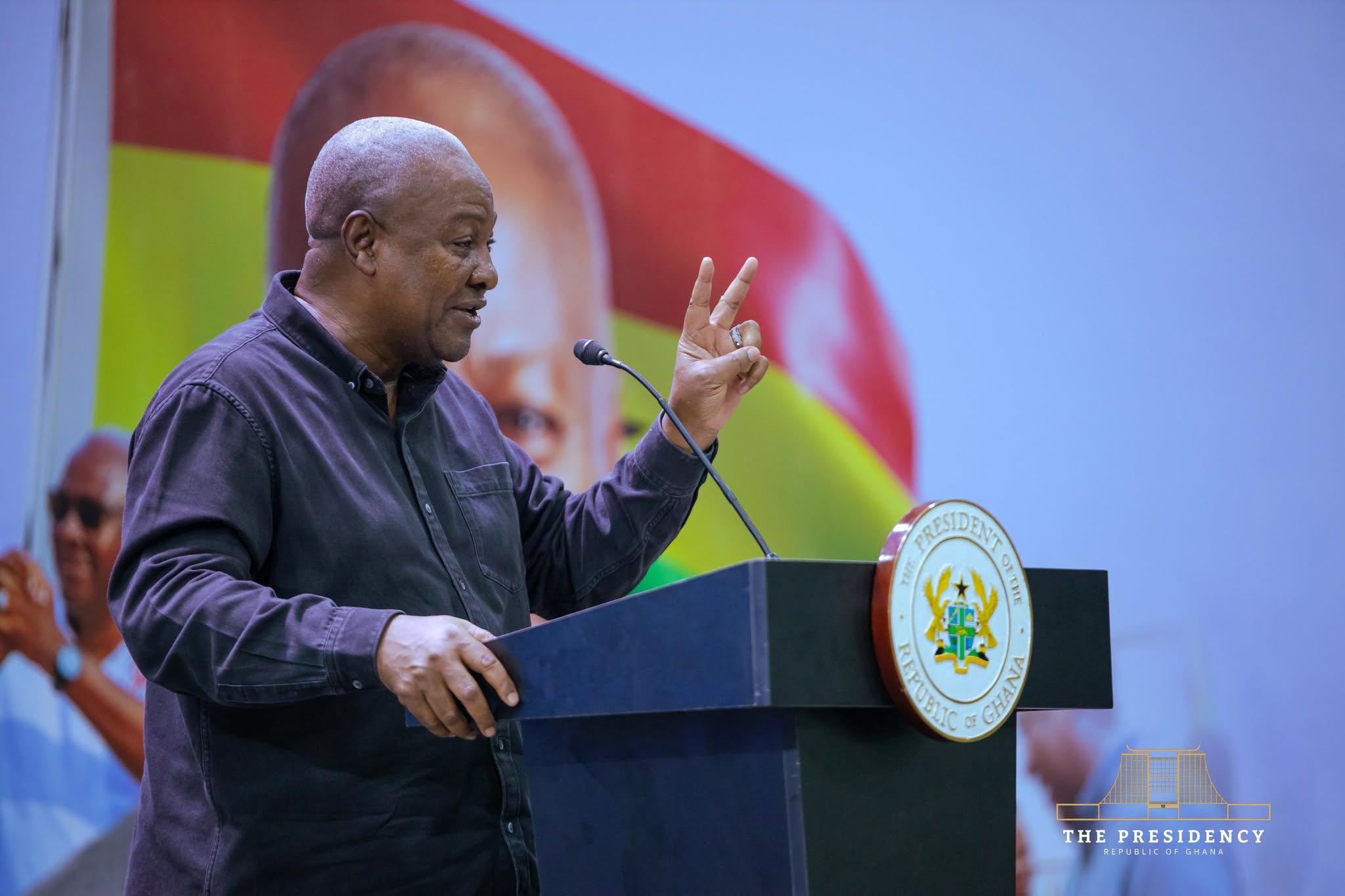
President John Dramani Mahama has declared that Ghana’s banknotes are long overdue for a currency refresh, arguing that leaving paper money unchanged for extended periods gives criminal networks ample time to master counterfeiting techniques.
Addressing residents during his Resetting Ghana Tour in the Upper East Region, the President noted that central banks worldwide observe regular maintenance cycles to preserve public trust in their physical legal tender.
"Every country, every ten years, you are supposed to refresh your currency because if you use the same currency for too long, people learn how to counterfeit it," President Mahama said. "And so this particular currency is long overdue for refreshing."
Central Bank Mandate and Security Upgrades
While making a strong case for updated notes, President Mahama acknowledged that the legal authority to design, alter, or replace banknotes rests entirely with the Bank of Ghana. He indicated that conversations surrounding the issue are already taking shape within the central bank hierarchy.
"I know the governor has plans to refresh the currency and I am sure that at the appropriate time, the Bank of Ghana will let Ghanaians know what they are doing about it." - President Mahama
A routine currency upgrade primarily targets physical security architecture rather than nominal value. Such changes typically involve embedding sophisticated holograms, updated watermarks, advanced colour-shifting inks, and tactile features that protect everyday traders and financial institutions from accepting forged tender.
Crucially, an update of this nature does not constitute a redenomination or alter the intrinsic purchasing power of the currency in circulation. It simply equips cash handlers with better tools to spot fake notes.
Economic Fundamentals Beyond Physical Notes
President Mahama was quick to separate banknote aesthetics from underlying macroeconomic stability. While modern security threads deter illicit printing presses, they do not dictate exchange rate movements or control domestic price pressures.
The President maintained that the relative stability of the cedi in recent months reflects deliberate policy adjustments rather than the paper the currency is printed on.
"What I would say is that the cedi today is stronger than it was in the past because of good economic management.
"Your currency is as strong as your economic management and because of the good policies we put in place, the cedi is holding its own against other major currencies." - President Mahama
The resilience of the local unit will ultimately depend on fiscal discipline, inflation control, export revenues, and foreign exchange reserves.
"We will continue to make sure that the economy bolsters the strength of the cedi," President Mahama stated. "But, like I said, at the appropriate time, the Governor will apprise us of any plans that he has for replacing the currency."
As the country awaits official word from the central bank on the timing and specifications of any new rollouts, government policy will remain focused on macro stability.
READ ALSO: Ghana Rejects GH¢6.4bn in T Bill Bids as Government Tightens Borrowing Strategy