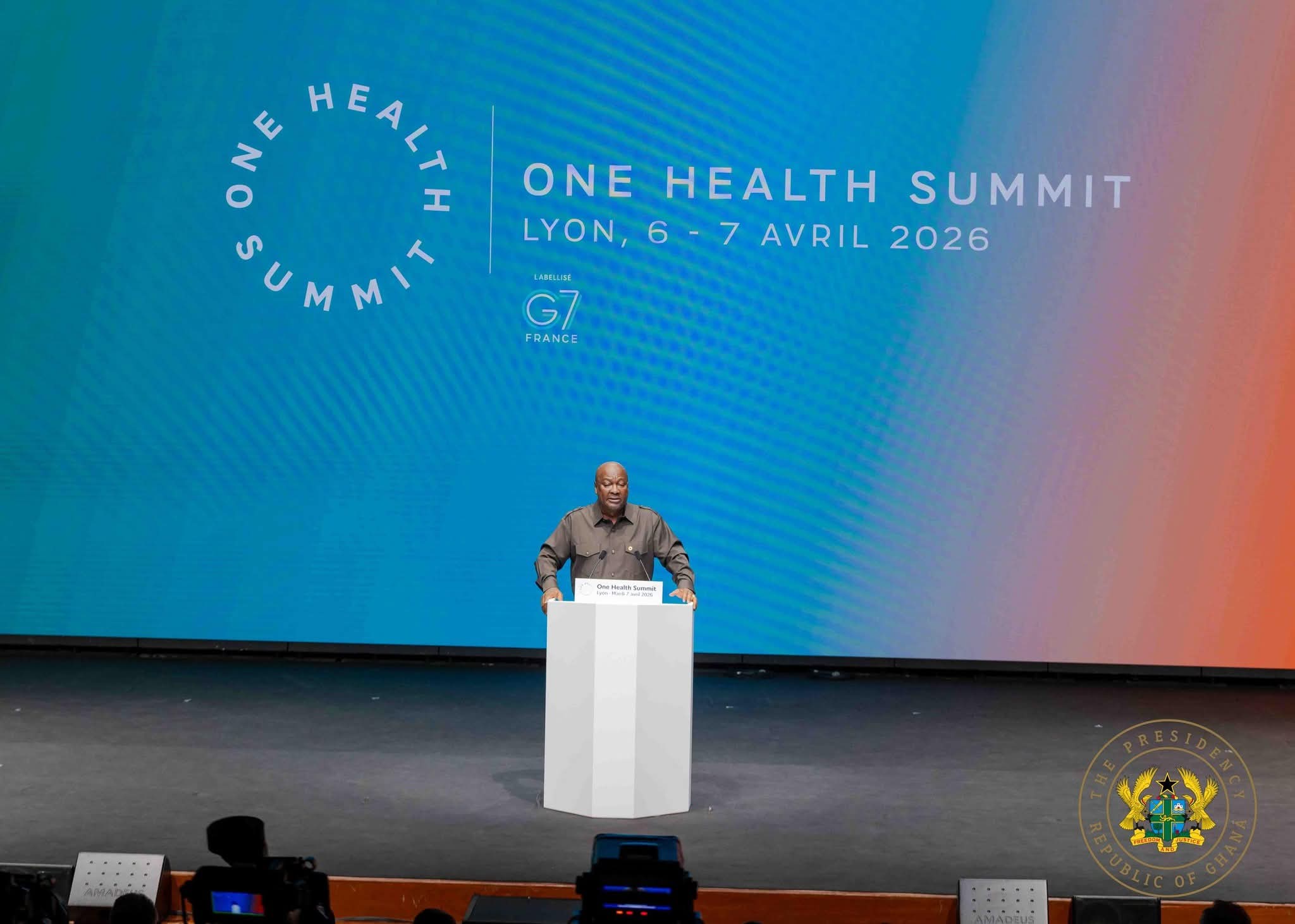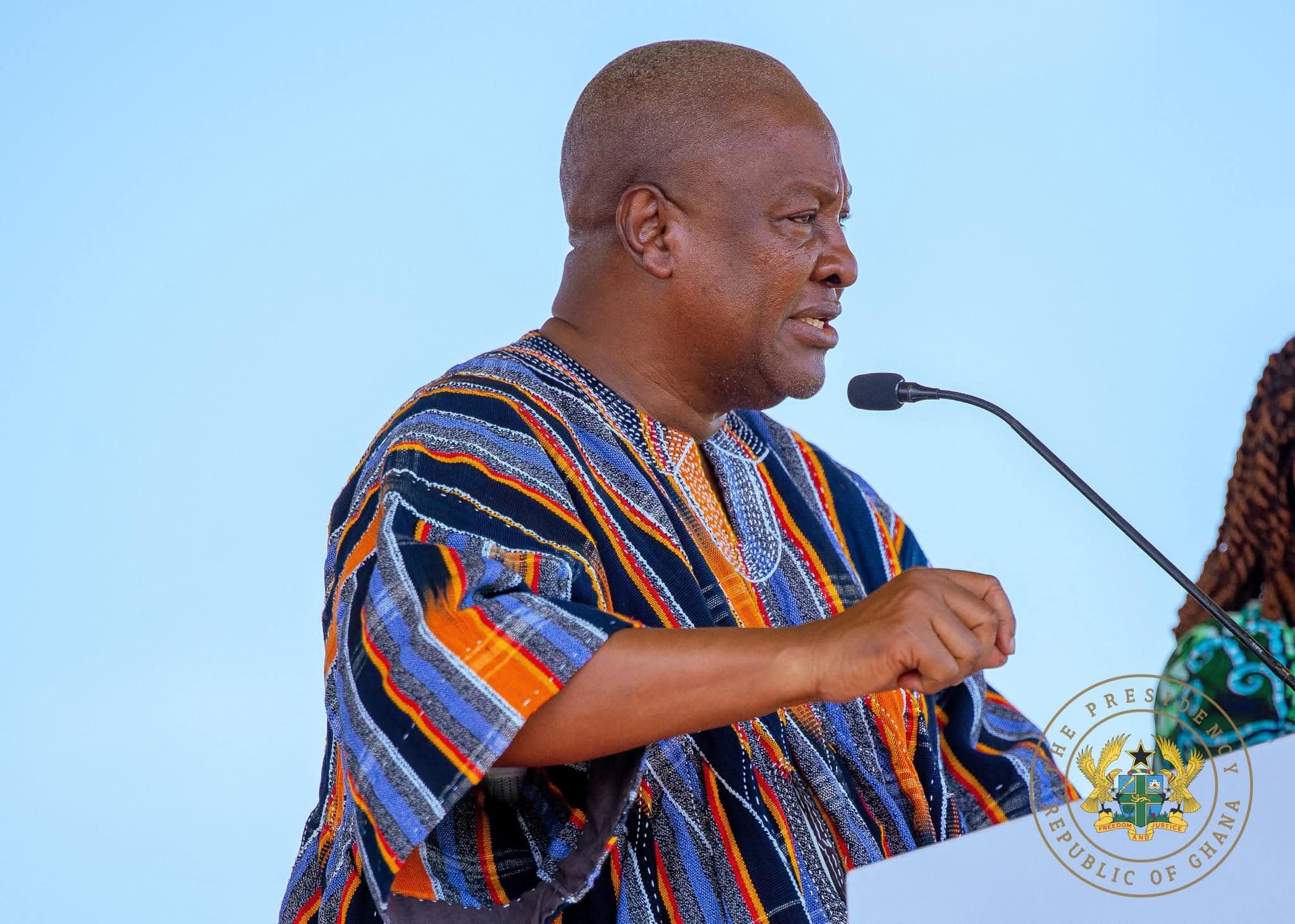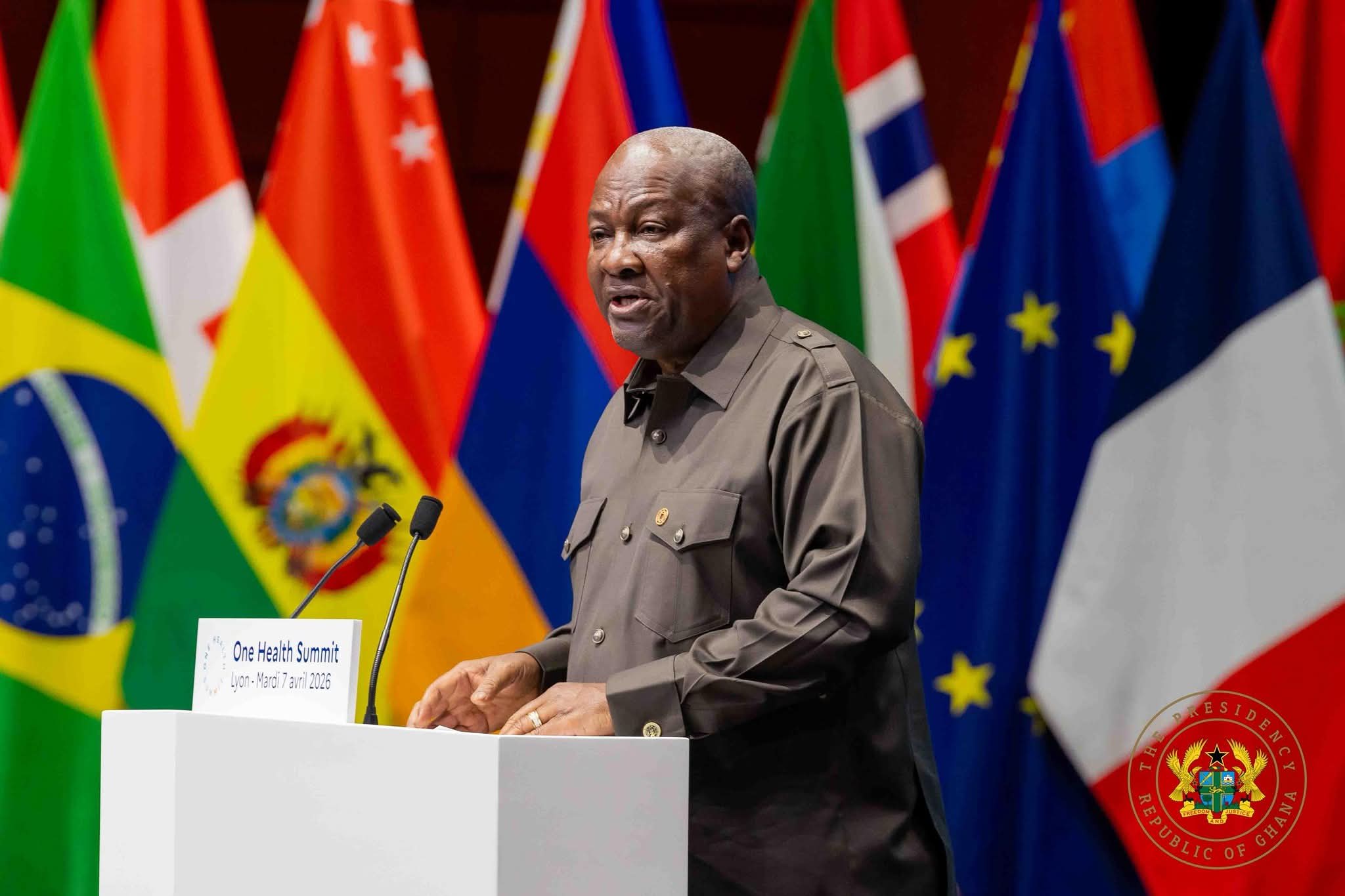
Ghana's President John Dramani Mahama took the global stage in Lyon, France this week, co-chairing the One Health Summit alongside French President Emmanuel Macron and delivering a keynote address that challenged world leaders to stop talking and start acting on one of the defining threats of the era, the convergence of human, animal, and environmental health crises.
Speaking to an audience that included heads of state, global health officials, and leaders of international organisations, President Mahama opened with an acknowledgement that the foundations of the global order are shifting.
"We are living in truly interesting times, and much of what we previously took for granted is now being questioned, and our old answers have now become the new questions." - President John Dramani Mahama
He framed the One Health agenda not as a technical exercise for specialists but as an existential necessity, particularly for the African continent.
From the threat of infectious disease outbreaks to the accelerating loss of biodiversity and the irreversible damage being done to ecosystems, Mahama argued that all these crises share a common origin.
"At the foundation of all these crises is the phenomenon of climate change and yes, we realise that everything is interconnected," he told the summit.
Africa's Living Tradition of One Health
In one of the speech's most distinctive passages, Mahama drew a direct line between Africa's ancestral knowledge systems and the modern One Health framework that the summit was convened to advance.
He argued that the concept of integrated human, animal, and plant health was never foreign to African civilisation, it was simply practised under different names for centuries.
"Long before the coinage of One Health innovations, our ancestors had over the centuries mastered the use of plant-based therapies for animal healing, which in turn protected human health." - President John Dramani Mahama
He pointed to the great civilisations of the continent, from Songhai and Great Zimbabwe to Timbuktu, Aksum, and ancient Egypt, as evidence that Africa's traditional knowledge systems had long incorporated methods for diagnosing chronic ailments, managing plagues and pests, and practising sustainable land management through techniques like terrace farming.
Three Calls to Action
Mahama concluded with three specific calls to action that he urged delegates to adopt immediately.
The first was a demand for an end to declarations without follow-through — a rebuke of the cycle of summits that produce commitments rarely converted into delivery on the ground.
"The period of declarations must come to an end. The moment for coordinated effort is here, and let us start from Lyon," he said.
The second called for the full integration of One Health principles into national development agendas and the international security framework, treating pandemic prevention as a pillar of sustainable development rather than a standalone health concern.
The third was a call to build what he described as a "new preventive shield", robust, interoperable surveillance systems and early warning mechanisms designed to detect and contain threats at source.
"But these must be smart, dynamic, agile, and interoperable, lest we simply add new bureaucracies to old ones," he warned.
READ ALSO: ECG's Transformer Upgrade to Trigger Outages in Parts of Accra