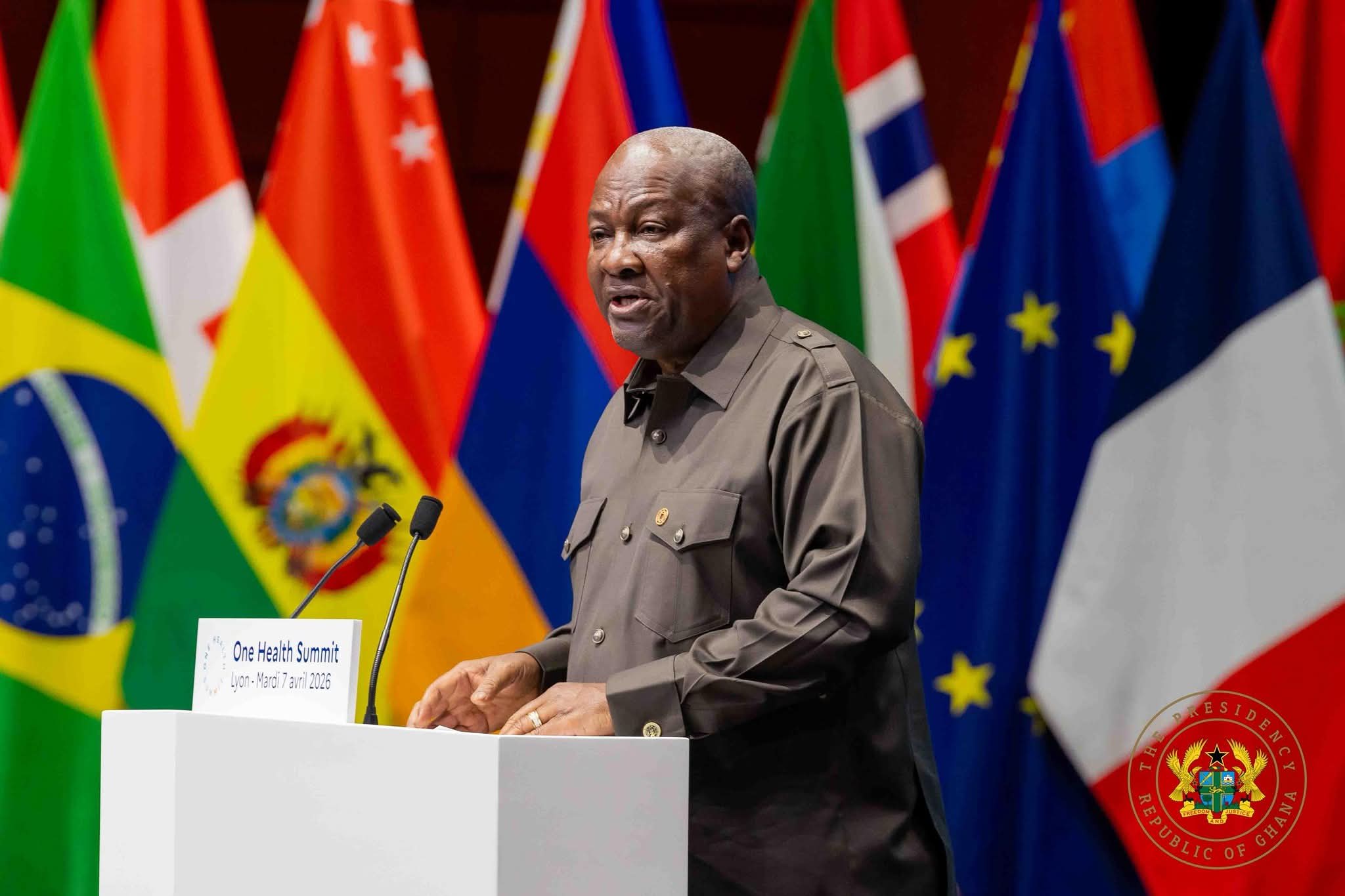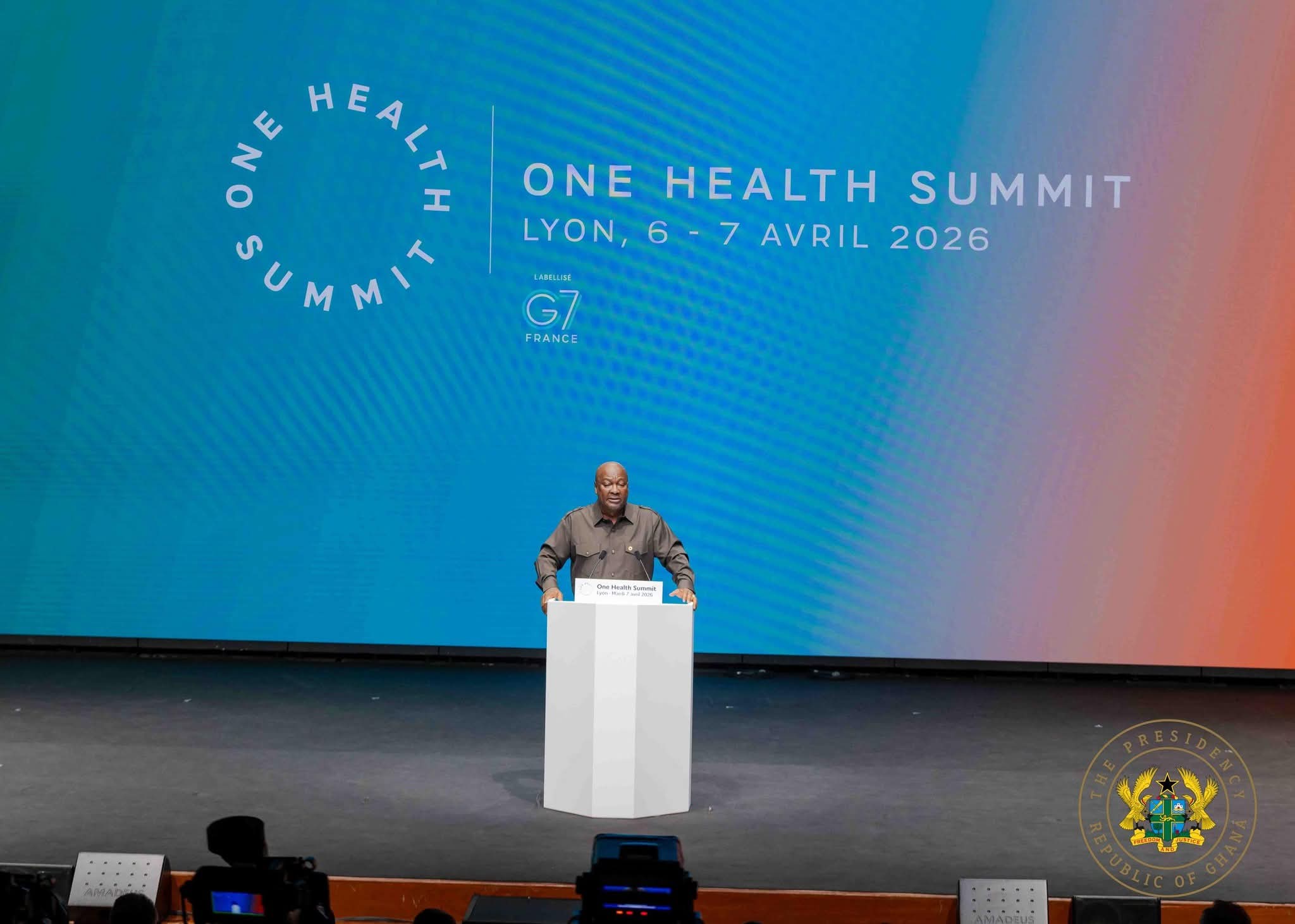
When Ghana's President John Dramani Mahama stepped to the podium at the One Health Summit in Lyon, he did not arrive merely as a co-chair lending diplomatic weight to a global gathering.
He arrived as the leader of a country living the consequences of the very crises on the agenda and he used his keynote to make that visible.
Mahama offered Ghana as a concrete illustration of how the forces of environmental degradation, disease, and climate disruption intersect and amplify each other in ways that abstract policy discussions often fail to capture.
He described a blight of diseases and pests currently decimating the country's smallholder cocoa farming communities, threatening the livelihoods of millions of households that depend on the crop for their survival.
He also spoke of the damage being done by illegal gold mining, a phenomenon known in Ghana as galamsey, which he described as leading directly to forest degradation and the pollution of water bodies.
The consequences, he argued, extend far beyond the economic. Precious populations of birds and insects critical to Ghana's biodiversity are being lost. "Every species is in the crosshairs, animals, humans, and plants," he told the summit.
The Burden of Non-Communicable Diseases
In a passage that challenged the common assumption that Africa's health crisis is primarily an infectious disease problem, Mahama highlighted the rapid and largely unacknowledged rise of non-communicable diseases on the continent.
In Ghana today, non-communicable diseases account for 42 percent of all mortality, a figure that places NCDs squarely at the centre of the country's health challenge alongside traditional infectious disease burdens.
His government's response, he said, includes the rollout of the Ghana Medical Trust Fund and a free primary healthcare programme, both of which are designed around prevention and lifestyle interventions rather than reactive treatment.
Significantly, both programmes are intended to incorporate traditional knowledge into their delivery, a deliberate choice to draw on Ghana's cultural heritage rather than import systems designed for different contexts.
The Equity Imperative
The sharpest edge of Mahama's address came when he turned to the question of global fairness in health financing. He made no effort to soften the message.
"Regrettably, as I speak to you today, the countries that are most at risk have the least resources to cope. This must change." - President John Dramani Mahama
He called for concrete improvements in access to financing, technology, data, and innovation for the most vulnerable nations, arguing that a healthy and resilient Africa would be a force for global progress rather than a burden.
He also issued a specific call for international action on plastic pollution, describing it as a cross-cutting threat that is poisoning ecosystems across the world.
For Mahama, Lyon represented more than a diplomatic occasion. It was an opportunity, perhaps the last, to convert the rhetoric of global health solidarity into the structural commitments that developing nations have long been promised and rarely received.
"Let Lyon be the turning point," he urged delegates. The world, he implied, has run out of time for anything less.
READ ALSO: Ghana's Inflation Forecast to Rise to 3.4% in April 2026