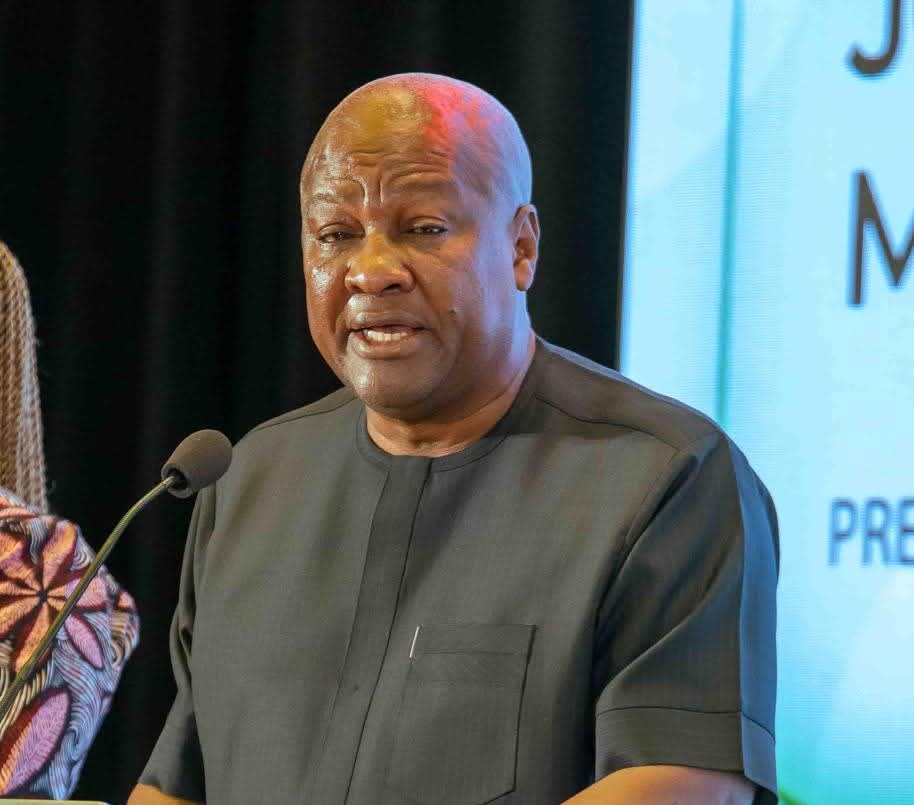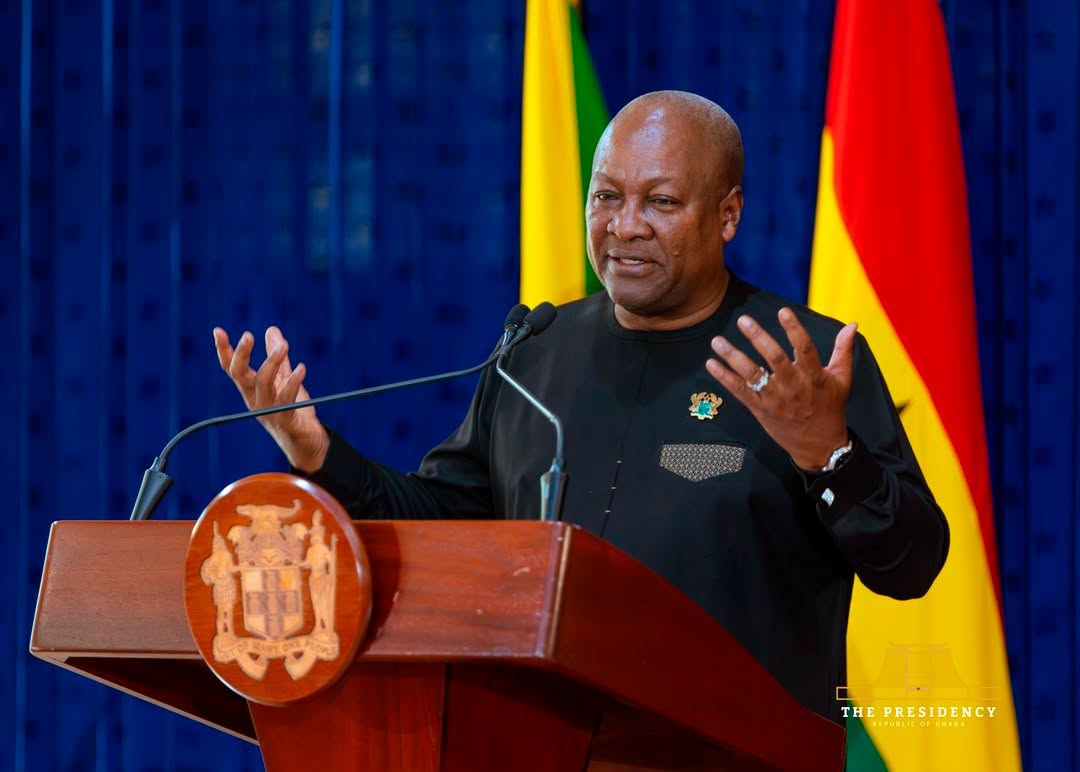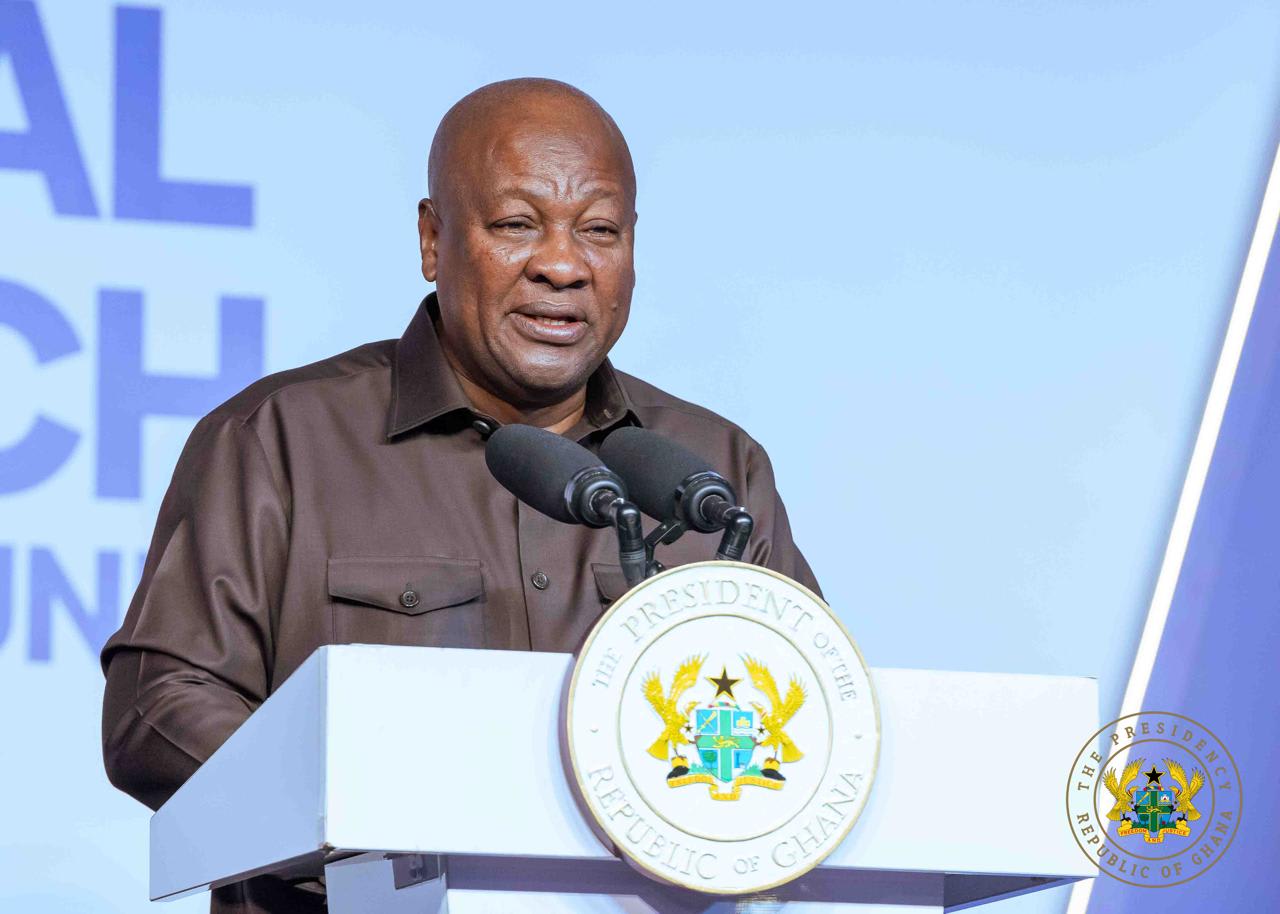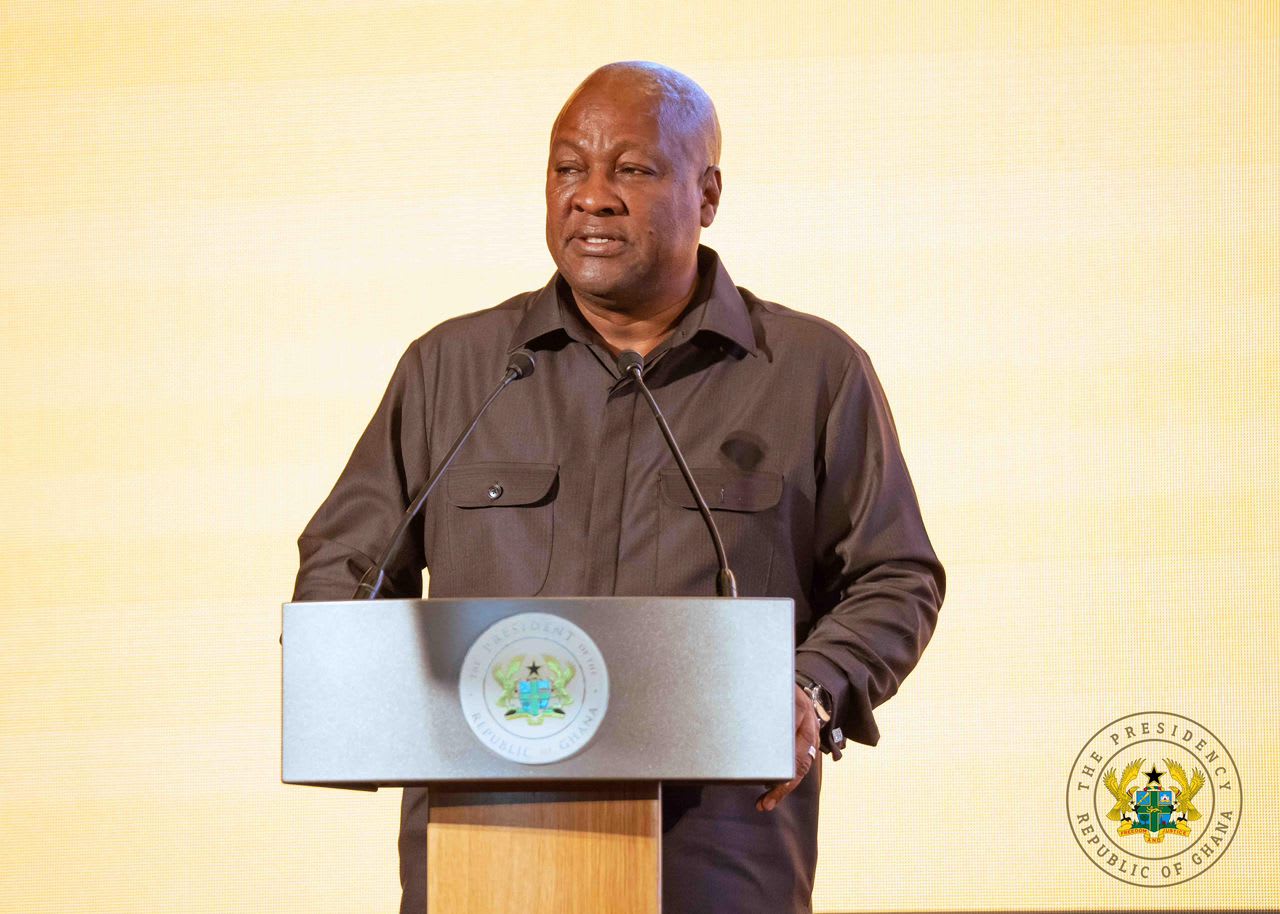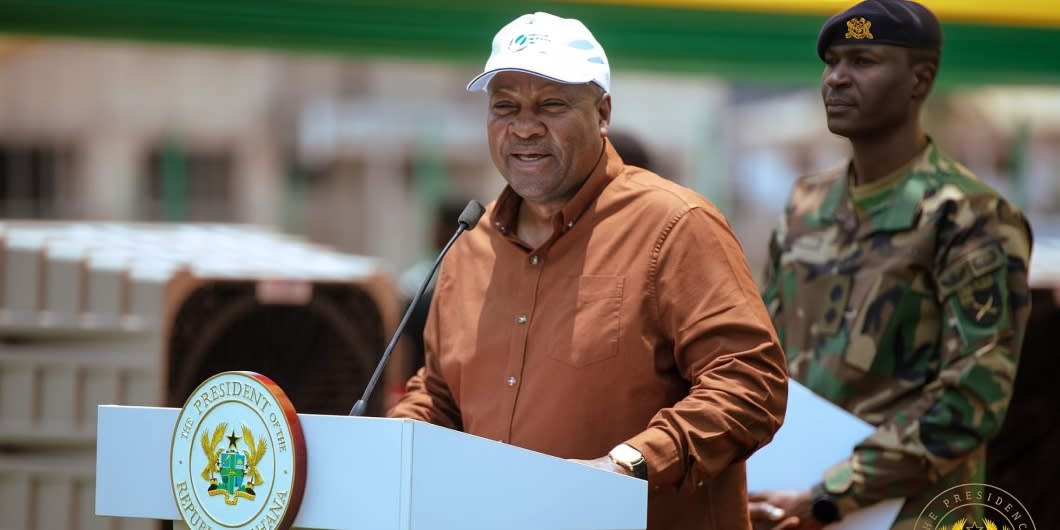
President John Dramani Mahama has announced a major policy shift in Ghana’s science education strategy, declaring that the era of stand-alone STEM institutions is ending as government moves to democratise science, technology, engineering and mathematics education across the country.
Speaking during the Sawla Demonstration of the National BSTEM programme in the Savannah Region as part of his Resetting Ghana Tour, President Mahama said the future of STEM education lies in broad access at the foundational level rather than limiting science-focused learning to a few specialised institutions.
According to him, the previous approach concentrated heavily on dedicated STEM senior high schools, a model he believes restricted opportunities for many students who could benefit from early science and technology exposure.
New Direction for STEM Education
President Mahama said government’s new policy seeks to decentralise STEM education and integrate it into basic schools nationwide so children can begin learning practical science and technology concepts from an early age.
“We have realised that it is the way science and mathematics are taught that makes a lot of our children not want to take the science and engineering routes,” he said.
He stressed that modern STEM education must move beyond memorisation and theoretical instruction by encouraging practical classroom interaction, experimentation and problem-solving.
The President explained that science lessons should become more engaging and relatable, allowing students to understand concepts through observation and participation rather than abstract teaching methods.
Drawing from his own school experience, President Mahama recalled how mathematics and science were previously taught with limited teaching aids, making technical subjects difficult for many students.
“In the past, when we were in school, they would just come and take a chalk and draw a triangle on the blackboard and say, this is a triangle. The child has to conceptualise in his mind what a triangle is,” he stated.
He noted that such rigid methods discouraged many students from pursuing careers in engineering and related scientific fields.
The President added that if modern STEM learning tools had existed during his school years, he might have pursued a career in civil or mechanical engineering.
Practical Learning and Technology Integration
President Mahama highlighted how current STEM education methods allow students to interact directly with learning materials through experiments, robotics, coding and artificial intelligence applications.
He cited classroom demonstrations where students used litmus paper to identify acids and bases, describing such hands-on learning as more effective than rote memorisation.
According to him, government is developing a revised curriculum that will incorporate robotics, coding and artificial intelligence into basic education.
“Currently, more than 5,000 schools have benefited from the STEM equipment, and we’re going to scale it up,” he said, adding that teacher training programmes are also being expanded to support the reforms.
President Mahama said strengthening basic education remains central to the broader reform agenda, arguing that literacy, numeracy and critical thinking form the foundation for future academic and professional success.
Using a building analogy, he explained that a weak educational foundation would undermine progress at higher levels regardless of investment.
He concluded by reaffirming government’s commitment to improving education delivery under the Resetting Ghana agenda while thanking residents of the Savannah Region for their support during his visit.
READ ALSO: Ghana Parliament Ranked Second Most Open Legislature in Africa – Ayariga