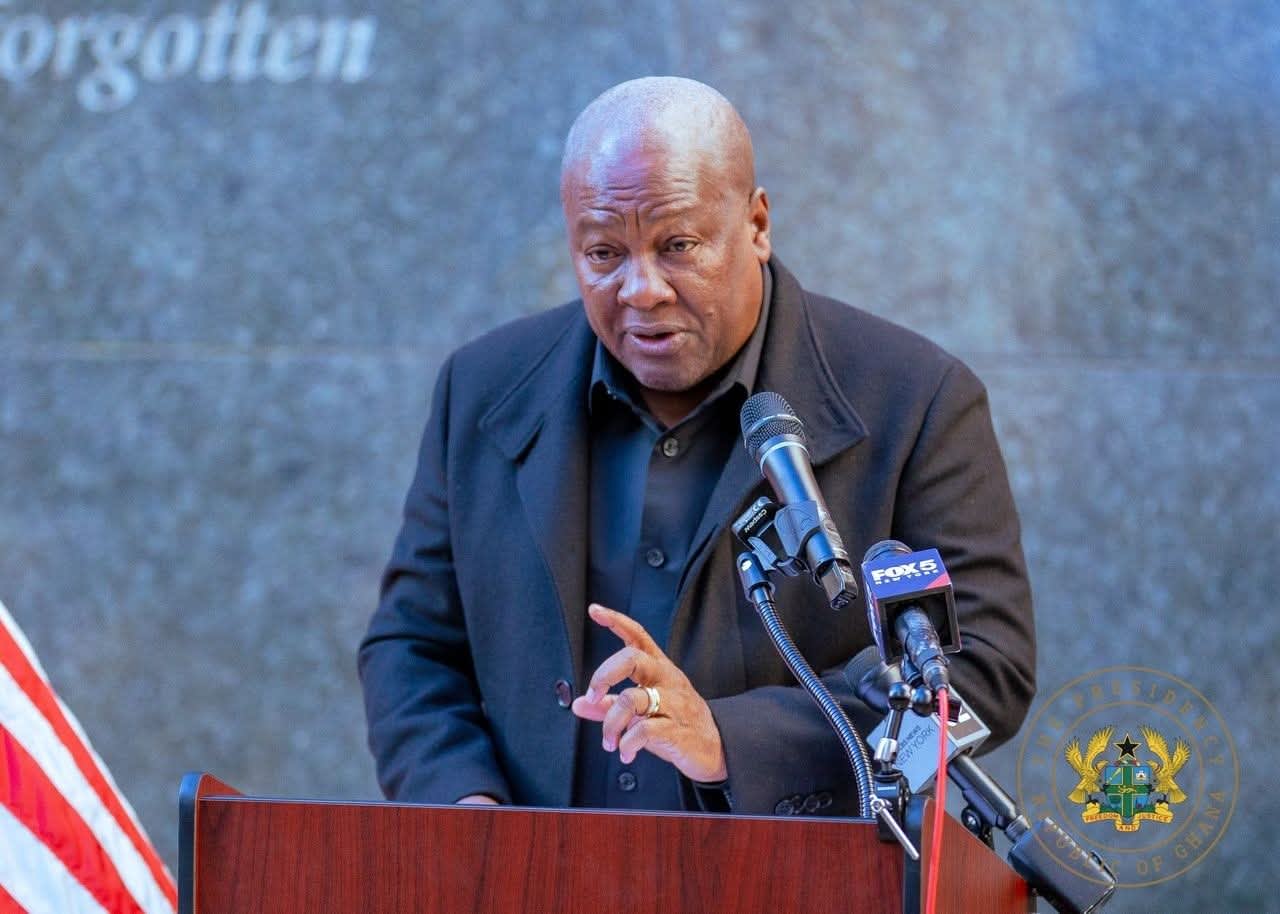
John Dramani Mahama has formally tabled a historic UN Resolution on Slavery at the United Nations General Assembly, calling for the trafficking of enslaved Africans and racialised chattel enslavement to be declared the gravest crime against humanity.
Delivering the statement on behalf of the African Group during the International Day of Remembrance of the Victims of Slavery and the Transatlantic Slave Trade, President Mahama described the moment as a significant step in the global pursuit of truth, healing and reparative justice.
He said the world must not only remember the millions of Africans brutalised over centuries, but also act to preserve their dignity through formal recognition of the atrocity.
“Today, we come together in solemn solidarity to affirm truth and pursue a route to healing and reparative justice.” - President Mahama
A Landmark Push for Historical Recognition
Mahama reminded delegates that the journey toward global acknowledgment has been gradual but meaningful.
He noted that the annual UN observance itself was born out of sustained international effort, first established in 2006 and made permanent in 2007.
“Progress is made in steps,” he said, framing the proposed resolution as the next logical milestone in confronting one of history’s greatest injustices.
The draft resolution, he explained, is the result of months of consultation among African institutions, national governments, legal experts, scholars and jurists, all working toward a common position grounded in “truth, compassion and moral conscience.”
By placing the issue before the General Assembly, Ghana is seeking to elevate the conversation from remembrance to formal moral and legal recognition.
Healing Through Remembrance and Justice
In his address, President Mahama stressed that remembrance is not merely ceremonial but part of a broader process of education and healing.
He reflected on the approximately 13 million African men, women and children who were enslaved and said their memory continues to live on through books, oral histories, museums and memorials such as the Ark of Return.
“Through these activities, we do more than remember. We document and educate,” he said, adding that such efforts help societies learn from the past without losing sight of the human pain involved.
He argued that the adoption of the resolution would serve as “a safeguard against forgetting,” while also creating a pathway toward healing for descendants and affected communities across Africa and the diaspora.
Call to Stand on the Right Side of History
Mahama closed his address with a direct appeal to the conscience of the international community, urging member states to back the resolution.
He invoked former U.S. President Theodore Roosevelt and civil rights leader Martin Luther King Jr. to underscore the moral weight of the vote.
“With a great moral issue involved, neutrality does not serve righteousness,” he quoted Roosevelt as saying, before reminding delegates of King’s famous words that “the arc of the moral universe is long, but it bends toward justice.”
On what he described as “this beautiful day in March,” Mahama urged nations to ensure that history records their decision as one rooted in justice. “Let our vote on this resolution restore their dignity and humanity,” he declared.
If adopted, the resolution could mark a defining turning point in global efforts to confront slavery’s legacy and strengthen the call for reparatory justice.
READ ALSO: International Day of Remembrance: African Union Calls for Justice Over Legacy of Slavery