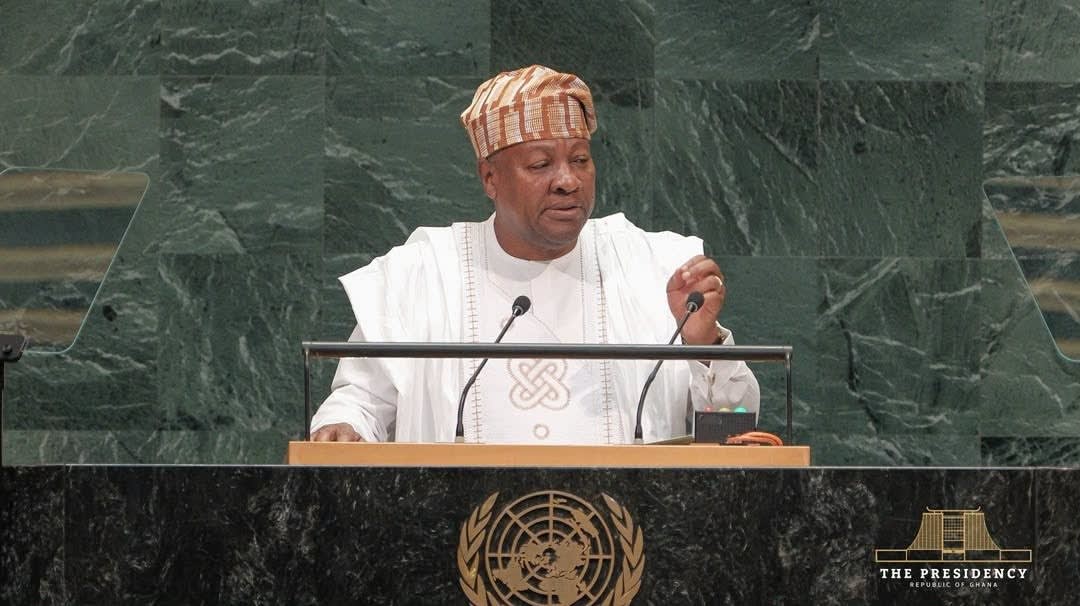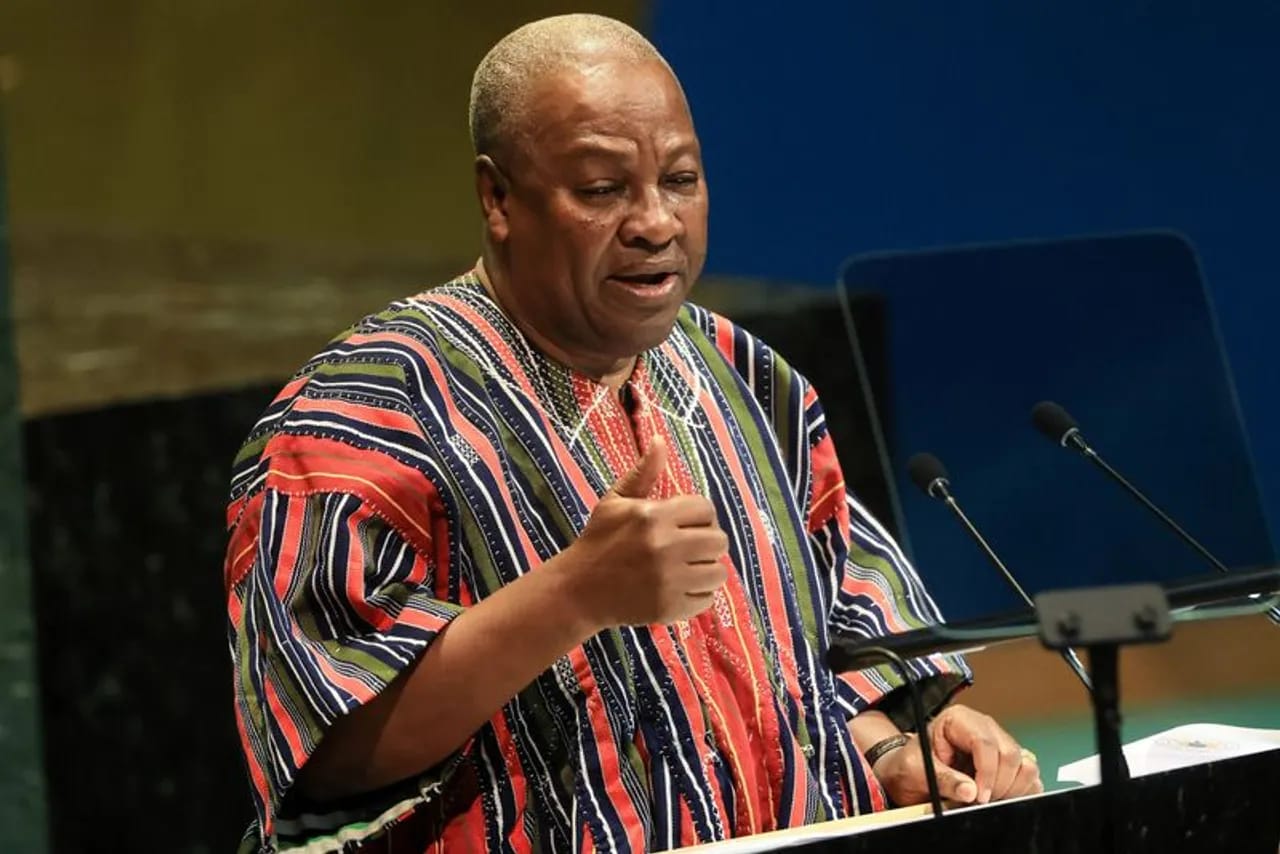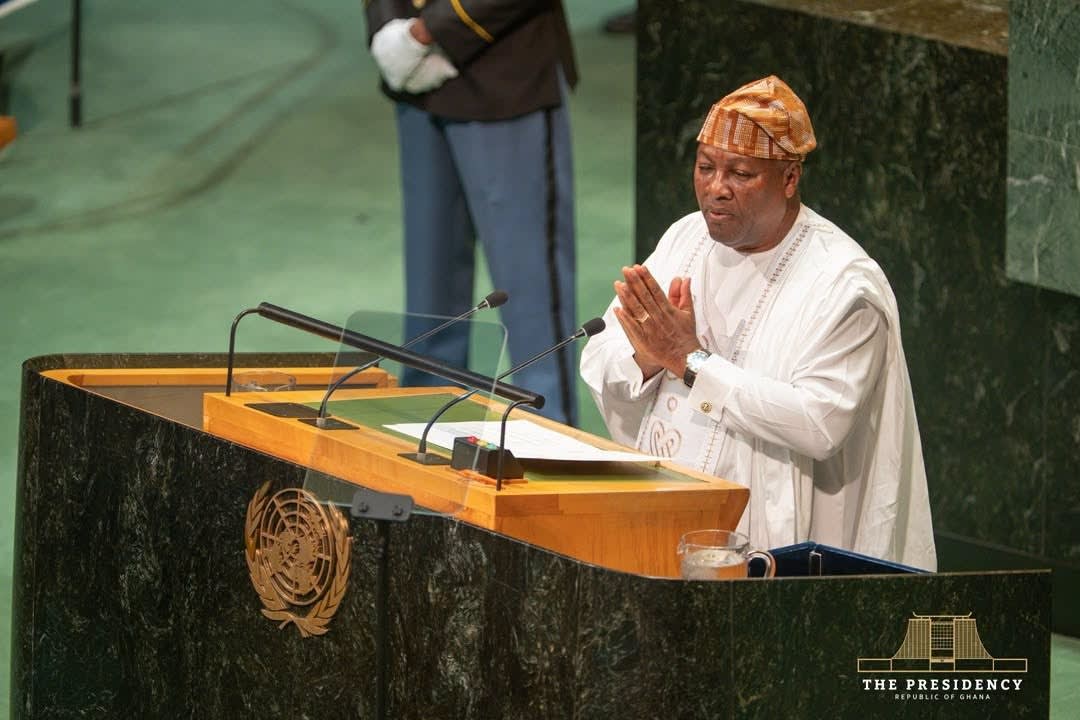
President John Dramani Mahama brought a domestic tragedy into the chamber of the United Nations General Assembly to make his point about climate injustice concrete, rather than abstract.
Mahama opened his climate remarks by addressing those who continue to dismiss climate change as, in his words, a hoax perpetrated by geopolitical opponents. He pointed to melting glaciers, flash flooding, droughts, record heatwaves, brush fires, and hurricanes as unmistakable signals of a planet under strain that recent events have made impossible to ignore.
He then delivered the statistic at the centre of Africa's climate grievance. The continent contributes less than 4 percent of global greenhouse gas emissions, yet bears some of the heaviest burden of climate devastation, facing erratic rainfall, relentless coastal erosion, and accelerating desertification across the Sahel.
Mahama did not leave the argument at the level of statistics. He described what happened in Ghana and coastal West Africa on June 29, 2026, when torrential rain exceeding 160 millimetres fell across seven coastal regions within 24 hours. The result was 39 deaths, with one person still missing.
The detail served as evidence rather than illustration. Mahama used it to argue that climate justice is not a theoretical debate for nations like Ghana. It is measured in lives lost to weather events the country did minimal amount to cause.
Grants, Not Loans
His policy demand followed directly from that evidence.
Mahama insisted that developed nations fulfil what he called their long-overdue financial commitments, and that mitigation support must be operationalised through predictable, non-debt-creating grants rather than loans that further indebt already fragile economies.
The distinction matters considerably to Ghana's broader economic argument.
Elsewhere in his address, Mahama noted that developing nations already borrow at interest rates up to eight times higher than industrialised nations, and that climate-struck African and Caribbean countries are frequently forced to take on crippling debt to rebuild from disasters they did not cause.
Layering climate finance on top of that structure as more debt, in his framing, would compound an injustice rather than resolve one.
He extended the same logic to global health security, calling for an equitable architecture guaranteeing regional vaccine manufacturing, stronger epidemic surveillance, and resilient public health infrastructure across the Global South, tying the demand explicitly to Ghana's own Accra Reset agenda.
READ ALSO: Mahama Demands Permanent African Seat on UN Security Council With Full Rights