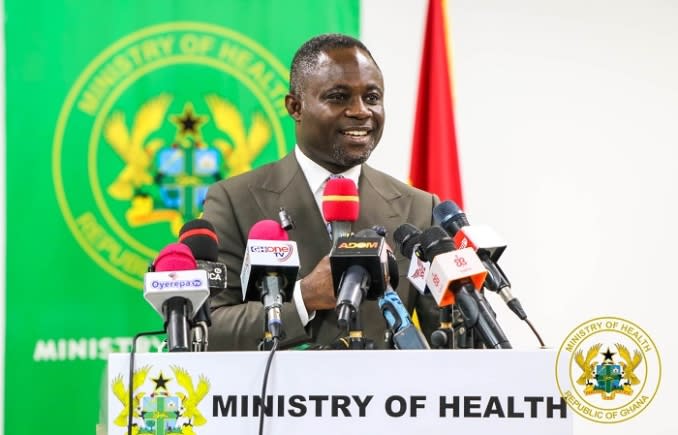
Ghana's digital health systems shutdown has triggered a sharp political backlash, with the Minority in Parliament demanding immediate accountability after ten critical servers were suspended by cloud provider Akamai over an unpaid debt of just US$64,510.95.
The outage, which began on October 29, 2026, crippled key electronic health information networks across the country, including the widely used DHIMS2 platform, leaving health workers unable to access vital patient and administrative data.
A Collapse Barely a Year After GHIMS Launch
The Minority highlighted the irony of the breakdown, noting that Health Minister Kwabena Mintah Akandoh had only introduced the Ghana Health Information Management System in October 2025 to replace the older Lightwave platform.
GHIMS was marketed as a state-owned solution designed to grant Ghana complete ownership over its health data while cutting ties with costly private vendors. Yet barely twelve months later, a routine bill of under US$65,000 brought major components of the country's health data network to a complete halt.
Ranking Member on the Health Committee, Dr. Nana Ayew Afriye, issued a press statement on November 6 questioning how such a minor financial default could happen when the Health Ministry's budget grew by 28 percent, climbing from GH¢17.8 billion in 2025 to GH¢22.8 billion in 2026.
"Digital health transformation must be measured not by the introduction of new platforms, but by the reliability, accessibility and sustainability of the systems serving Ghanaians," Dr. Afriye stated, demanding a full accounting of every cedi spent on the GHIMS rollout.
Administrative Negligence and Vendor Insensitivity
The Minority directed heavy criticism at both state institutions and the vendor, calling it unacceptable that the Ministry of Health and the Ghana Health Service allowed contractual debts to escalate into a national public health risk.
"How could institutions entrusted with managing Ghana's health information infrastructure allow ten servers to be suspended over an outstanding obligation of approximately US$64,511?" Dr. Afriye asked, while also calling out Akamai for cutting off essential health services without regard for patient safety.
The Minority urged the Ministry to review its contract with Akamai and terminate the agreement if investigations reveal grounds to do so.
Five Demands Issued to Government
To resolve the crisis, the Minority laid out five specific demands for the government.
First, it wants the affected systems restored immediately with a clear public timeline for total recovery.
Second, the Ministry must publish a complete breakdown of GHIMS expenditures, including actual spending, implementation milestones, and integration work with legacy platforms.
Third, government must launch an internal investigation into the Akamai default, punish responsible officials, and conduct an independent audit of all national digital health hosting, security, and backup infrastructure.
Finally, the Minority called for the establishment of a dedicated, sustainable funding mechanism to ensure utility and hosting bills for critical health data are never left unpaid again.
"It is unacceptable for critical national health information systems to remain vulnerable to disruption over unresolved administrative and financial obligations," Dr. Afriye concluded, promising that Parliament will use its oversight powers to enforce accountability.
READ ALSO: President Mahama, Boeing Agree Roadmap for Ghana National Airline