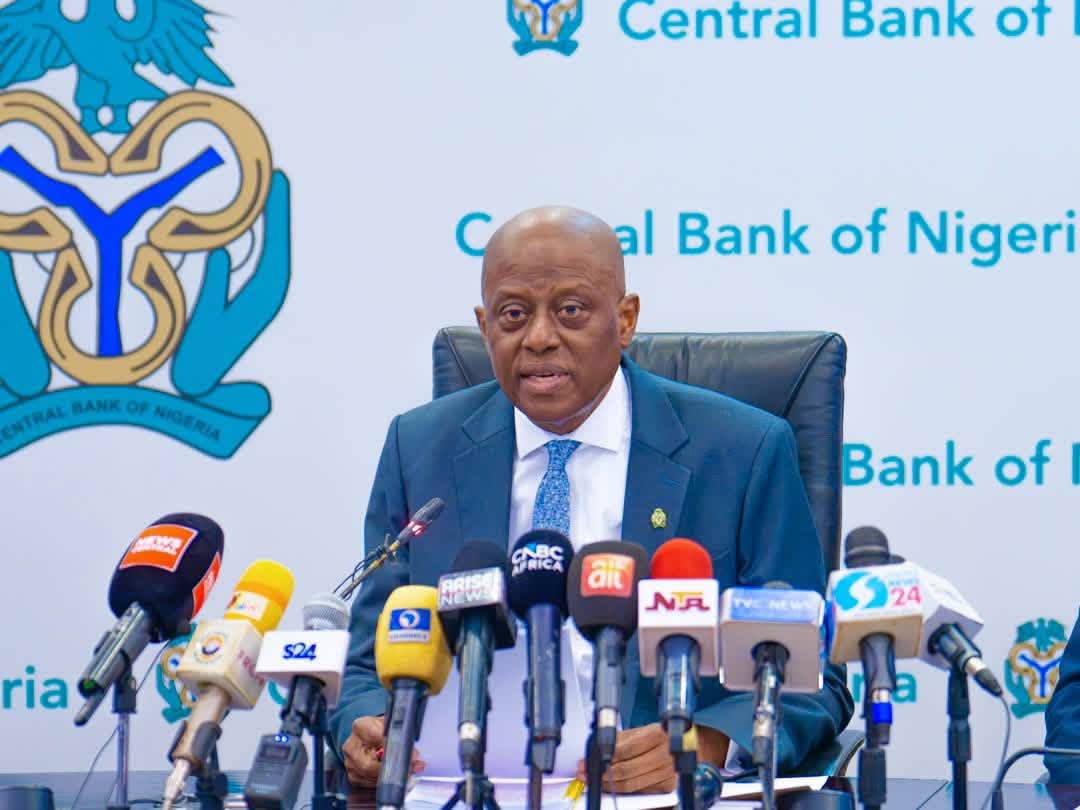
The Central Bank of Nigeria (CBN) says its external reserves stood at US$54.02 billion on November 17, providing about 10.26 months of import cover for goods and services, as Governor Olayemi Cardoso pledged to protect financial sector stability.
Cardoso spoke after the MPC’s 308th meeting, at its final briefing for 2026. He said the reserves remain strong enough to absorb external shocks, describing the recent decline as seasonal and a temporary market adjustment.
Reserves and foreign exchange market
The Governor said the September 2026 reset of the monetary policy rate (MPR) and policy corridor was producing the intended effects.
Interbank rates have moved closer to the corridor’s lower band, while Open Market Operations (OMO) and Treasury Bill rates have moderated.
The gap between policy and market rates had narrowed, indicating improved monetary policy transmission. The CBN remained mindful of borrowing costs and was encouraged by a gradual increase in private sector credit.
The MPC said effective implementation of the CBN’s memorandum of understanding with NNPC Limited could improve foreign exchange liquidity, add to external reserves and strengthen investor confidence.
Inflation remains a key priority
Cardoso said the Bank would maintain a consistent, data-driven policy approach to help businesses and investors plan.
It would assess policy transmission and adjust its measures as conditions change, while deepening coordination between fiscal and monetary authorities.
He reaffirmed the CBN’s commitment to bringing inflation down to single digits, saying the Bank “will not stop until we get there.” He also pledged to safeguard stronger capital buffers across the banking sector and preserve its resilience.
Cardoso expressed optimism about the economy through the rest of 2026 and into 2027, citing improved crude oil production and expansion in agriculture, services and industry, alongside growth in the Composite Purchasing Managers’ Index (PMI).
READ ALSO: Ghana Launches National Referral System for Vulnerable Migrants