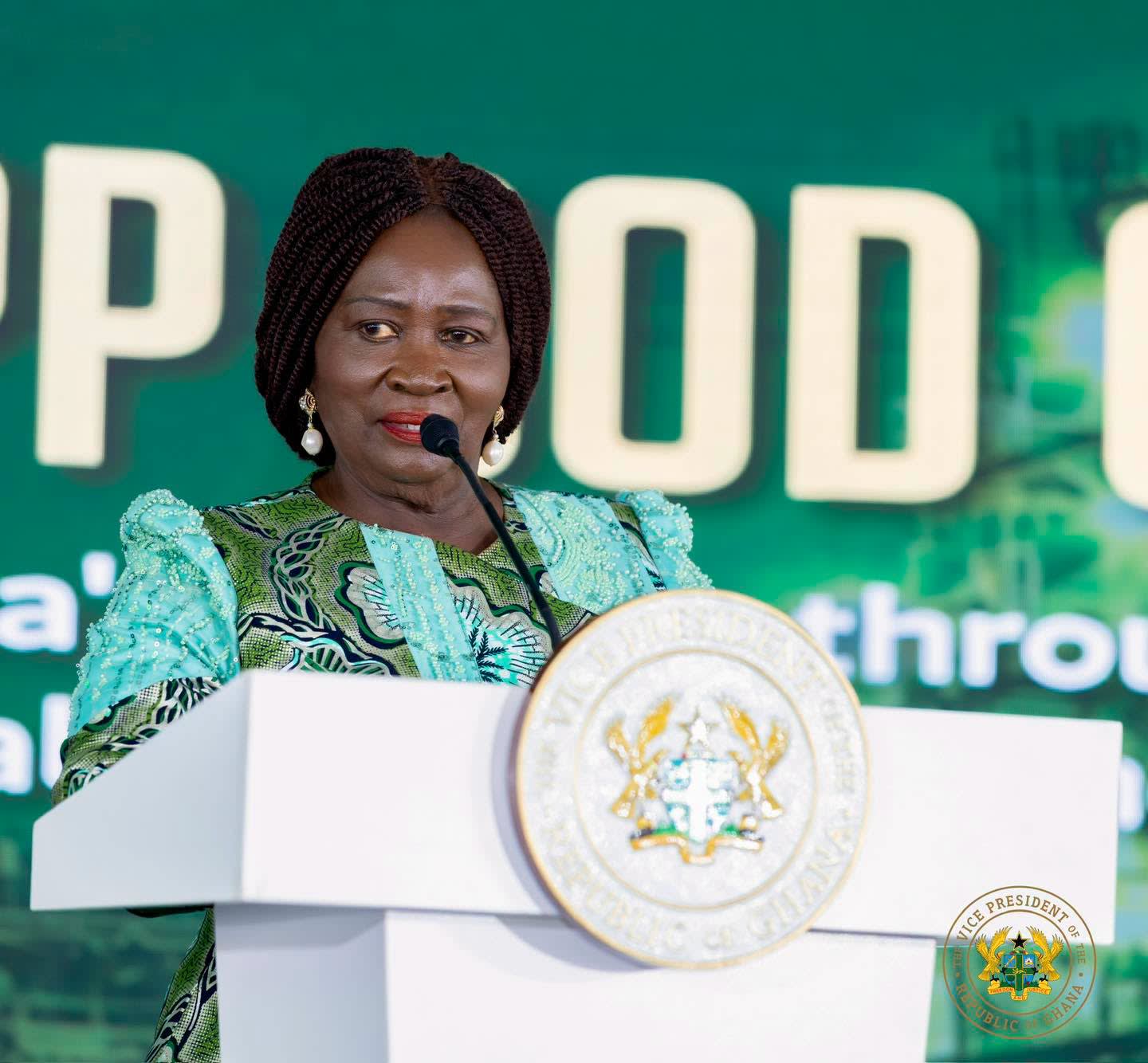
Vice President Professor Naana Jane Opoku-Agyemang has urged the Ghana private sector to take advantage of improving economic conditions, artificial intelligence and the African Continental Free Trade Area to expand businesses and remain competitive.
She said the government’s economic reforms, including changes to the tax system, are intended to reduce pressure on businesses and create a more predictable environment for investment.
Prof. Opoku-Agyemang was speaking at the 6th Chamber Business Awards organised by the Ghana National Chamber of Commerce and Industry at the Labadi Beach Hotel on Friday, November 20.
“As you all know, inflation has moderated, interest rates have declined, and the cedi has strengthened.
“These developments are important because businesses need a reasonably predictable environment to price their products and make investment decisions.” - Prof. Opoku-Agyemang
Tax reforms aimed at easing business costs
The Vice President said recent tax reforms were also designed to make compliance easier and reduce the burden on enterprises.
She noted that the effective tax rate had been reduced, while the registration threshold for businesses dealing in goods had increased significantly.
According to her, macroeconomic stability will matter little if businesses are unable to translate it into stronger production, investment and job creation.
She therefore called on companies to make use of the changing environment to improve efficiency and position themselves for growth.
AI must solve practical business problems
Prof. Opoku-Agyemang also pointed to artificial intelligence as one of the major opportunities now available to businesses.
She cautioned, however, against adopting AI simply because it is fashionable.
“Artificial intelligence in particular is opening up new possibilities across sectors.
“Some of its applications are accessible without substantial investment in new infrastructure, but its adoption must be guided by practical business needs.” - Prof. Opoku-Agyemang
She said companies must also consider cost, skills development, data protection, employment and safety when investing in AI.
The Vice President referred to Ghana’s National Artificial Intelligence Strategy, launched earlier this year, as a framework for building local AI capabilities.
“For this to have a meaningful impact on enterprise, sustained engagement between government and industry is essential,” she said.
AfCFTA offers bigger market, but competition matters
Prof. Opoku-Agyemang also urged businesses to treat AfCFTA as a real expansion opportunity rather than simply a policy slogan.
With the AfCFTA Secretariat headquartered in Accra, she said Ghana had a strong interest in ensuring that the continental agreement succeeds.
“We should be ambitious about the possibilities for our country,” she said.
She warned that access to a larger African market would not automatically translate into commercial success.
“Access to a larger market will be of limited benefit if we do not produce competitively or supply consistently,” she said.
The Vice President said long term success would depend on better management, investment in workforce skills and more efficient production methods.
She also encouraged the GNCCI to continue bringing private sector concerns into policy discussions and helping businesses build the capabilities needed to scale.
The 6th Chamber Business Awards was held under the theme, “Shaping a Resilient Future: The Role of Sustainability and AI in Business.”
The event recognises companies for innovation, technology adoption, entrepreneurship and sound business practices.
READ ALSO: Mahama Urges Oti Chiefs to Help Resolve Nkwanta Conflict