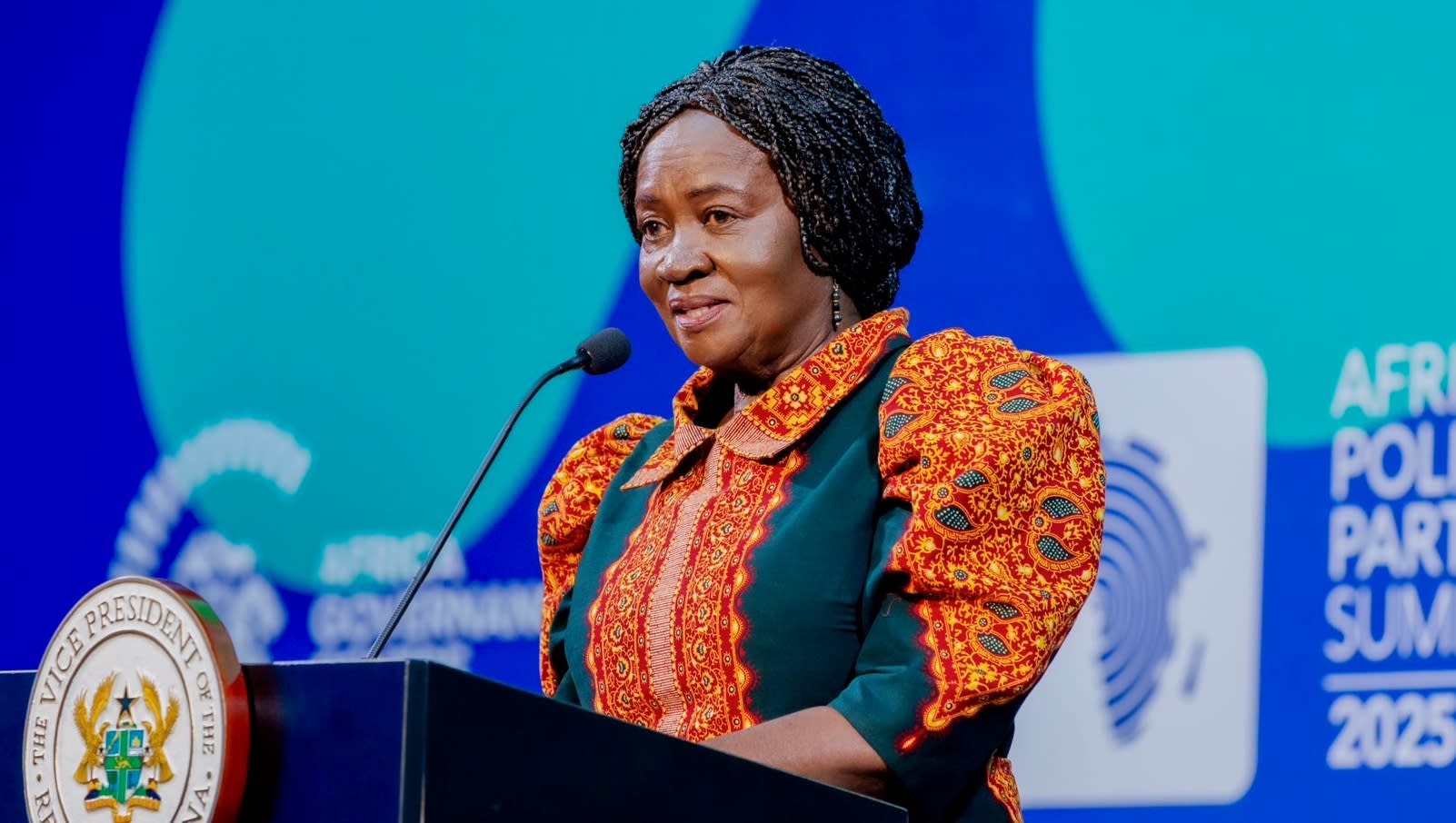
Ghana’s Vice President, Jane Naana Opoku-Agyemang, has challenged the Ghana Export-Import Bank to move beyond conventional financing and become a central force in driving export competitiveness and value addition in the Ghanaian economy.
Her remarks were highlighted by the Ministry of Trade, Agribusiness and Industry during the “GEXIM at 10” International Conference in Accra, where policymakers and industry players gathered to assess the bank’s impact over the past decade and redefine its future role.
Addressing the conference, themed “A Decade of Enabling Export Trade and Industrial Transformation: Resetting GEXIM for the Next Frontier,” the Vice President said Ghana’s ambition of becoming a resilient, export-led economy will depend heavily on how effectively the bank supports Micro, Small and Medium Enterprises to compete internationally.
Shift from Raw Exports to Value Addition
According to the Ministry, Professor Opoku-Agyemang acknowledged GEXIM’s support for agriculture, manufacturing and non-traditional exports but stressed that changing global trade conditions demand stronger institutions and more strategic intervention.
She argued that Ghana can no longer rely on the export of raw materials if it wants to strengthen its place in global markets. Instead, she said, the bank’s next phase must be rooted in industrial production and the export of higher-value processed goods.
The Vice President reportedly described GEXIM as a key engine of “export competitiveness,” adding that its real success should be measured by the quantity and quality of value-added Ghanaian products shipped abroad.
Deputy Minister for Trade, Agribusiness and Industry, Sampson Ahi, said the two-day summit should not be viewed as a ceremonial milestone but as a “working session” focused on practical reform.
He identified high compliance costs, limited access to long-term capital and the technical demands of international trade standards as the main obstacles preventing many local businesses from becoming export-ready.
Mr. Ahi urged GEXIM to provide targeted and time-bound support to help MSMEs scale, innovate and meet export requirements.
More Than a Lender
The Ministry’s broader position is that GEXIM must evolve into more than a financing institution.
Officials believe the bank should also serve as a “facilitator of readiness” by offering guarantees and risk mitigation tools that traditional commercial banks are often reluctant to provide.
By reducing the risk burden on exporters, the bank is expected to unlock stronger private sector participation and align more closely with the government’s industrialisation agenda.
The conference’s central message was clear: if Ghana is to compete globally, the next chapter of GEXIM must be defined not only by loans disbursed, but by how effectively it helps businesses turn local products into globally competitive exports.