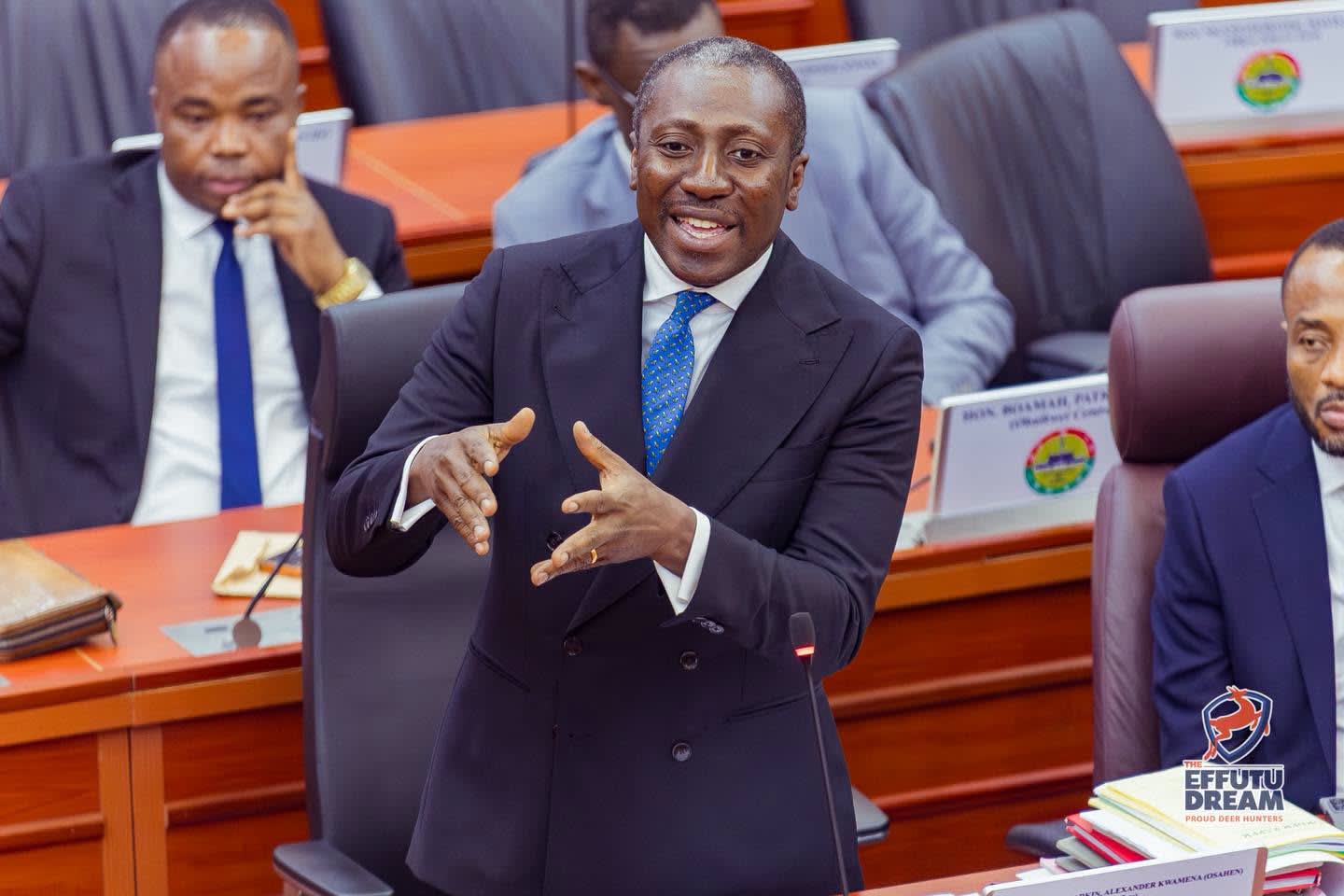
Minority Leader Alexander Afenyo-Markin has questioned government's decision to revive Ghana's tribunal system, insisting that the country's existing courts are capable of delivering justice if they receive the investment and resources they need.
Speaking during parliamentary debate on the Tribunals Bill, 2026 on Thursday, July 16, the Effutu MP argued that the priority should be modernising the judiciary rather than creating what he described as another layer of legal bureaucracy.
For him, the issue is not the structure of Ghana's justice system. It is how that structure is supported. "The justice architecture we have is not a broken architecture," Afenyo-Markin told Parliament.
"We have a district court. We have a circuit court. We have a high court. We have a court of appeal and a supreme court." - Afenyo-Markin
Call for investment in existing courts
The Minority Leader maintained that meaningful reform should begin with improving the capacity of the courts already operating across the country.
He urged government to channel resources into digitalising court processes, improving infrastructure and providing judges and court staff with the tools required to speed up justice delivery.
"Instead of improving on the structures and resourcing the courts, help the courts to be fully digitalized, help the courts to have the necessary tools to administer justice, then you say you are creating another bureaucracy to bring a new tribunal." - Afenyo-Markin
According to him, strengthening the current judicial system would produce quicker and more sustainable results than establishing parallel institutions.
Questions over tribunal structure
Afenyo-Markin also raised concerns about the proposed role of the tribunals within Ghana's judicial framework.
He questioned whether the new bodies would handle civil disputes, criminal cases or both, suggesting that Parliament had not adequately addressed how they would fit into the existing hierarchy of courts.
"Is it going to be in charge of civil matters or criminal matters?" he asked. "I am asking rhetorically."
While acknowledging that the Constitution permits Parliament to establish tribunals, he stressed that lawmakers are not under any obligation to do so.
"The Constitution says Parliament may determine," he said. "I am saying that this Parliament must know that the justice architecture we have is not a broken architecture."
Government defends reform
Government has defended the Tribunals Bill as a constitutional reform designed to improve access to justice and strengthen the administration of justice across the country.
The proposed legislation seeks to operationalise Article 126 of the Constitution by reintroducing tribunals under a framework that includes judicial oversight, constitutional safeguards and due process protections. Officials say the tribunals would complement, rather than replace, the existing courts.
Despite those assurances, Afenyo-Markin remained unconvinced.
His argument was straightforward. Ghana, he said, already has the institutions needed to deliver justice. The real challenge lies in ensuring those institutions are properly funded, efficiently managed and equipped to meet the demands of a modern legal system.
READ ALSO: MIIF Share Ghana's Sovereign Mineral Investment Model with Zambia